How to Tell if Palm Coast Landscaping Advice Is Actually Useful
May 4, 2026Palm Coast Landscape Design for Front Yards
May 4, 2026Clean edges make landscaping look more professional because they show, at a glance, that someone is caring for the yard on purpose. A sharp line between lawn and bed frames the plants, separates textures, and makes even a simple yard look finished. Ragged, creeping edges do the opposite, so a yard with healthy plants can still look neglected.
In Palm Coast, where grass grows fast for much of the year, edges blur quickly. Here is why they matter so much and the realistic ways to keep them crisp.
What your eye notices first
When people look at a yard, they rarely study individual plants. They take in the overall picture: shapes, contrast and whether things look intentional. Edges are where the contrast is strongest, because that is where green grass meets dark mulch, pale stone or concrete.
A clean edge does a few things at once:
- It creates a clear outline, so beds read as shapes rather than patches.
- It makes mulch and stone look fresh, because they are not mixed with grass blades and runners.
- It gives the lawn a defined border, so the grass looks fuller and more even.
- It signals regular care, which is a big part of curb appeal for neighbors, guests and buyers.
Professional crews spend time on edges for exactly this reason. It is often the difference between a yard that was mowed and a yard that was maintained.
Why edges fall apart in Flagler County
Edges here are under steady pressure. Knowing what causes the blur makes it easier to pick the right fix.
- Runner grasses. St. Augustine and other warm season grasses spread sideways and push into beds, especially in the rainy summer months.
- Sandy soil. A cut edge in loose sand slumps over time, especially after heavy rain, so a spade-cut line does not stay sharp for long.
- Washouts. Summer downpours carry mulch and soil out onto the grass and sidewalk, smearing the line.
- Trimmer wear. Repeated string trimming along a soft edge slowly chews it into a wavy groove.
Three ways to keep edges sharp
There is no single right answer. The best choice depends on your budget, how much upkeep you want and how permanent you want the lines to be.
| Method | Upkeep | How long the line holds | Good fit when |
|---|---|---|---|
| Trimmed or spade-cut edge | High, needs regular recutting | Weeks to a few months | You like a natural look and keep up with maintenance |
| Plastic or metal edging strips | Moderate | Varies, can heave or shift in sand | You want a low cost barrier for a small area |
| Concrete curbing | Low, mainly light trimming beside it | Long term, it is a permanent line | You want lines that stay put through rain and mowing |
Trimmed edges
A hand edger or a string trimmer turned on its side can cut a clean vertical line between grass and bed. It looks great when fresh. The tradeoff is time, since in the growing season you may need to recut every few mowings to stay ahead of runners.
Edging strips
Plastic, steel and aluminum strips are common at home improvement stores. They help, but in loose sandy soil thin plastic edging tends to lift and wander, and it can be nicked by mowers. Metal edging holds a line better but still needs to be installed deep enough to stay put.
Concrete curbing
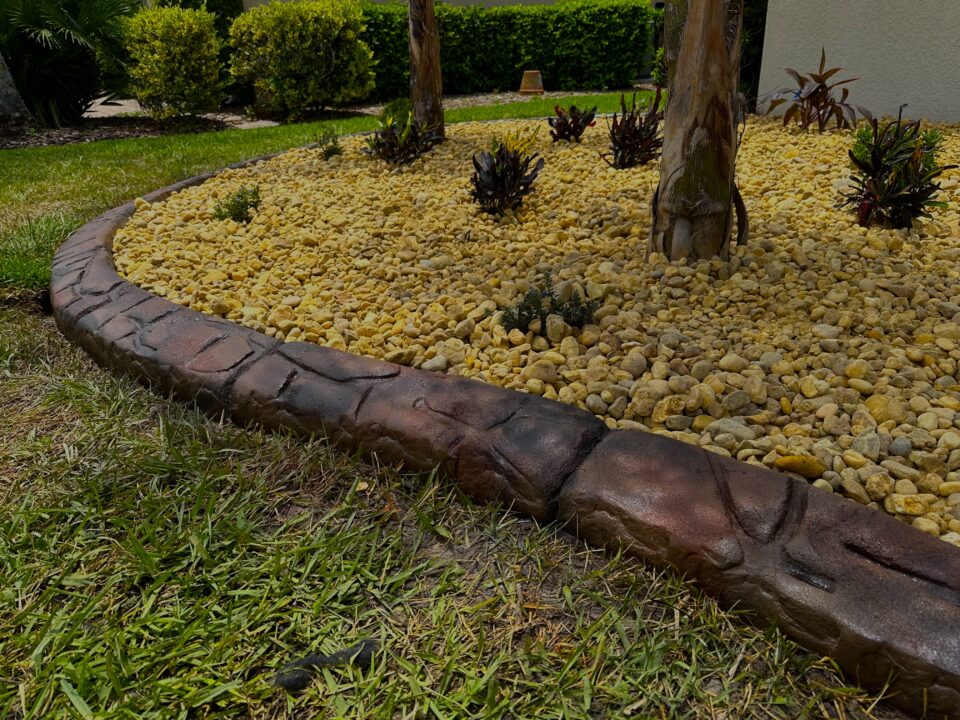
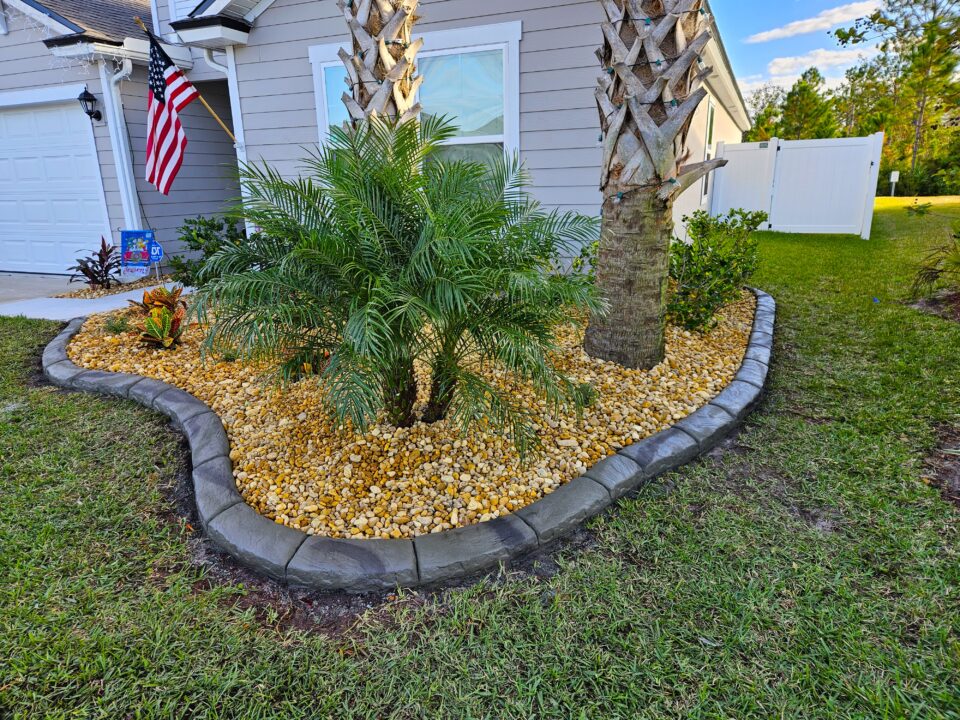
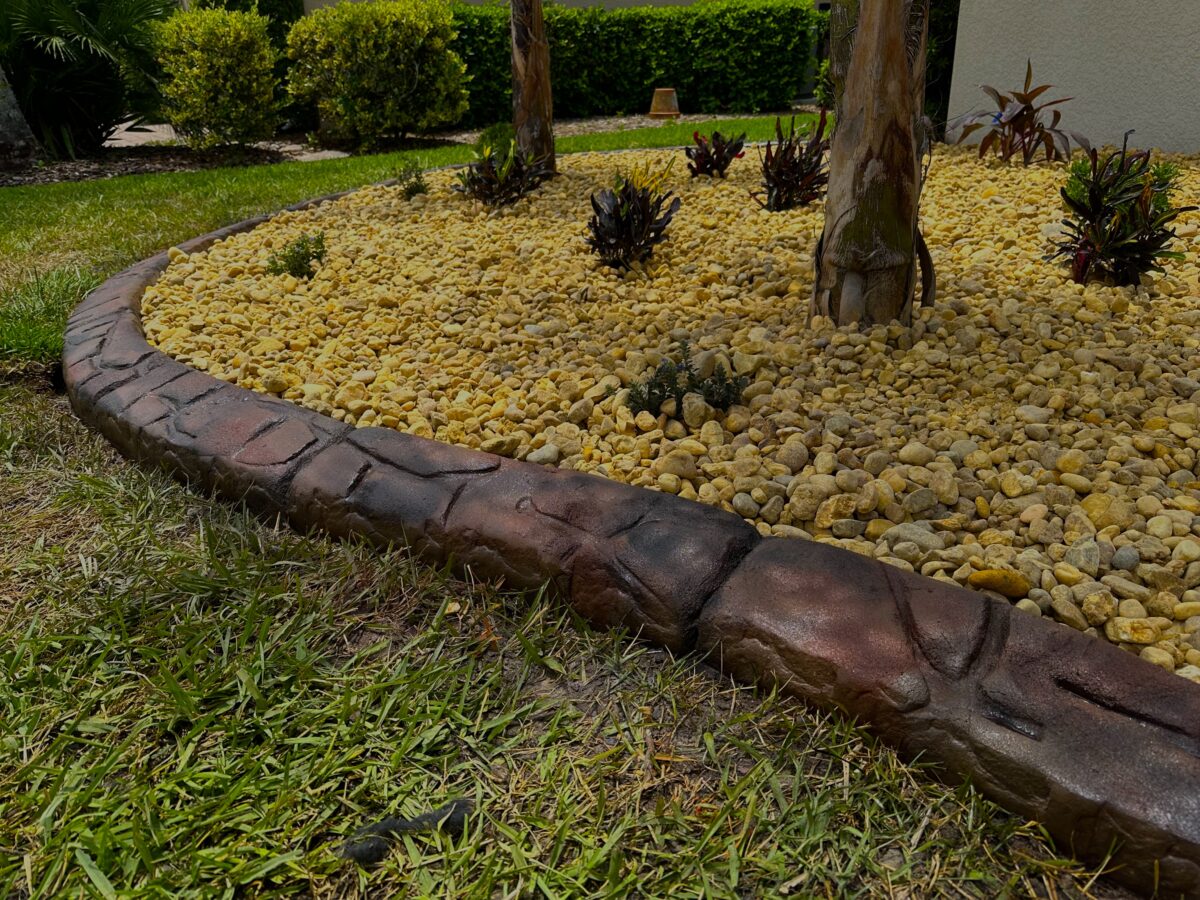
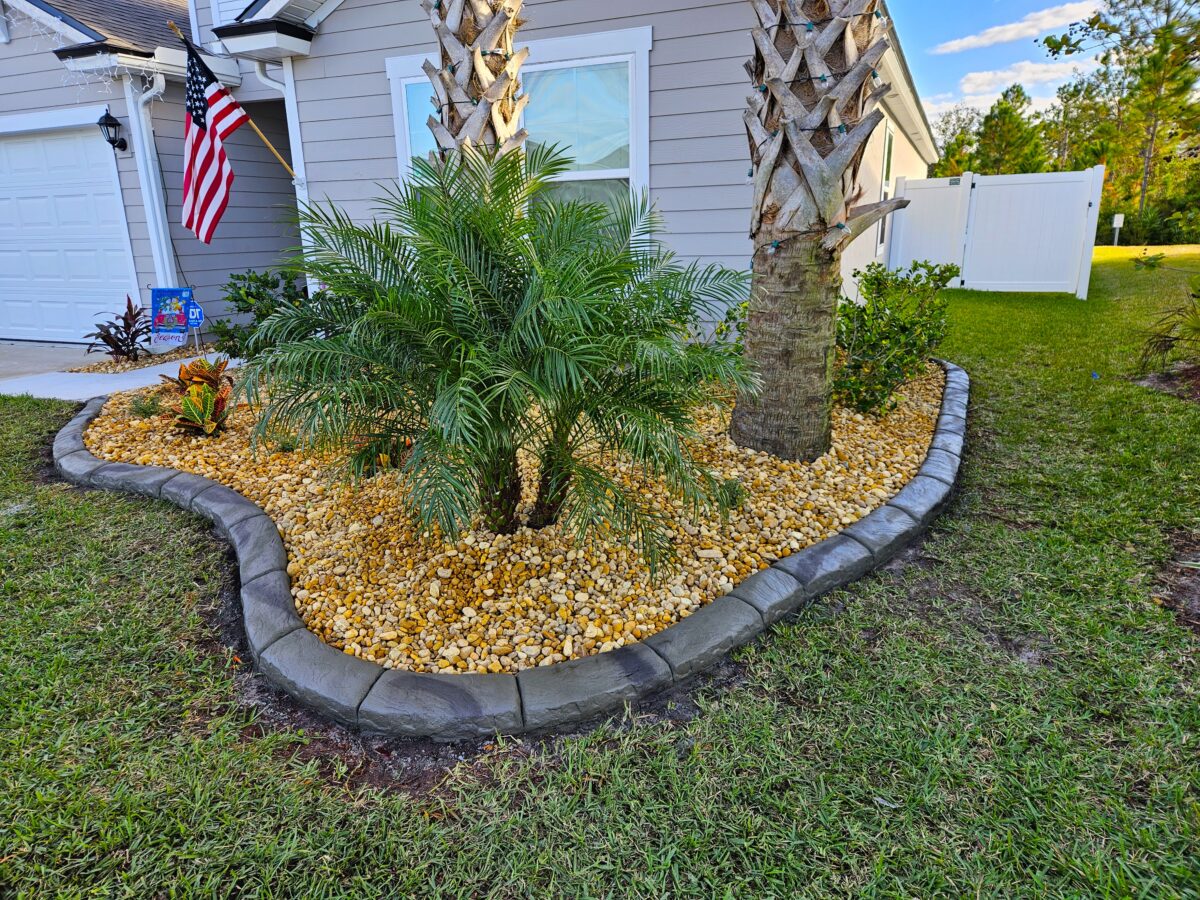
A continuous concrete curb sets the edge permanently. Grass has a hard stop, mulch and stone stay contained, and the mower can ride along the top. You will still run a trimmer along it occasionally, but the line itself does not move. Our decorative concrete curbing page explains how it is installed.
Edges beyond the flower beds
Bed borders get most of the attention, but a professional look also depends on other edges around the property:
- Driveways and sidewalks: Grass creeping over concrete makes the whole front look shaggy. Edging these every few mowings goes a long way.
- Tree rings: A neat circle of mulch around each tree keeps trimmers off the trunk and looks tidy.
- Fence lines and walls: A narrow strip of stone or mulch along the base prevents the scruffy fringe that trimmers leave.
- Hedge faces: Shrubs that are squared up or smoothly rounded create their own kind of edge. Regular hedge trimming for clean Palm Coast landscaping keeps those lines in shape.
Small habits that keep lines crisp
Whatever method you choose, a little routine attention makes a big difference:
- Pull runners crossing into beds as soon as you see them, before they root.
- Top up mulch so it sits just below the edge rather than spilling over it.
- Blow or sweep washed out mulch and soil back into beds after big storms.
- Keep the mower deck from scalping right at the edge, which leaves bare strips that weeds love.
- Walk the property once a month and look specifically at the lines, not just the plants.
If your edges have been slipping for years, our post on refreshing old landscaping without starting over shows how much new edges can do on their own.
Frequently asked questions
How often should lawn edges be trimmed in Palm Coast?
During the warm, rainy growing season, many yards need edging every one to two mowings to stay sharp. In the cooler months grass slows down, so you can usually stretch that out.
Is concrete curbing worth it compared to trimming?
It depends on how you value your time and how long you plan to stay. Curbing costs more upfront but keeps the line in place for years, while trimming is cheaper but needs to be repeated all season.
Do HOAs care about edges?
Many HOA communities in Flagler County expect lawns and beds to look maintained, and ragged edges can draw notices. Check your community’s guidelines, and ask before adding curbing in a new color or style.
Udell’s Landscape Services is a locally owned Palm Coast company, and owner Corey Udell has more than 20 years of experience keeping Flagler County yards looking sharp, from trimming and curbing to full landscape design in Palm Coast. If you want cleaner lines around your property, you can request a free estimate or call (386) 931-6539.