Backyard Landscape Design in Palm Coast: Where to Start
October 14, 2026
Small Yard Landscape Design in Palm Coast: Making Space Count
October 19, 2026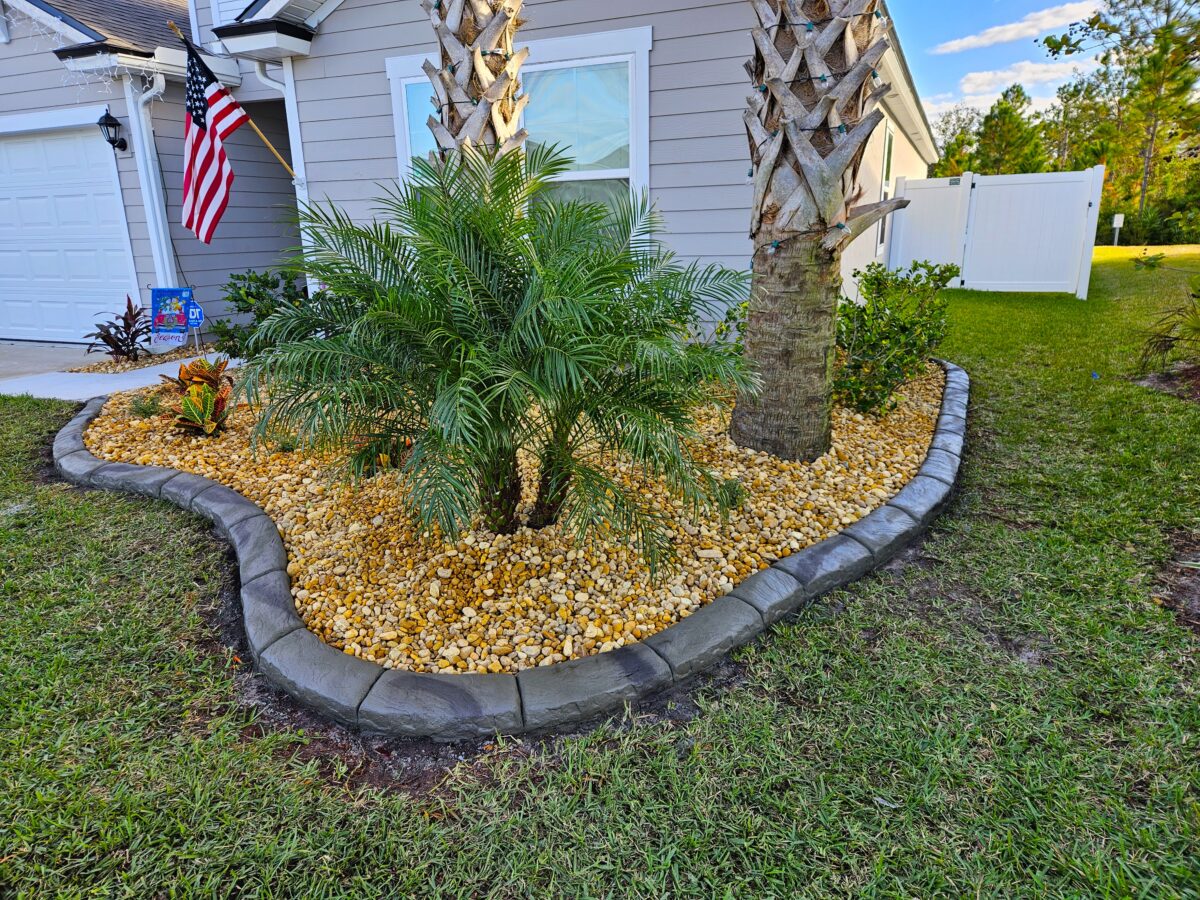
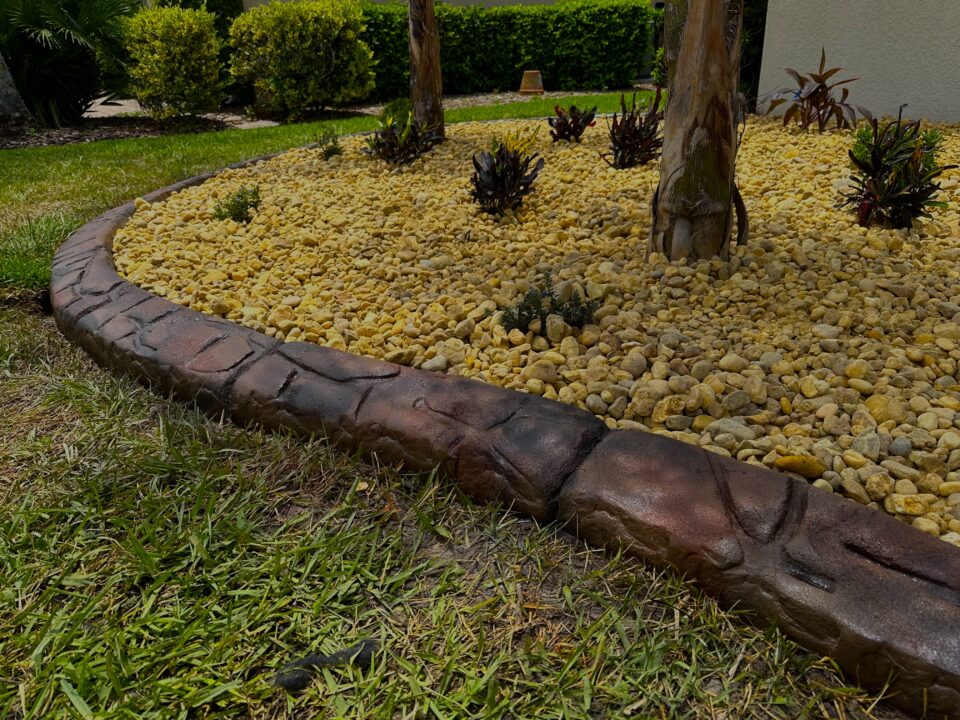
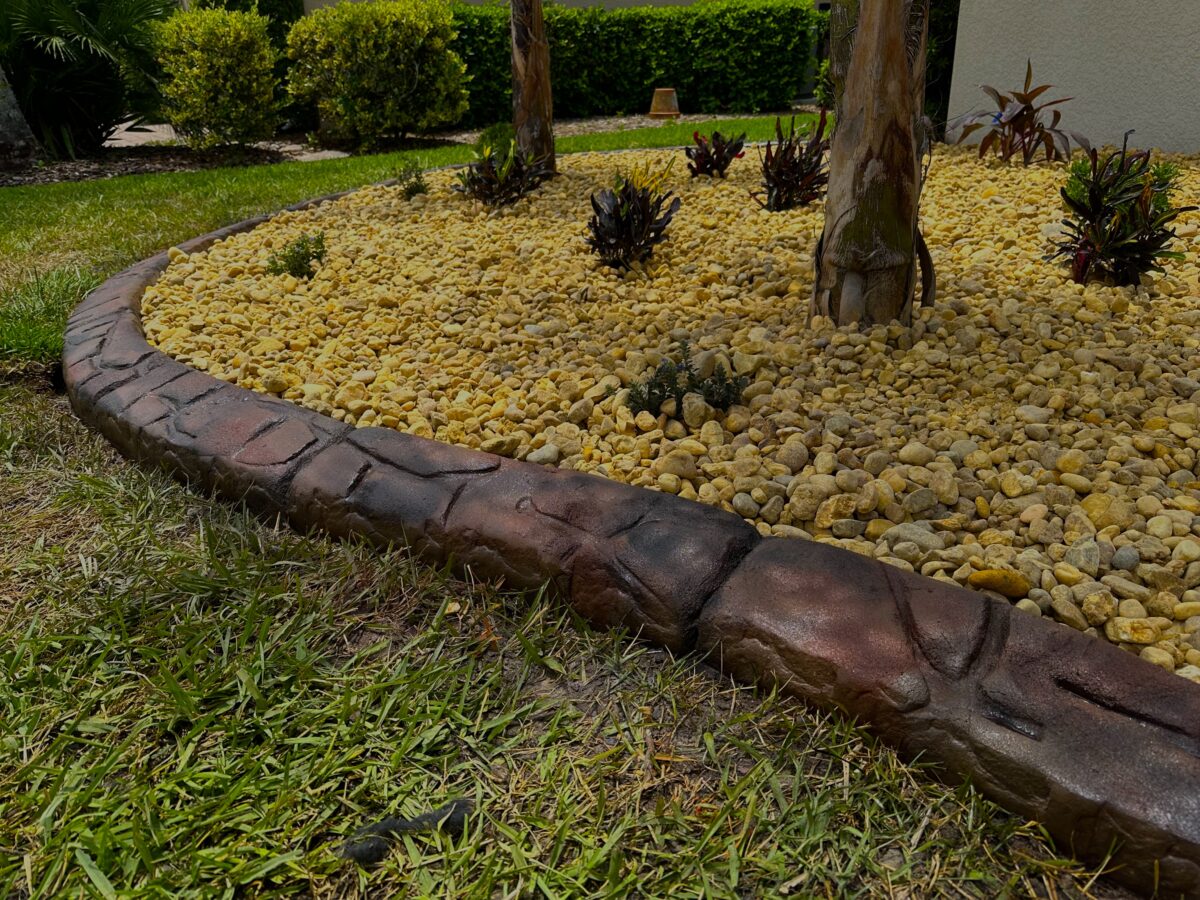
Curbing around trees and planter beds in Palm Coast works best when the ring is sized for the tree’s roots, not just for looks. A good tree ring gives the trunk breathing room, holds mulch or rock in place, and keeps mowers and string trimmers away from the bark. The curb itself is the easy part. The planning before it goes in is what decides whether it still looks right in five years.
We get a lot of questions about this from Palm Coast and Flagler County homeowners, especially people with a big live oak out front, a row of palms along the drive, or a lonely island bed in the middle of the lawn. Here is how we think it through.
Why put curbing around a tree or planter bed?
Most yards in Palm Coast have at least one tree or bed that sits on its own in the grass. Without a firm edge, a few things tend to happen over time:
- Grass creeps into the bed and has to be pulled or sprayed again and again.
- Mulch and rock wash out into the lawn after our heavy summer rains.
- Mowers and trimmers nick the base of the trunk, which can open the bark up to decay.
- The bed slowly loses its shape, so a nice round circle turns into a lopsided blob.
A decorative concrete curb solves most of that in one step. It gives the mower a clean line to follow, holds the bed material in place, and makes the whole yard look finished. It also pairs well with the rest of a landscape design in Palm Coast, since the same curb style can carry from the front beds out to the tree rings so everything matches.
How big should a tree ring be?
This is where most tree rings go wrong. A tight little circle hugging the trunk looks neat on day one, but it leaves the tree with almost no protected root area and puts the curb right where roots are growing.
The University of Florida IFAS Extension recommends that the mulched area around a tree be at least 8 feet across, and wider is better, out toward the drip line where the branches end. Their guide to choosing and installing mulches covers this well. So when we lay out a ring, we usually start from that size and adjust for the yard, rather than starting small.
A few things we look at when sizing it:
- The type of tree. A broad oak or magnolia needs a much bigger ring than a single palm.
- How much it will still grow. A young tree planted with a new build will look small for years, so the ring should be sized for the tree it will become.
- Surface roots. If you can already see roots running across the lawn, the curb needs to go outside them or between them, not on top of them.
- The rest of the yard. The ring should feel in proportion with the house and nearby beds. Sometimes a single larger island bed that holds two trees looks better than two small circles.
Will curbing hurt my tree’s roots?
It can if it is placed carelessly. Concrete curbing sits on top of the soil with only a shallow trench, so it is far less disruptive than digging a footing, but it still has to go somewhere. Cutting through large structural roots near the trunk can weaken a tree and affect how well it stands up to wind, which matters a lot here during hurricane season.
Our approach is simple:
- Mark the curb line and walk it before anything is cut.
- Check for surface roots and large roots just below the grass along that line.
- Move the line out or reshape it so it avoids big roots, instead of cutting through them.
- Keep the trench shallow and the work tidy so the soil around the tree is disturbed as little as possible.
Palms are a little more forgiving than oaks because their roots are many smaller roots rather than a few big ones, but we still give them room. If a tree already has roots lifting the lawn or a walkway, we will talk through the options with you on site before laying any curb.
Mulch, rock or plants inside the ring?
What goes inside the curb changes how the bed looks and how much care it needs. Here is a quick comparison for tree rings and planter islands in Palm Coast yards:
| Fill | Good for | Things to keep in mind |
|---|---|---|
| Mulch (pine bark, pine straw, hardwood) | Most trees, especially larger shade trees | Breaks down and needs topping off. Keep it about 2 to 3 inches deep and pulled back from the trunk. |
| River rock or decorative stone | Palms and clean, low-care looks | Lasts much longer, but it does not feed the soil and can hold heat in full sun. |
| Groundcover or low plants | Island beds and wider rings | Softens the look. Choose plants suited to the light under the tree, which is often shade. |
| Mix of plants and mulch | Larger planter islands | A few shrubs or accent plants with mulch between them often looks the most finished. |
One rule applies no matter what you choose: do not pile anything against the trunk. UF/IFAS specifically warns against “volcano mulching,” where mulch is mounded up around the base of a tree. It holds moisture against the bark and encourages rot. Leave a small gap so the base of the trunk, where it flares out into the roots, stays visible.
If you are deciding between materials for the rest of your beds too, our post on how concrete curbing helps control mulch, gravel and soil goes into more detail.
Round, square or free-form: which shape works best?
There is no single right shape, but a few patterns work well in Palm Coast yards:
- Circles are the classic choice for a single tree in open lawn. They are easy to mow around and look clean from the street.
- Ovals and soft curves work well when a ring needs to stretch to cover two trees, a tree and a shrub, or roots that run in one direction.
- Squares and straight lines suit more modern homes, or trees that sit close to a driveway or walkway where a straight edge lines up with the hardscape.
- Connected beds join a tree ring to a nearby foundation bed with a sweeping curve. This often looks more natural than a separate circle, and it means less grass to trim.
Whatever the shape, think about the mower. Curves that are too tight or narrow strips of grass between beds are hard to cut neatly. We cover more of these layout decisions in questions to settle before curbing installation.
What about planter beds that are not around a tree?
Island beds around a mailbox, a light post, a utility box or simply a group of plants in the lawn follow most of the same ideas. A few extra things to check:
- Utilities. Know where irrigation lines, low-voltage lighting wire and any buried utilities run before a trench is cut.
- Sprinkler heads. Heads near the new edge may need to be moved or adjusted so they water the bed and lawn properly instead of spraying the curb.
- Drainage. A curb can hold water in a low spot. If the area puddles after rain, plan the bed so water still has a way out.
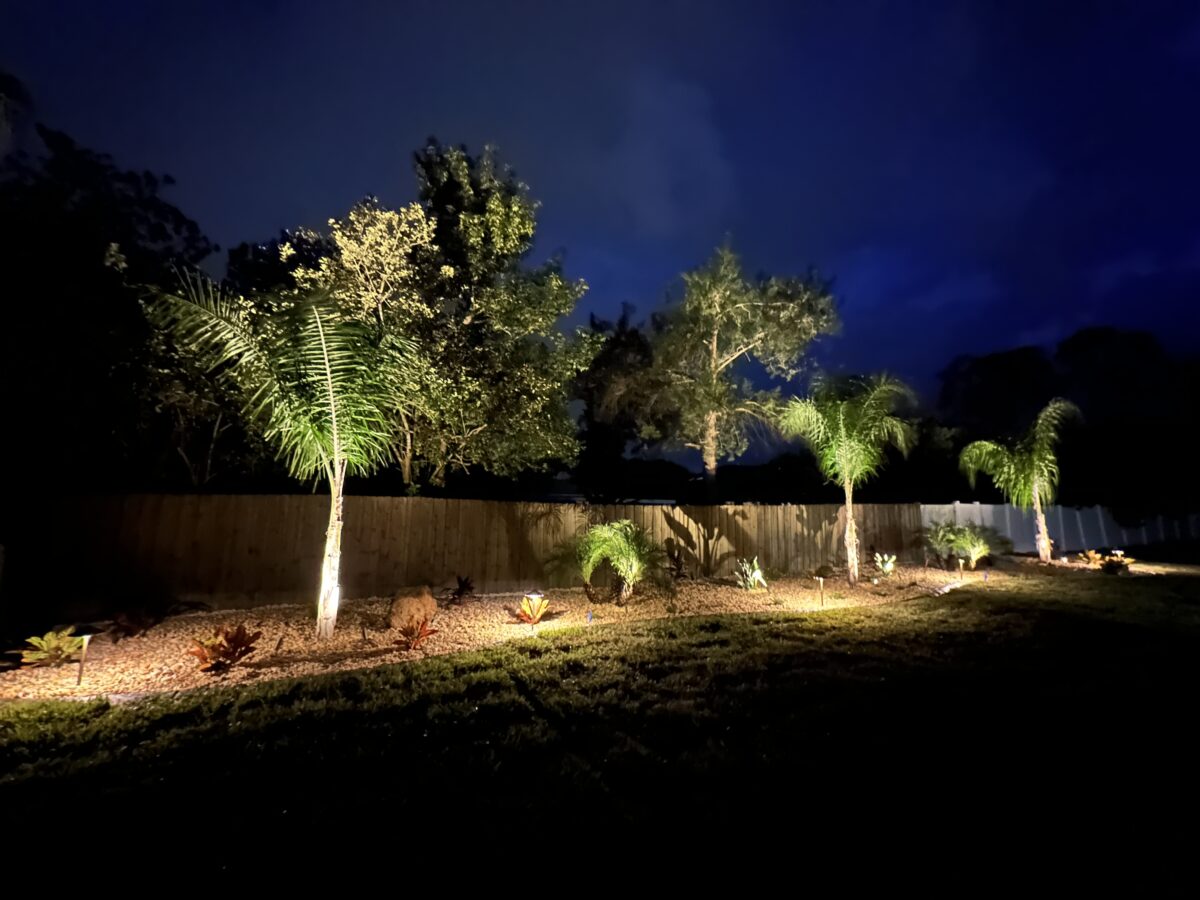
- Lighting. Island beds are a natural spot for landscape lighting, and it is easier to run wire before the curb and bed go in than after.
Frequently asked questions
Can you add curbing around a tree that is already established?
Yes, and that is the most common situation we see. The key is laying the curb line where it avoids the tree’s larger roots. That often means a wider ring or a reshaped bed instead of a tight circle at the trunk.
How close to the trunk should curbing go?
Farther than most people expect. UF/IFAS recommends a mulched area at least 8 feet across around a tree, so we usually start from that size and adjust for the tree, the roots and the yard. Bigger trees get bigger rings.
Is rock or mulch better inside a tree ring?
For most shade trees, mulch is the better choice because it breaks down and helps the soil. Rock works well around palms and in areas where you want a cleaner, longer-lasting look. Either way, keep it pulled back from the trunk.
Can curbing around trees be part of a bigger landscape project?
It often is. Tree rings tend to look best when they match the curb style and materials in the rest of the yard, so many homeowners do them together with new beds, mulch or rock and plant work through our landscaping services.
If you have a tree or island bed that never quite looks finished, Udell’s Landscape Services can take a look. We work with homeowners across Palm Coast and Flagler County on curbing, beds and full landscape design, and estimates are free. You can reach us through our contact page or call (386) 931-6539.