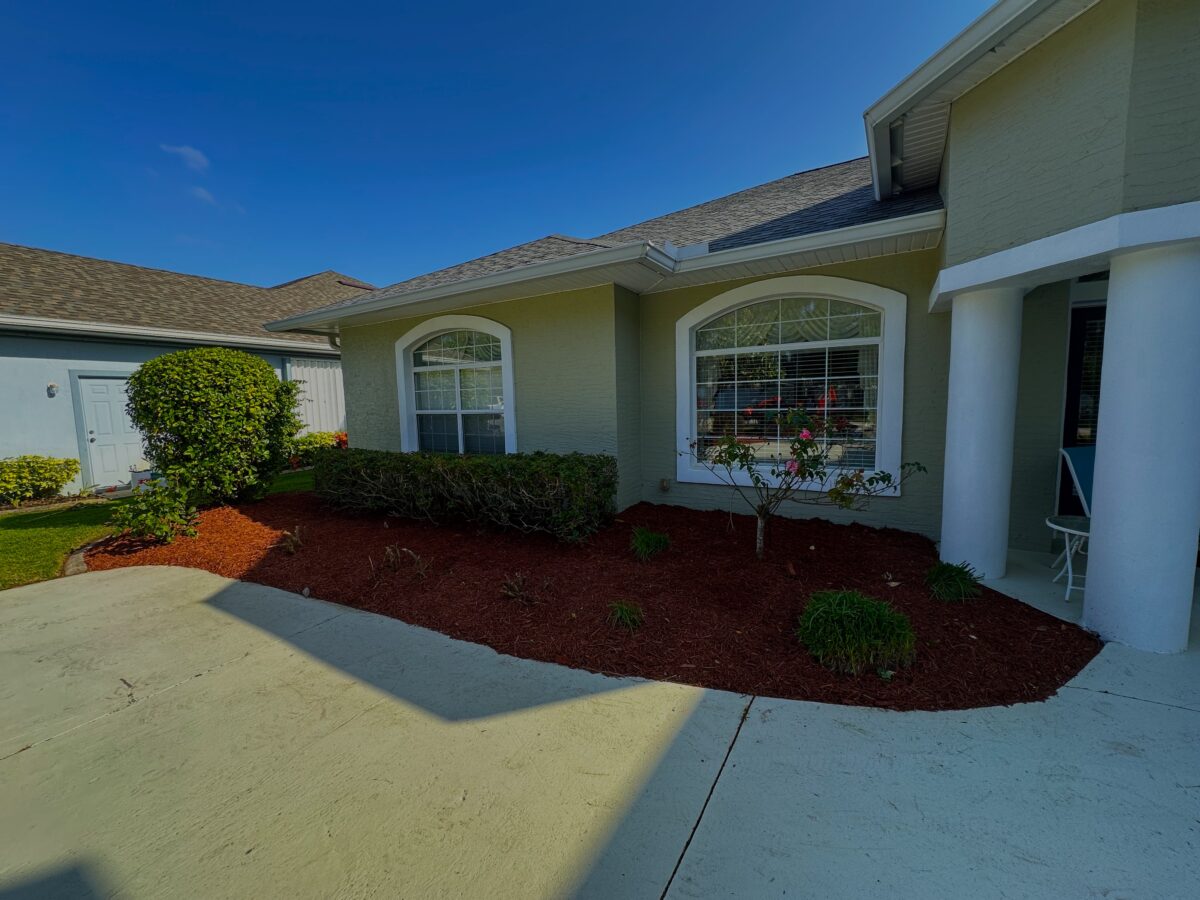
How to Plan a Low-Maintenance Landscape in Palm Coast
February 26, 2026Best Landscape Plants for Sunny Palm Coast Yards
March 24, 2026Palm Coast can move from dry conditions to intense rain quickly, which makes drainage part of landscape design rather than an afterthought. Water that repeatedly sits against planting beds, walkways or foundations can affect plant health, wash out mulch and make attractive upgrades harder to maintain.
Quick answer: A successful Palm Coast landscape is designed around local sun, soil, drainage, water needs and the architecture of the home. The strongest results combine practical plant placement with clean bed definition and a maintenance plan that makes sense for the property.
Watch Where Water Already Wants to Go
After a strong rain, note where water collects and how it travels across the property. Downspouts, driveway slopes, neighboring grades and compacted areas can all concentrate runoff.
Avoid Blocking Natural Flow
Raised beds, edging and hardscape should be designed so they do not accidentally create a dam. Good-looking borders still need to respect the way water moves across the lot.
Select Plants for Wet and Dry Zones
Not every part of a Palm Coast yard experiences the same moisture. Plants in a low area may need very different tolerances than plants beside a hot driveway or west-facing wall.
Use Mulch and Stone Strategically
Mulch can soften planting beds and improve appearance, but fast-moving water may relocate it. In certain drainage paths, stone or another stable treatment may be more practical.
Solve Drainage Before Cosmetic Upgrades
If a bed is repeatedly washing out or staying saturated, installing new plants without addressing the cause can turn into repeated replacement costs. Diagnose the water pattern first, then build the visual design around the solution.
Local Landscape Planning Matters in Palm Coast and Flagler County
Florida landscaping is highly site-specific. Conditions can change from one side of a home to the other, and coastal exposure, drainage, shade, irrigation coverage and mature plant size all affect the finished result. UF/IFAS Extension promotes Florida-Friendly Landscaping practices built around appropriate plant selection and environmentally responsible maintenance. Homeowners should also verify current City of Palm Coast watering requirements when irrigation is part of the project.
If your property needs a more intentional layout, Udell’s Landscape Services offers local property enhancement services backed by more than 20 years of experience. Explore our landscaping services, decorative concrete curbing, and landscape lighting, or contact us to discuss your Palm Coast or Flagler County property.
Frequently Asked Questions
Why does water stand in parts of my Palm Coast yard?
Low grade, compacted soil, concentrated roof runoff, irrigation leaks and neighboring drainage patterns can all contribute.
Can landscaping make drainage worse?
Yes. Poorly placed borders, raised beds or hardscape can redirect or trap water if drainage is not considered during design.
Should drainage be planned before new landscaping?
In areas with recurring water problems, yes. It is more efficient to address drainage before installing finished beds and plants.
Local note: Landscape and irrigation conditions, watering restrictions and property requirements can change. For current regulatory or horticultural guidance, consult the City of Palm Coast and UF/IFAS Extension Flagler County.