Fall Planting in Palm Coast: What to Plant and When
October 12, 2026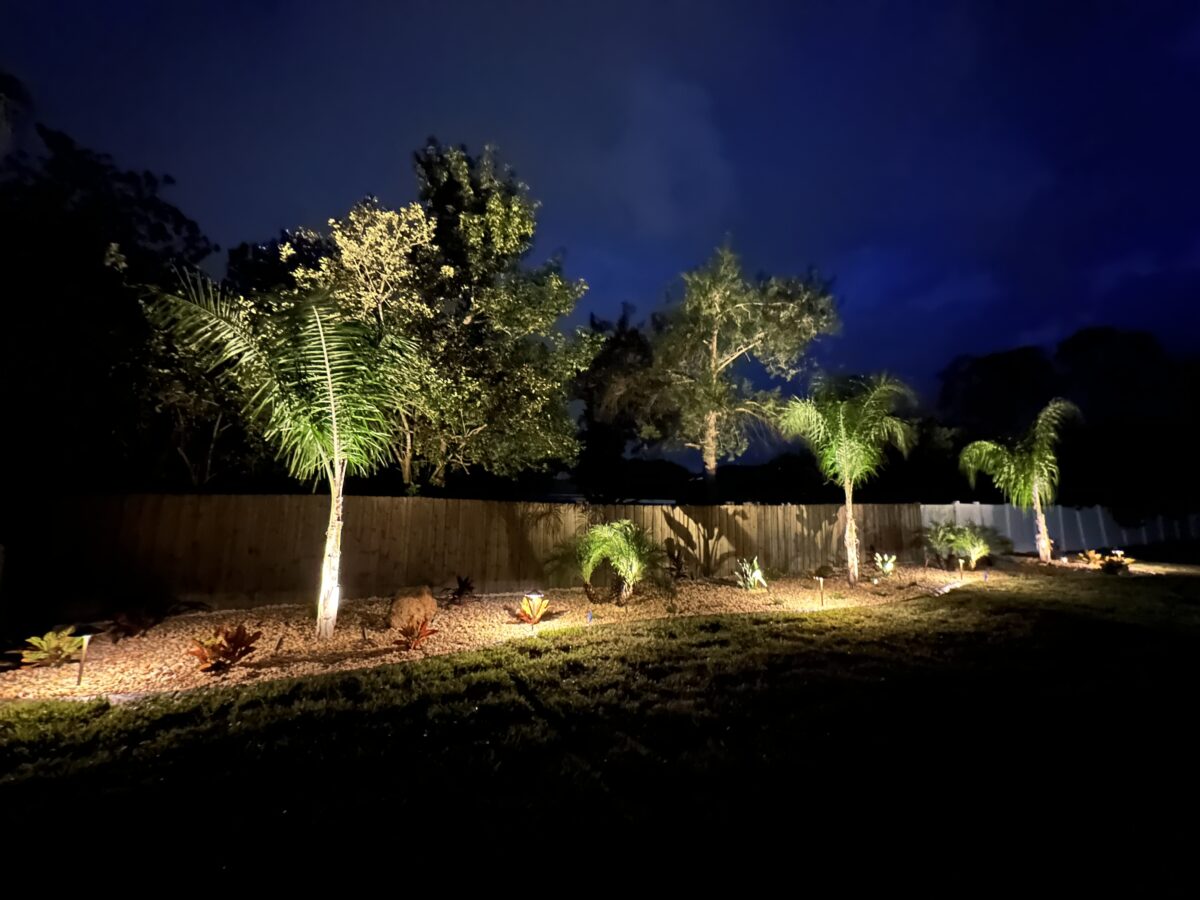
Good backyard landscape design in Palm Coast starts with how you actually want to use the space, then works around sun, drainage and privacy before a single plant is chosen. Get those few things right and the yard feels comfortable and easy to care for. Skip them and even expensive plants and pavers end up in the wrong place.
Front yards get most of the attention because everyone drives past them, but the backyard is where Palm Coast families spend their evenings, grill on weekends and let the dog run. Here is how we think through a backyard, from the first walk around to the finished beds.
Where should you start with a backyard design?
Start with a list of how you want to use the yard, not a list of plants. A backyard that has to handle kids, a pool, a fire pit and a vegetable bed needs a very different layout than one that is mostly a quiet view from the lanai.
Before any design work, it helps to answer a few simple questions:
- Where do you sit, eat or grill most often, and what do you look at from there?
- Do you need open lawn for kids or pets, or would you rather have less grass to mow?
- Which neighbors, windows or equipment would you like to screen from view?
- How much time do you want to spend on upkeep each month?
- Is this a full-time home, a seasonal home or a rental?
Those answers shape everything else. They are also the first things we talk through during a visit, which is part of how landscape design in Palm Coast works with our team, whether the yard needs a full plan or a few well placed changes.
How do sun, shade and drainage shape a Palm Coast backyard?
Most Palm Coast homes sit on lots where the house throws a big shadow across part of the backyard for much of the day, while the far side bakes in afternoon sun. Mapping that pattern matters more than any single plant choice, because a sun loving shrub planted in deep shade will struggle no matter how well it is cared for.
Spend a day noting which parts of the yard get morning sun, afternoon sun or mostly shade. Our guide to landscape design for shade and sun areas goes deeper on matching plants to each zone.
Drainage is the other big factor. Many backyards in Palm Coast back up to swales, canals, ponds or preserve land, and summer storms can drop a lot of water in a short time. After a heavy rain, look for:
- Spots where water stands for more than a day
- Mulch or soil washing toward the lanai, pool deck or fence line
- Low areas where grass stays thin or soggy
- Downspouts that empty straight into a bed
A good design works with that water instead of fighting it. Low spots can become planted areas with plants that tolerate wet feet, and beds can be shaped so runoff moves away from the house. If water is a real problem in your yard, our post on designing around heavy Florida rain is a good next read.
How do you lay out zones in a backyard?
Most comfortable backyards are built from a few simple zones that connect to each other. Thinking in zones keeps the yard from feeling like a lawn with some plants pushed against the fence.
| Zone | What it is for | What usually works there |
|---|---|---|
| Living area | Sitting, dining, grilling | Patio or lanai edge, low plantings that do not block the view, soft lighting |
| Open space | Kids, pets, games | Lawn or a durable groundcover, kept clear of beds and edging |
| Screening | Privacy and backdrop | Layered shrubs, small trees or ornamental grasses along the fence or property line |
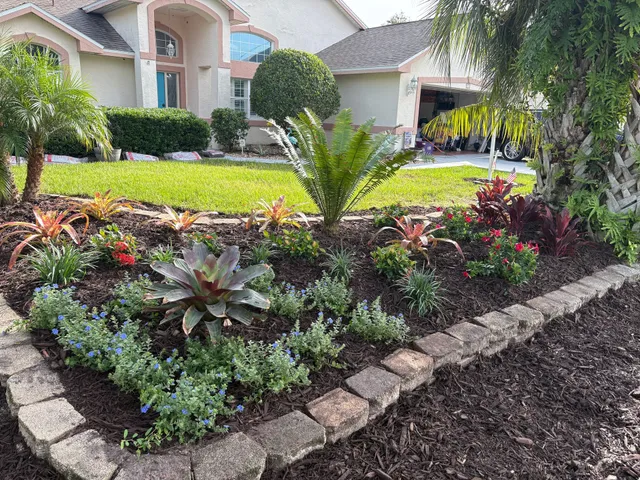
| Feature beds | Color and interest | Perennials, accent plants and stone, placed where you can see them from inside |
| Service area | AC units, pool equipment, trash cans | A simple bed or screen that hides equipment but leaves room for access |
Not every yard needs all five. A small backyard might only have a living area, one feature bed and a screening strip. The point is to give each part of the yard a job so nothing feels leftover.
How can a backyard feel private without feeling closed in?
Privacy is one of the most common requests we hear in Palm Coast, especially in neighborhoods where homes sit close together and backyards face each other. A single wall of hedges can work, but it often makes a small yard feel boxed in.
Layering usually works better:
- Taller shrubs or small trees at the back, placed where they block the view that bothers you most
- Medium shrubs or grasses in front of them to soften the line
- Low plants or groundcover at the front edge of the bed
That approach gives you screening where you need it without planting a solid green wall along every fence. We cover more ideas in how landscape design can improve privacy without closing in your yard.
Always leave room for plants to reach their mature size. A shrub that looks right at planting can crowd a fence, lanai screen or AC unit within a few years if it is set too close.
What details make a backyard easier to maintain?
The yards that stay looking good are usually the ones where upkeep was planned from the start. A few details make a big difference over time.
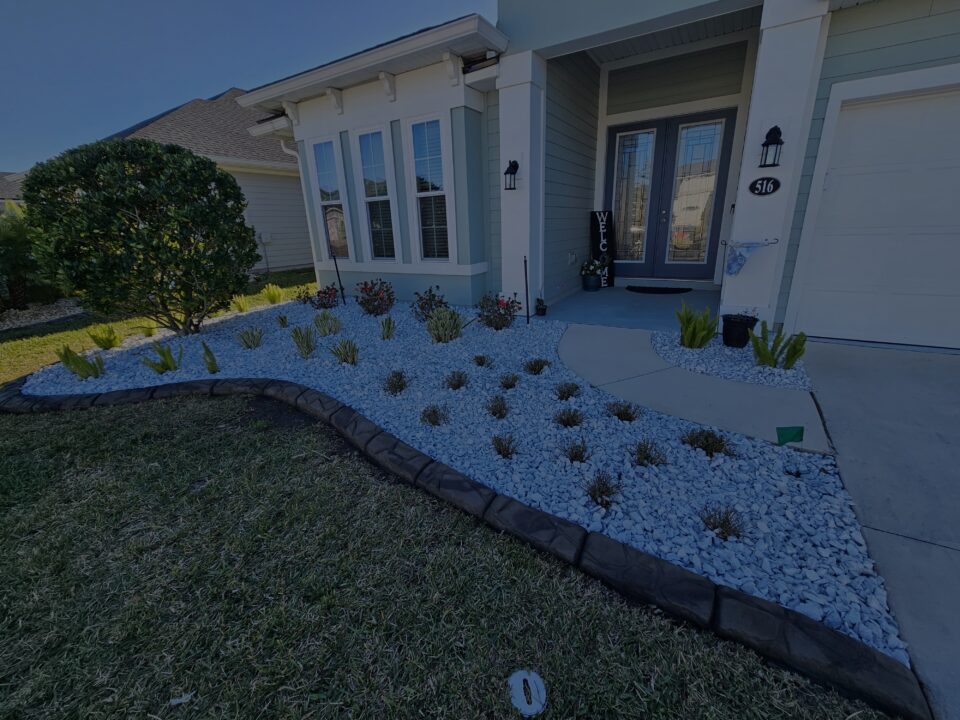
- Clear bed edges. A defined line between lawn and bed keeps grass from creeping in and mulch or stone from spilling out. Decorative concrete curbing is a popular way to hold that line, especially around curved beds and trees.
- Right plant, right place. Plants matched to the sun, soil and space need less trimming, less water and less replacing.
- Fewer, larger beds. A few generous beds are easier to mow around than many small islands.
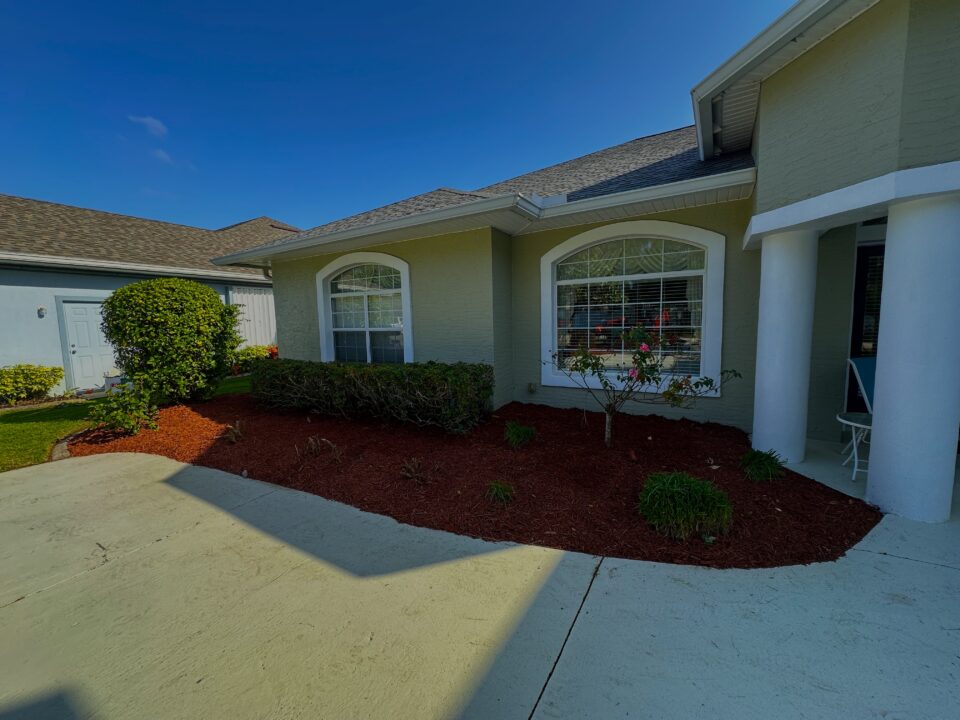
- Mulch or stone with a purpose. Mulch helps hold moisture and keep weeds down. Stone works well in spots that tend to wash out or near the pool.
- Room around equipment. AC units, pool pumps and irrigation valves need clear access for service.
Florida-friendly design principles from UF/IFAS are a helpful reference here, especially the idea of putting the right plant in the right place. The UF/IFAS Gardening Solutions site has plant guides and tips written for Florida conditions.
Should backyard lighting be part of the design?
In Palm Coast, much of the time people spend in the backyard comes after the sun goes down, when it is finally cooler. Planning lighting with the layout means fixtures go where they make sense, and wiring can be run before beds are planted and mulched.
Useful places for backyard lighting include:
- Paths and steps between the lanai, patio and the rest of the yard
- A specimen tree or palm you can see from inside
- Seating and dining areas, with soft light that does not glare
- Gates and side yards you walk through at night
Our landscape lighting work focuses on warm, low glare light that shows off the yard and helps people get around safely after dark.
Frequently asked questions
How long does a backyard landscape project take in Palm Coast?
It depends on the size of the yard and how much is changing. A bed refresh might take a day or two, while a full backyard redesign with new beds, curbing and lighting takes longer. We give a clear timeline after seeing the yard and talking through what you want.
Can a small backyard still have a real design?
Yes. Small yards often benefit the most from a plan, because every foot of space counts. A simple layout with one living area, a screening bed and clean edges can make a small backyard feel larger and more useful.
What is the best time of year to redo a backyard in Palm Coast?
Fall and early spring are comfortable times for planting, since new plants can root in before the summer heat. Design work and hardscape items like curbing can be planned any time of year, so many homeowners start the conversation a season ahead.
Do I need to replace everything to improve my backyard?
Not usually. Many backyards have healthy trees and shrubs worth keeping. A good design keeps what is working, removes what is struggling or overgrown, and fills the gaps so the yard feels finished.
If you are thinking about your backyard, the team at Udell’s Landscape Services has been helping homeowners across Palm Coast and Flagler County for more than 20 years. We are happy to walk the yard with you and talk through options. You can reach us here or call (386) 931-6539 for a free estimate.