Best Landscaping Services for Palm Coast Property Enhancements
May 4, 2026Why Flagler Beach Homes Need Salt-Tolerant Landscaping
May 4, 2026The keys to planting in Florida coastal landscapes are setting each plant at the right depth, giving it room to reach its full size, and watering it on a steady schedule until the roots grow out into the surrounding sand. In Palm Coast, most new plants that fail do so in the first few months because they were planted too deep, crowded together, or left to dry out in fast-draining soil. Get those three things right and most well chosen plants settle in without much trouble.
Start with the soil you actually have
Much of Palm Coast sits on sandy soil that drains quickly and holds very few nutrients. Near new foundations you may also find shell or compacted fill. Before anything goes in the ground, dig a test hole or two and look at what comes out.
- Loose gray or white sand: drains fast. Plan on closer attention to watering during establishment.
- Hard, compacted fill: common along new home foundations. Loosen a wide area so roots can spread sideways.
- Standing water in the hole after a rain: a drainage problem. Choose plants that tolerate wet feet or fix the grade first.
We generally avoid filling planting holes with rich bagged soil. When the hole is full of soft, rich material and the ground around it is plain sand, roots tend to stay inside that comfortable pocket instead of reaching out. Backfilling with the native soil you dug out, broken up well, encourages roots to grow into the yard they will live in for years.
Getting the depth right
Planting too deep is the most common mistake we see on shrubs and small trees. The top of the root ball should sit level with the surrounding ground or slightly above it, never buried. Sandy soil settles after watering, so a plant that looks level on day one can end up sunk an inch or two a month later.
- Dig the hole two to three times wider than the root ball but no deeper than the root ball is tall.
- Set the plant on firm, undisturbed soil at the bottom so it does not sink.
- Check that the point where the stem meets the roots is at or just above grade.
- Gently loosen circling roots on the outside of the root ball, especially on plants that were in a pot a long time.
- Backfill halfway, water to settle the soil and remove air pockets, then finish filling and water again.
The same rule applies to trees and palms. A buried trunk stays wet against the soil, which invites rot in our humid climate.
Spacing for the size the plant will become
A three gallon shrub looks small and lonely when it first goes in, so it is tempting to plant them close together for an instant full look. The trouble shows up two or three years later, when those shrubs are fighting for light, pressed against windows, and need constant shearing.
Read the plant tag for mature width and space based on that number. Leave extra room near the house, along walkways, and around AC units and pool equipment. If the bed looks sparse in the first season, fill gaps with mulch or a few inexpensive annuals rather than more permanent shrubs. Our post on choosing plants for heat, humidity and sandy soil covers how to pick plants that suit each spot before you worry about spacing.
Salt air and wind near the coast
Homes east of the Intracoastal and in the Flagler Beach area deal with salt spray and steady wind that inland yards do not. Salt can burn leaf edges and dry out tender new growth.
Plants with good salt tolerance, such as sea grape, saw palmetto, coontie, cabbage palm, yaupon holly and muhly grass, can handle the exposed side of a coastal yard. More sensitive plants do better tucked behind the house or behind a row of tougher shrubs that blocks some of the spray. You can read more about this in our guide to salt-tolerant landscaping for Flagler Beach homes.
Watering during the first months
New plants depend completely on the soil inside their original root ball until fresh roots grow out. In sandy soil, that root ball can dry out even when the ground around it feels damp. A general pattern that works well for shrubs in our area:
- First week or two: water daily, slowly enough that it soaks the root ball instead of running off.
- Next several weeks: cut back to every other day, then a few times a week.
- After that: taper to your normal irrigation schedule as the plant shows steady new growth.
Trees and larger palms take longer to establish and need a longer watering period. Skip days when a summer storm soaks the yard, and check more often in dry spring months. Follow the local watering day rules that apply to your address, and hand water new plantings if your system cannot reach them well.
Mulch, timing and the first season
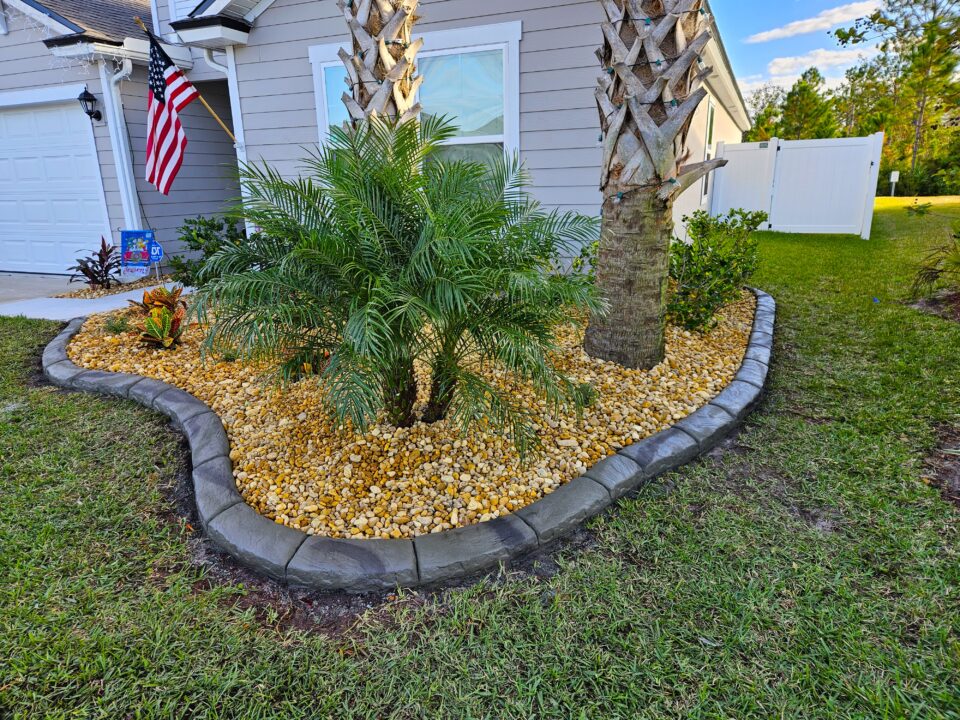
After planting, spread two to three inches of mulch over the bed, keeping it pulled back a few inches from stems and trunks. Mulch slows evaporation, keeps roots cooler in summer heat, and helps hold down weeds while the plants fill in.
Fall and early spring are comfortable seasons to plant here because temperatures are milder. If a storm is forecast, hold off on planting large trees until it passes, and stake young trees in exposed spots, removing the stakes once they are rooted in.
If you are planning a full bed or front yard, our landscaping services page explains the planting, mulch, stone and sod work we handle as part of a project.
Frequently asked questions
Should I add fertilizer when I plant?
Most new shrubs do not need a heavy dose of fertilizer at planting, and too much can burn roots in sandy soil. A light, slow release product used according to the label is usually enough. If you live in an area with seasonal fertilizer rules, follow those as well.
How do I know if a new plant is getting too much water?
Yellowing lower leaves, soggy soil that never dries between waterings, and a sour smell around the root ball are signs of overwatering. Push a finger into the root ball itself; it should feel moist, not muddy. Cut back if water is sitting around the plant.
Can I plant during the summer in Palm Coast?
Yes, with care. Summer heat dries out root balls quickly between storms, so new plants need consistent watering. Choosing heat tolerant plants and planting in the morning or late afternoon helps.
If you would like a hand planning or installing new plants, Udell’s Landscape Services works with homeowners throughout Palm Coast and Flagler County on landscape design in Palm Coast, plant installation and bed care. You can request a free estimate or call (386) 931-6539.