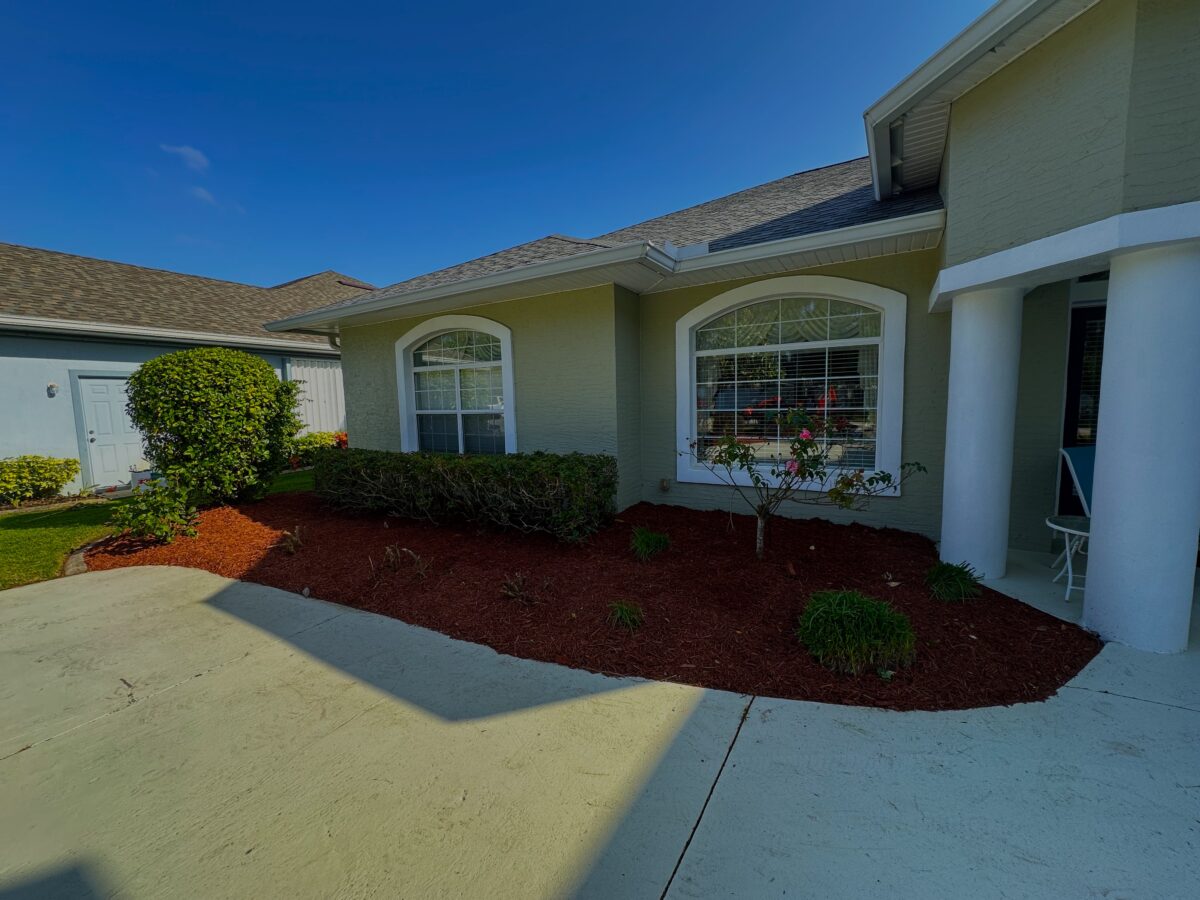
Landscape Bed Design: Curves, Borders and Plant Layers That Work
May 27, 2026Outdoor Lighting Ideas for Palm Coast Front Yards
June 23, 2026Getting your Palm Coast landscape ready for hurricane season is mostly about doing small jobs early: clearing dead wood and loose items, keeping drainage paths open, checking lighting and irrigation, and taking photos of the yard. A well kept yard cannot stop a storm, but it can mean less flying debris, less standing water and a much easier cleanup afterward. Atlantic hurricane season runs from June 1 to November 30, so these checks are worth doing at the start of the season and again before any named storm heads toward Flagler County.
Here is the checklist we use when we walk Palm Coast properties during storm season, plus a few things we suggest you skip.
What should you remove from the yard before a storm?
Anything that is dead, loose or light enough to move in high wind is the first priority. That usually includes:
- Dead or hanging branches on trees and large shrubs
- Brown, dead palm fronds and loose seed pods
- Plants that are already failing or leaning badly
- Loose pots, yard art, solar stakes and small decor
- Piles of yard waste waiting for pickup
Routine cleanup is much easier when it happens early in the season. Once a storm is in the forecast, everyone in town is trying to do the same thing at once, and curbside pickup schedules can get backed up. If your beds and shrubs have gotten away from you, our lawn cleanup services can get the property back in shape before the busy part of the season.
Should you hurricane cut your palms?
No. The so called hurricane cut, where most of the green fronds are stripped off and only a small tuft is left at the top, does not make a palm safer. Green fronds feed the palm, and removing too many can weaken it over time. UF/IFAS guidance on palm care recommends removing only fronds that are completely dead.
What does help:
- Removing fully brown fronds and loose fruit or seed stalks
- Keeping the trunk free of damage from string trimmers and mowers
- Calling a qualified tree professional for large trees near the house that look damaged or unstable
How do you check drainage before heavy rain?
Tropical storms often bring more trouble from water than wind. Palm Coast has sandy soil that usually drains well, but low spots, clogged swales and blocked downspouts can still flood beds and lawns quickly. Before and during the season:
- Clear leaves, mulch and debris from swales, drains and the path water takes away from the house
- Make sure downspouts discharge away from the foundation and are not buried under mulch
- Pull mulch and rock back where they have spilled into drainage paths
- Note any spot where water sat for days after a summer storm
Clean bed borders help here too. Decorative concrete curbing keeps mulch and stone in the beds instead of washing across the lawn or into the street when the rain comes down hard. If one area floods every year, it may be time to rethink the layout. Our post on designing around heavy rain in Palm Coast goes into more detail.
What about landscape lighting and irrigation?
Walk the yard and look at fixtures, wiring and sprinkler heads before the season gets busy:
- Make sure fixtures are firmly set and not leaning or loose
- Look for exposed or damaged wire runs
- Check that the transformer is mounted securely
- Note sprinkler heads that are broken, tilted or buried
After a storm, have any landscape lighting that was underwater, buried or disturbed checked before you use it again. It is also a good idea to turn off the irrigation system when heavy rain is in the forecast, since the ground will get plenty of water without it.
Why photograph your landscape before storm season?
A few minutes with your phone camera can save a lot of guesswork later. Take photos of every side of the house, each bed, large trees, lighting and any hardscape. Those photos help you remember what was planted where, compare damage after a storm, and plan repairs or a redesign with a clear starting point.
Store the photos somewhere other than just your phone, like a cloud folder or an email to yourself.
What to do after the storm passes
Once it is safe to go outside, start with safety and work your way to the plants:
- Stay clear of downed power lines and report them to the utility.
- Look for hanging branches and leaning trees before walking under them.
- Clear drains and swales so standing water can move.
- Gather debris and separate it the way your local pickup asks.
- Give damaged shrubs a little time. Many recover once they leaf out again.
When the immediate cleanup is done, damaged areas can be looked at with fresh eyes. Sometimes a few replacement plants are enough. Other times it makes sense to redesign a bed with tougher, wind and salt tolerant plants and better drainage.
Frequently asked questions
Should palms be hurricane cut?
No. Removing healthy green fronds weakens the palm and does not make it safer in a storm. Remove only fronds that are completely dead, along with loose seed stalks.
What should I clean up before a storm?
Start with dead branches, dead palm fronds, loose pots and decor, and piles of yard waste. Then clear drains and swales so heavy rain can move away from the house.
When should storm damaged landscaping be redesigned?
After hazards are cleared and the water has drained, give plants a few weeks to show whether they will recover. Then decide which areas need repair, replacement or a new layout.
Do I need to turn off my sprinklers during a hurricane?
It is a good idea. Heavy rain will water the yard on its own, and running sprinklers on saturated ground only adds to standing water.
Udell’s Landscape Services brings more than 20 years of landscaping experience to yards across Palm Coast and Flagler County. If you want help with pre-season cleanup, storm recovery or a more resilient landscape design in Palm Coast, contact us for a free estimate or see what affects the cost of landscape design in Palm Coast.