Native and Florida-Friendly Plants for Flagler County Landscapes
July 16, 2026
Palm Coast Irrigation and Landscape Design: Why They Should Be Planned Together
July 30, 2026Privacy landscaping works best when it solves a specific view instead of surrounding the entire property with one solid wall of plants. By studying sight lines, a designer can block what needs to disappear while keeping the yard open where views, sunlight and airflow are worth keeping.
In Palm Coast, where many homes sit close together and backyards often face each other across a fence or a canal, that approach gives you a yard that feels private and still feels open. Here is how we plan privacy plantings that actually work.
Identify the exact sight line
Stand where privacy matters most: the patio chair, pool deck, bedroom window or front porch. The location and height of the unwanted view decide where screening will be most effective.
It helps to check from a few spots, since a neighbor’s second story window might only be a problem from the lanai, while the street view only matters from the front porch. A few simple notes make the plan much clearer:
- Where you are sitting or standing when the view bothers you
- How high the view is, from fence height to a second floor window
- How wide the area is that needs screening
- Whether you need privacy all year or mostly during the months you use the yard
Often only one or two short stretches of the property line need real screening. Focusing there saves space, money and maintenance.
Layer instead of building one green wall
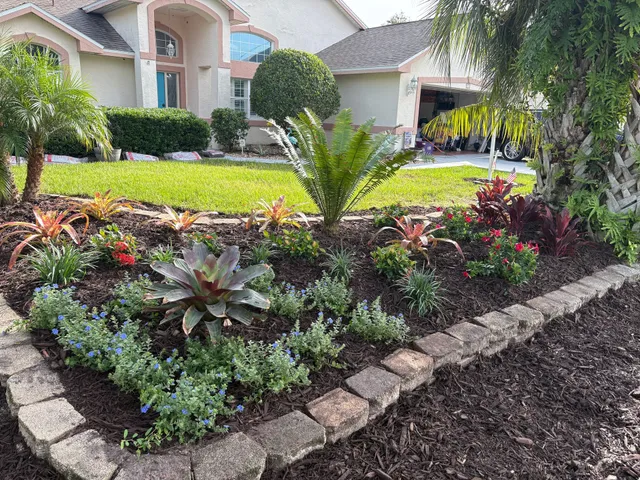
Combining taller screening with medium shrubs and lower accents creates depth and usually feels more natural than one continuous hedge. A layered bed also holds up better over time, since the yard does not depend on a single row of plants staying perfect.
- Back layer: taller shrubs or small trees placed where they block the view that matters most
- Middle layer: medium shrubs or ornamental grasses that soften the line and add texture
- Front layer: low plants or groundcover that finish the bed and keep it looking tidy
Mixing plant types also means a pest problem or a cold night is less likely to open a gap in your whole screen at once.
Respect mature size
Fast-growing screening can quickly become a maintenance burden if it is installed too close to fences, structures or neighboring property. Plants that look small at planting can push against a fence, crowd a lanai screen or block an AC unit within a few years.
Spacing should be based on how wide each plant will get, not how it looks the day it goes in. A bed that looks a little open for the first season usually looks right for years after, while a crowded bed turns into constant trimming. Our guide to landscape design for shade and sun areas can help you match screening plants to the light they will actually get.
Preserve useful open space
Not every boundary needs dense planting. Keeping selected areas open can make the yard feel larger, let breezes through and keep sun on the lawn or garden beds.
A good backyard plan gives each area a job, with screening where it is needed and open space for kids, pets or entertaining. We walk through that zone approach in more detail in backyard landscape design in Palm Coast.
Consider nighttime privacy
Privacy is not only a daytime question. Lanais and patios get a lot of use after dark in Palm Coast, when it is finally cooler outside.
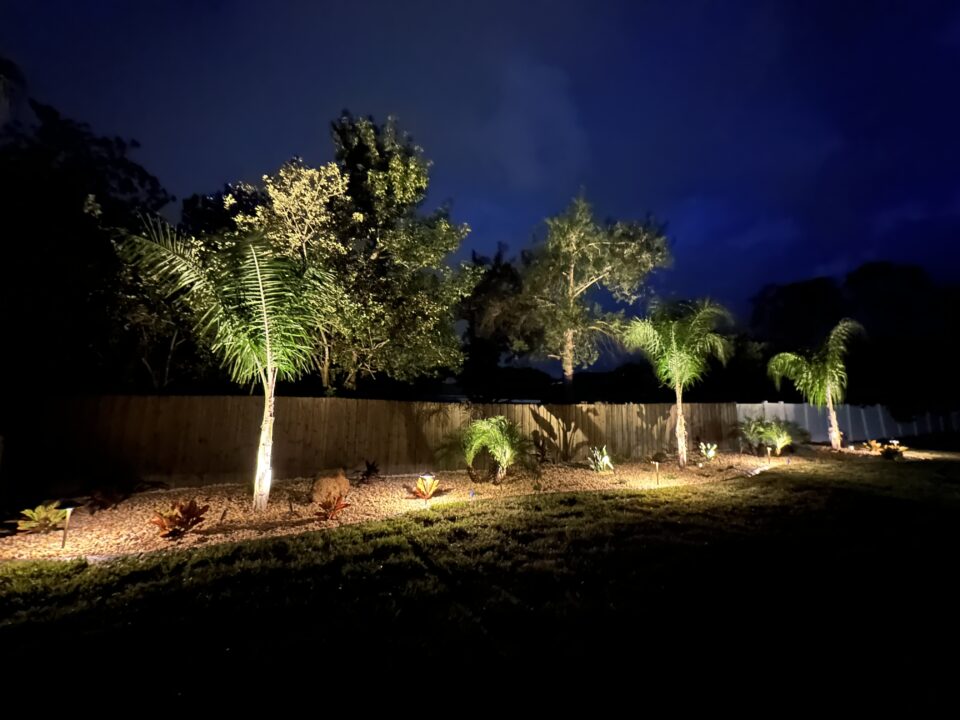
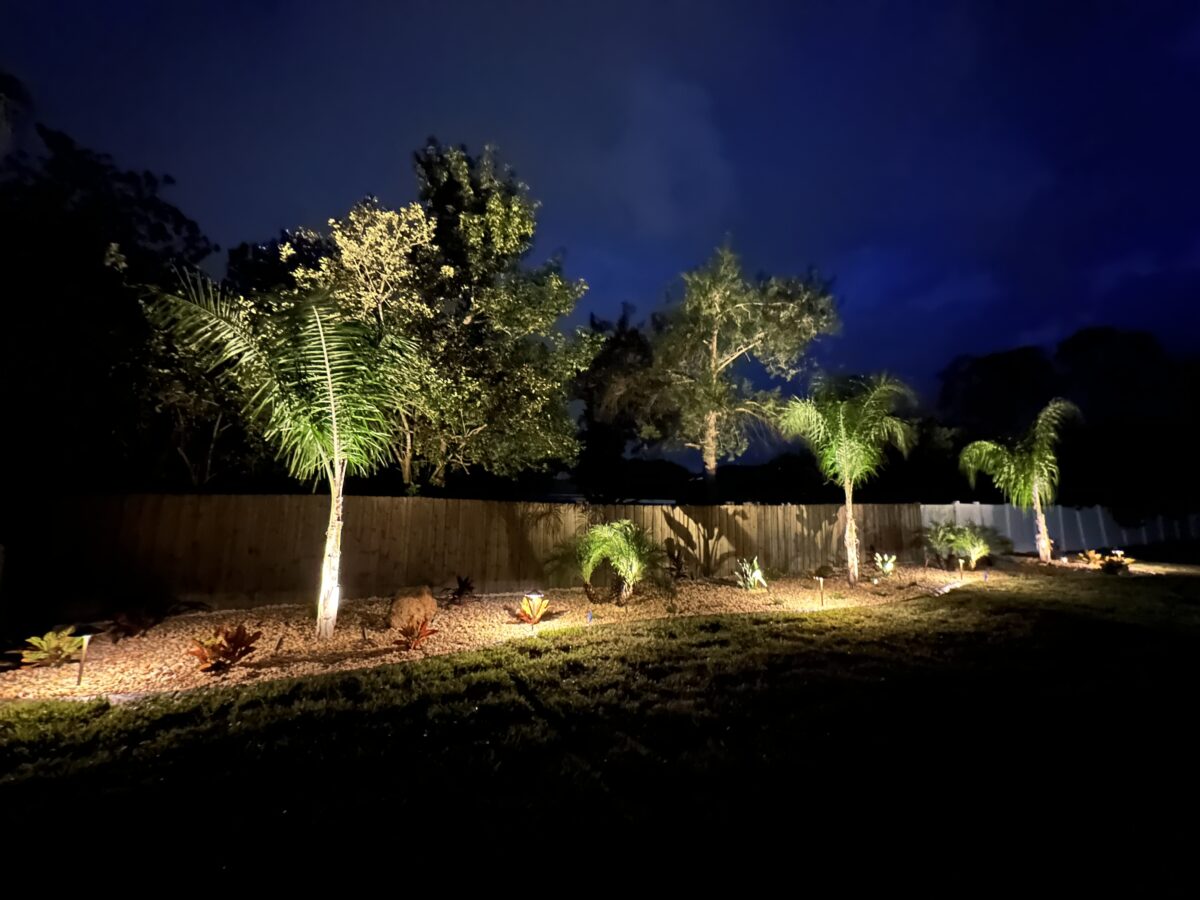
Landscape lighting should be aimed so it lights up your space without throwing glare into a neighbor’s windows. Soft uplighting on a screening tree or a layered bed can make the edge of the yard feel finished at night, while lights aimed down and away keep things comfortable on both sides of the fence.
Keep privacy beds easy to maintain
Screening beds along a fence line are easy to forget until they become overgrown. A few choices up front keep them manageable:
- Leave a narrow access path between the bed and the fence for trimming and fence repairs
- Define the bed edge so grass and weeds do not creep in. Decorative concrete curbing holds that line and keeps mulch or stone in place
- Choose plants suited to the sun, soil and space so they do not need constant shaping
- Check that irrigation reaches the whole bed, especially the back layer near the fence
Local landscape planning matters in Palm Coast and Flagler County
Florida landscaping is very site specific. Conditions can change from one side of a home to the other, and coastal exposure, drainage, shade, irrigation coverage and mature plant size all affect the finished result. UF/IFAS Extension promotes Florida-Friendly Landscaping practices built around appropriate plant selection and responsible maintenance. Homeowners should also check current City of Palm Coast watering rules when irrigation is part of the project.
If your property needs a more intentional layout, Udell’s Landscape Services has more than 20 years of experience with landscape design in Palm Coast and across Flagler County. Explore our landscaping services, or contact us to talk through your property.
Frequently asked questions
What is the best landscaping for backyard privacy?
The best option depends on the view being screened, the width of the space, sunlight and how much upkeep you want. Layered screening with taller plants at the back and lower plants in front is often more flexible than a single hedge.
How close should privacy plants be planted?
Spacing should be based on each plant’s mature width and how dense you want the screen to be, not how small the plants look at installation. Leaving room from fences and structures also makes trimming and repairs easier later.
Can landscaping add privacy around a patio?
Yes. Planting that targets the sight lines from where you sit can make a patio feel private without enclosing the entire yard. A few well placed shrubs or a small tree often do more than a long hedge.
Do privacy plantings work in a small Palm Coast backyard?
They can, as long as the plants are chosen for the space. In narrow beds, upright plants and a layered front edge give screening without eating up the whole yard.
Local note: Landscape and irrigation conditions, watering restrictions and property requirements can change. For current regulatory or horticultural guidance, check with the City of Palm Coast and UF/IFAS Extension Flagler County.