An October-Ready Landscape Handoff for Your September Project
September 30, 2026
What Affects Landscape Design Cost in Palm Coast, FL?
October 7, 2026Landscape design in Palm Coast usually follows a simple path: a visit to walk the property, a conversation about how you use the yard, a plan that fits our sandy soil, sun and salt air, and then installation in a sensible order. Most of the work happens before a single plant goes in the ground. When the planning is right, the install goes smoothly and the yard keeps looking good long after the crew leaves.
We get asked about this a lot, so here is how the process looks from the first visit to the finished yard, and what you can do to get the most out of it.
What happens at the first landscape design visit?
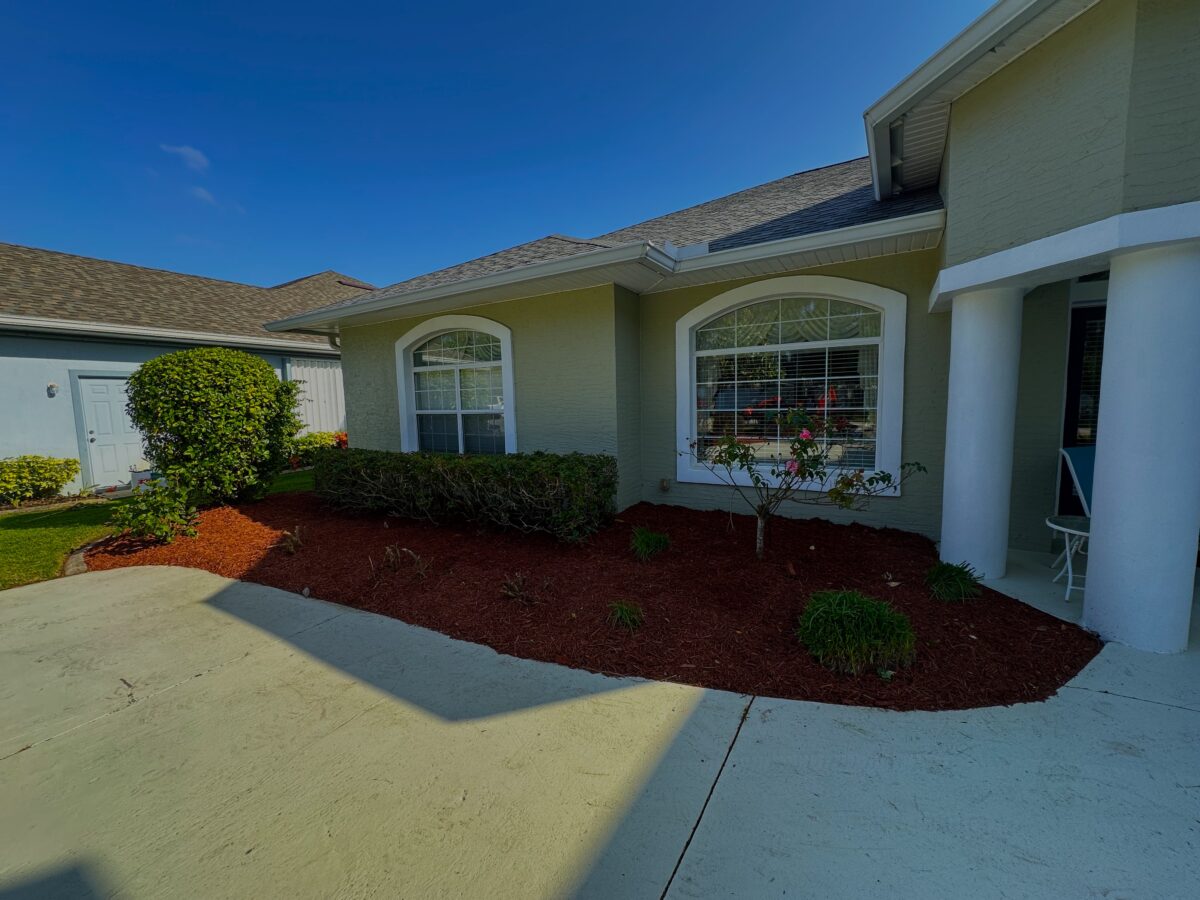
Every project we take on for landscape design in Palm Coast starts the same way. The first visit is mostly listening and looking. We walk the whole property with you, front and back, and talk about what is working, what is not, and what you want the yard to do for you. Some homeowners want curb appeal for the street. Others want less to maintain, a cleaner look around the pool cage, or a backyard that feels finished.
While we walk, we are noting the things that shape every good plan:
- Where the sun hits in the morning and where it bakes in the afternoon
- Low spots where water sits after a summer storm
- Sprinkler heads, utility boxes, AC units and pool equipment that need access
- Existing plants and trees worth keeping
- Views from inside the house, not just from the street
- HOA rules, which matter a lot in many Palm Coast neighborhoods
It helps if you bring a few photos of yards you like, even if they are not from Florida. We can talk through what would actually thrive here and what would struggle.
How do Palm Coast conditions shape the design?
Good landscape design in Palm Coast has to start with local conditions, because a plan that looks great on paper can fail fast if it ignores them. Palm Coast and the rest of Flagler County have sandy soil that drains quickly and holds few nutrients, long hot summers, heavy afternoon rain in the wet season, and dry stretches in spring. Homes closer to the Intracoastal and the beach also deal with wind and salt spray.
That is why we follow the idea of putting the right plant in the right place. A plant that loves full sun will sulk on the shady north side of the house, and a shade lover will scorch in an open west facing bed. The UF/IFAS Florida-Friendly Landscaping program is a good resource if you want to read more about this approach. In practice it means grouping plants with similar water and light needs, giving them room to reach their mature size, and choosing tougher, salt tolerant plants for exposed coastal spots.
Drainage and irrigation belong in the same conversation. If a bed sits where runoff from the roof lands, the design has to account for it. We wrote more about that in our post on planning irrigation and landscape design together.
What goes into the landscape plan?
Once we understand the property and your goals, we put together a plan that covers the layout and the materials. A typical plan includes:
- Bed shapes and sizes. Smooth curves that are easy to mow around usually look better and work better than lots of tight corners.
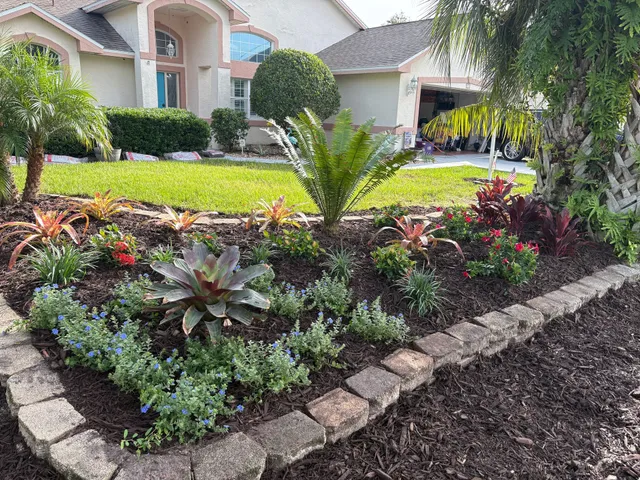
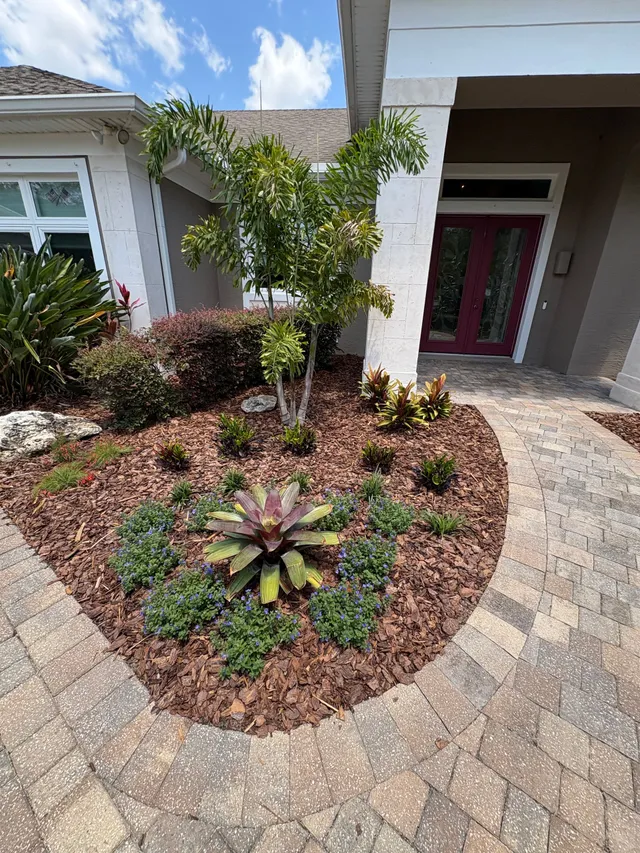
- Plant choices and placement. Taller plants toward the house or fence, mid size shrubs in the middle, and low groundcovers or accent plants along the front edge.
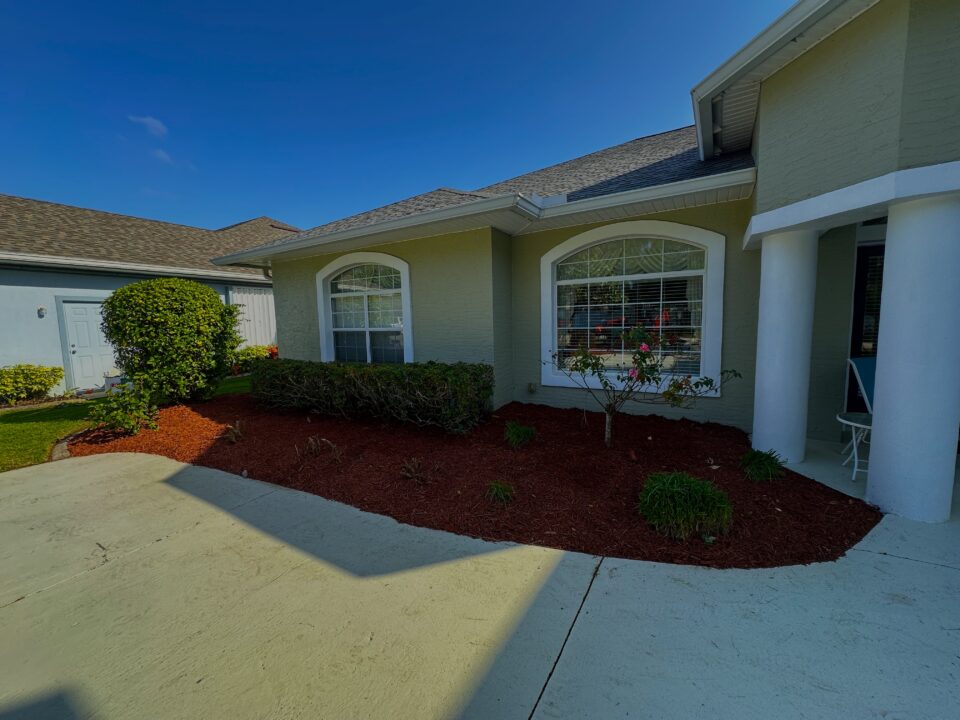
- Ground cover material. Mulch, rock or a mix, depending on the look you want and how much upkeep you are comfortable with.
- Borders. Edging that keeps mulch, rock and grass where they belong, such as decorative concrete curbing.
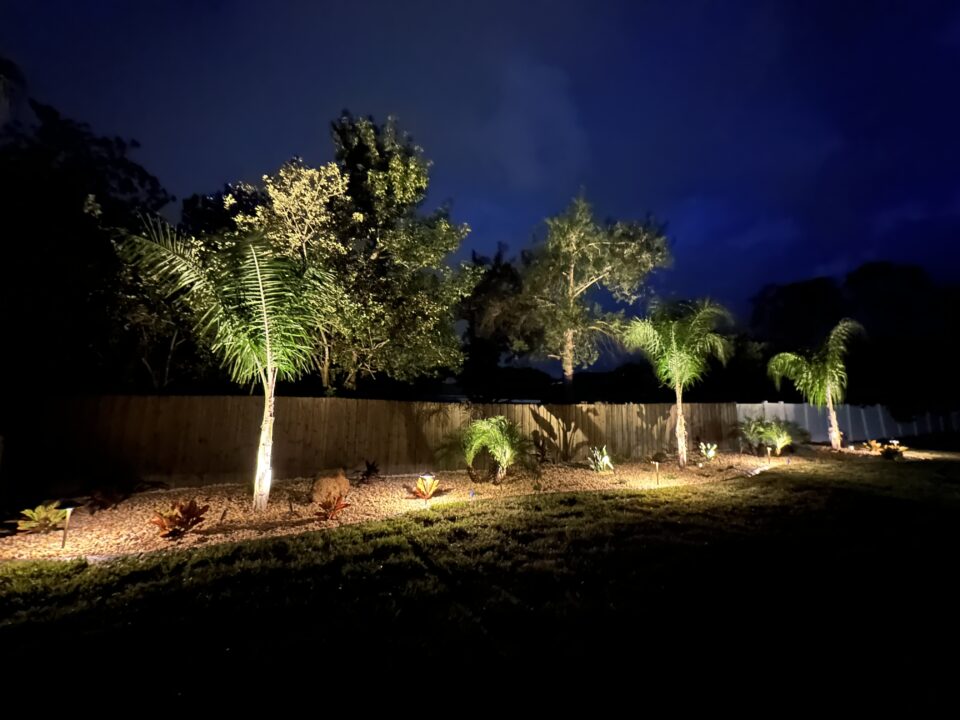
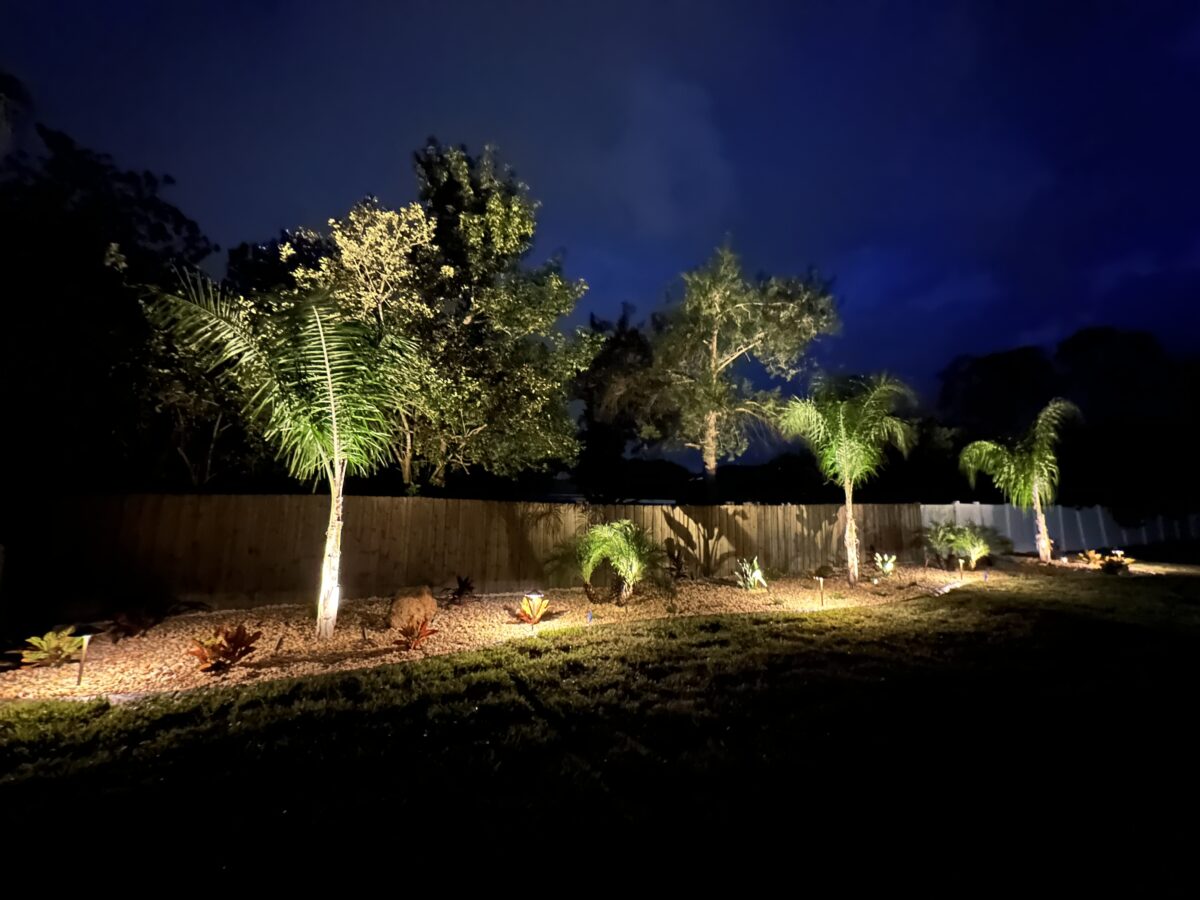
- Lighting and finishing touches. Spots where path or accent lighting would help at night.
We try to keep the plan practical. A good design should be easy to understand, easy to maintain and easy to add to later if you want to do the project in phases.
What are the steps from plan to finished yard?
Installation goes in an order that protects the work already done. Here is the usual sequence we follow for landscape design in Palm Coast yards:
- Cleanup and removal. Old shrubs, weeds, worn out mulch and anything that is not staying come out first.
- Bed layout. We mark the new bed lines on the ground so you can see the shapes before anything is permanent.
- Soil and grading touch ups. Low spots and problem areas get addressed while the beds are open.
- Irrigation adjustments. Heads get moved or redirected so new beds and the lawn both get the right coverage.
- Curbing or edging. Borders go in before plants so the lines are clean.
- Planting. Plants are set at the right depth and spacing for their mature size.
- Mulch or rock. The finishing layer goes down last and ties everything together.
- Lighting and walkthrough. Any lighting gets set and aimed, and we walk the yard with you to go over watering and care.
Not every project needs every step. A front bed refresh might only need cleanup, new plants and mulch. A full redesign for a new build might need all of them. You can see the kind of work this covers on our landscaping services page.
What affects the scope and cost of landscape design in Palm Coast?
Every yard is different, so we give free estimates after seeing the property instead of quoting a flat number. These are the main things that move the scope up or down:
| Factor | Why it matters |
|---|---|
| Size of the area | More square footage means more plants, material and labor. |
| Removal needed | Pulling out old shrubs, roots and stumps adds time before the new work starts. |
| Plant size at install | Larger plants fill in faster but cost more than smaller ones that need time to grow. |
| Mulch, rock or both | Rock and mulch have different material and installation needs. |
| Curbing and lighting | Borders and low voltage lighting add to the scope but also to the finished look. |
| Irrigation changes | Moving heads or adding zones depends on the existing system. |
If the budget is tight, phasing is a smart option. Many homeowners start with the front yard and come back for the backyard later, using the same plan so it all fits together.
How can you prepare for your landscape design consultation?
A little prep makes the first visit more useful for both of us:
- Check your HOA guidelines for approved plants, rock colors or approval steps
- Think about how much time you want to spend on yard care each month
- Note any trouble spots, like a bed that floods or a corner where nothing grows
- Save a few photos of yards or styles you like
- Decide if you want to do everything at once or in phases
If you are still deciding whether your yard needs a full redesign or just a refresh, our post on signs your front yard is ready for a redesign can help. And if you are comparing companies, these questions to ask before hiring a Palm Coast landscaper are worth a look.
Frequently asked questions
How long does landscape design in Palm Coast take?
It depends on the size of the project. A single front bed refresh can often be finished quickly once it is scheduled, while a full front and back redesign takes longer because of removal, irrigation changes and curbing. We will give you a realistic timeline when we look at the property.
Is there a best time of year for landscape design in Palm Coast?
Fall and early spring are comfortable times to plant because the heat is milder and new plants have time to settle in. That said, we plant year round in Flagler County, and summer installs work well with steady watering. The planning part can start any time.
Can you work with the plants I already have?
Yes. Healthy, well placed plants and trees are often worth keeping, and building around them can keep the project simpler. We will point out which ones fit the new plan and which ones are struggling or outgrowing their space.
Do I need a design for a small yard?
Small yards benefit from a plan just as much as large ones, maybe more, because every plant is in view. A simple layout with the right plant sizes keeps a small space from looking crowded a year or two later.
Talk with a local team about your yard
Udell’s Landscape Services brings more than 20 years of landscaping experience to landscape design in Palm Coast and across Flagler County. If you would like us to walk your property and talk through ideas, you can reach us through our contact page or call (386) 931-6539 for a free estimate.