Best Landscaping Services for Palm Coast Property Enhancements
May 4, 2026Why Flagler Beach Homes Need Salt-Tolerant Landscaping
May 4, 2026Shrub removal makes sense in Flagler County when a plant is dead or mostly dead, has outgrown its space so badly that trimming can no longer control it, keeps getting sick, or is an invasive species. Once the old shrubs are out, the bed can be redesigned with plants that fit the space at full size and suit our sandy soil, heat and humidity. A well planned redesign usually means less trimming and fewer replacements down the road.
Signs it is time to take a shrub out
Not every tired shrub needs to go. A heavy trim, better watering or a fresh layer of mulch can bring many plants back. Removal is the better choice when you see one or more of these:
- More than half of the plant is bare or brown and it has not recovered after a full growing season.
- It is far too big for its spot, covering windows, pushing on the roof line or blocking a walkway even right after trimming.
- The same problem keeps coming back, such as persistent scale, sooty mold or root rot in a spot that stays wet.
- Roots are crowding the foundation, a slab or irrigation lines.
- It is an invasive plant. Brazilian pepper, for example, is a well known invasive in Florida and is best removed and not replaced with the same thing.
Older Palm Coast neighborhoods often have foundation shrubs that were planted when the house was built and have simply aged out. They may have been sheared into boxes for twenty years and now have green only on the outer inch. That is usually a sign the bed is ready for a fresh start.
What the removal process involves
Pulling a mature shrub is more work than it looks. The visible part is easy to cut down, but the root mass is what matters for whatever you plant next. Here is the general order we follow:
- Cut the shrub down to a manageable stump and haul the branches away.
- Dig out the main root ball and as many of the larger roots as practical. Leftover stumps can sprout again, and large roots make it hard to plant in the same spot.
- Check for irrigation lines, low voltage lighting wire and anything else buried in the bed before digging deep. For deeper digging, Florida’s 811 service can locate underground utilities.
- Fill the holes and level the bed so it drains away from the house.
- Remove old landscape fabric, rotted mulch and weeds so the new layout starts clean.
If a shrub was removed because of a root disease, it is wise not to put the same type of plant right back in that spot.
Redesigning the bed instead of just refilling it
The easy move after a removal is to buy the same shrub and plant it in the same hole. That is how many yards end up repeating the problem. A better approach is to step back and rethink the bed as a whole.
A few questions we ask before choosing new plants:
- How much sun does the bed get in summer, when the sun is high, compared to winter?
- How tall can plants get before they block windows, outlets or the view from the street?
- Does the bed hold water after a summer storm, or does it dry out fast?
- Is the home close enough to the ocean to get salt spray?
- Does your HOA have an approved plant list or rules about front yard changes?
The answers usually point toward fewer, smaller shrubs spaced for their mature size, with layers that step down from taller plants near the house to low groundcovers or grasses at the front edge. Our post on refreshing old landscaping without starting over covers how to keep the plants that are still worth saving.
Better picks for Flagler County beds
Many native and Florida-Friendly plants handle sandy soil and summer heat well once established. Depending on sun and space, good replacements might include:
- Coontie: a low, tough native cycad for sun or part shade.
- Dwarf yaupon holly: naturally compact and salt tolerant, a good swap for boxwood style foundation plants.
- Firebush: a native that flowers through the warm months and draws butterflies and hummingbirds, best where it has room to grow.
- Muhly grass: a clumping native grass with pink fall plumes that needs very little care.
- Simpson’s stopper: a native shrub that can be kept as a medium hedge.
The UF/IFAS Florida-Friendly Landscaping principles are a helpful guide for putting the right plant in the right place. You can also browse our list of native and Florida-Friendly plants for Flagler County.
Finishing the new bed
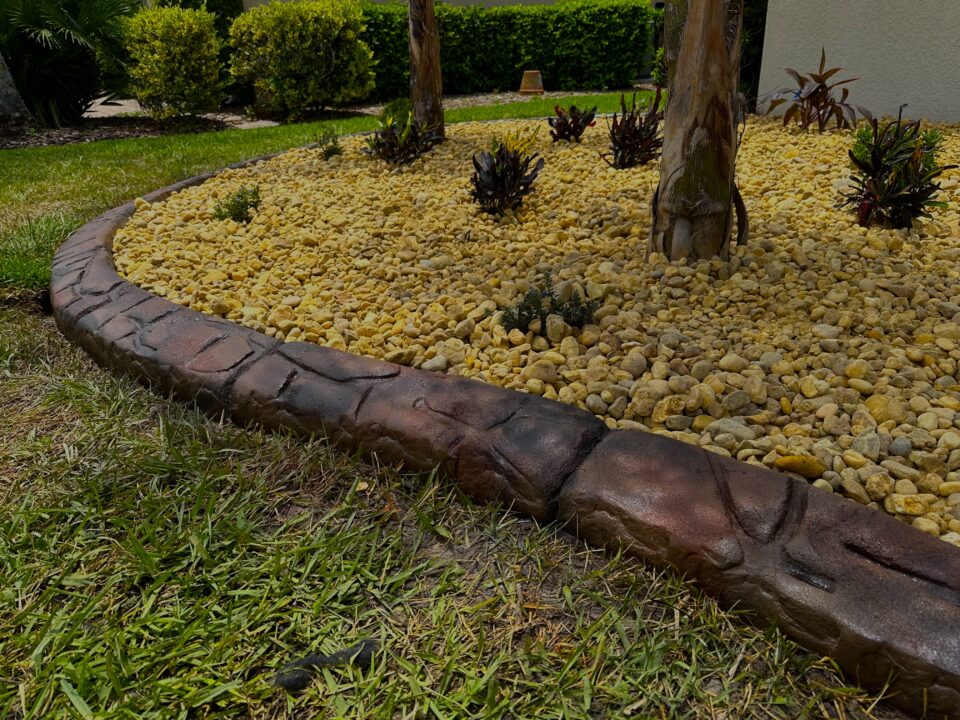
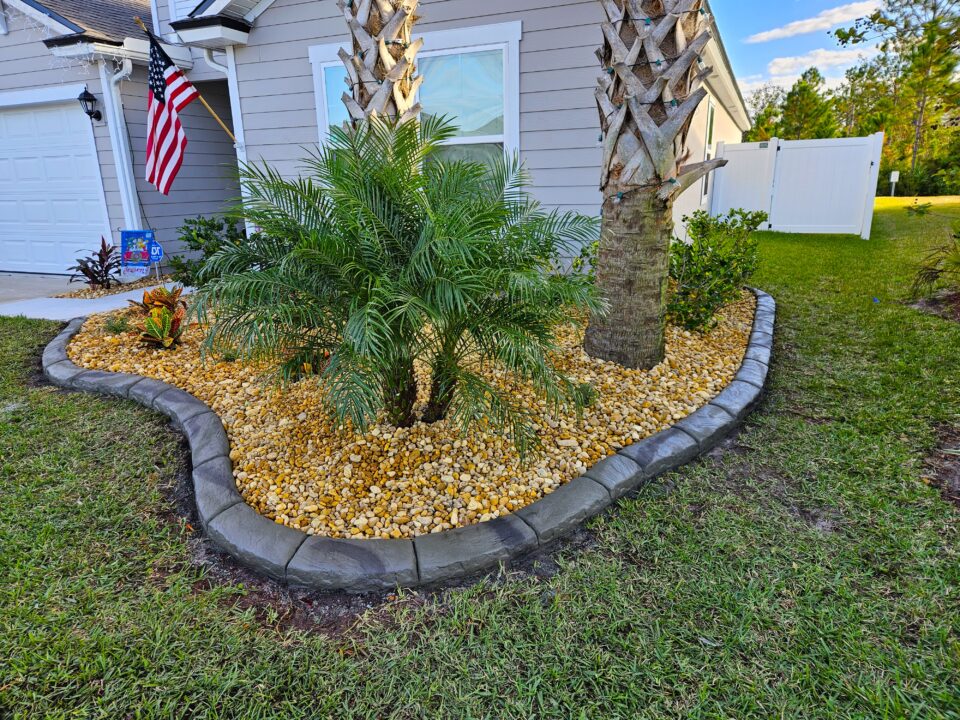
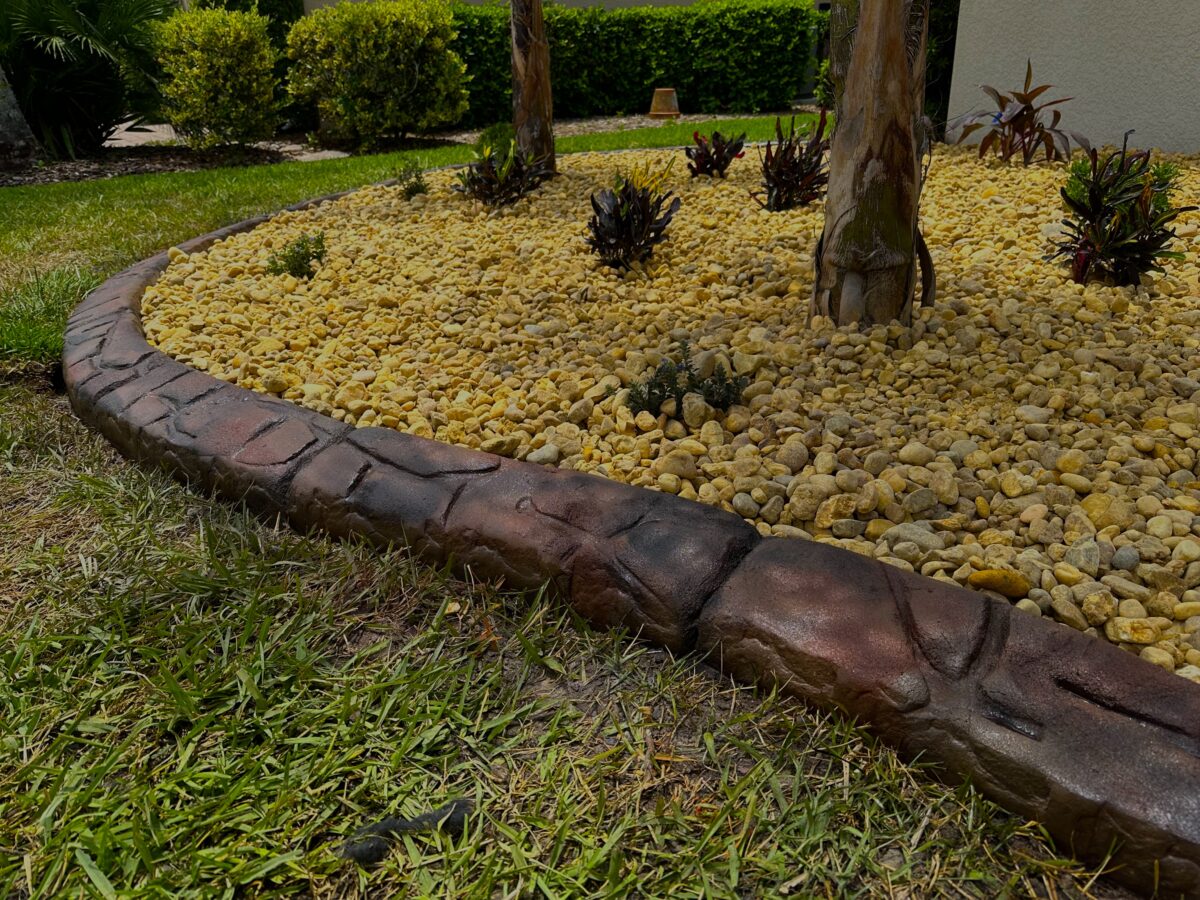
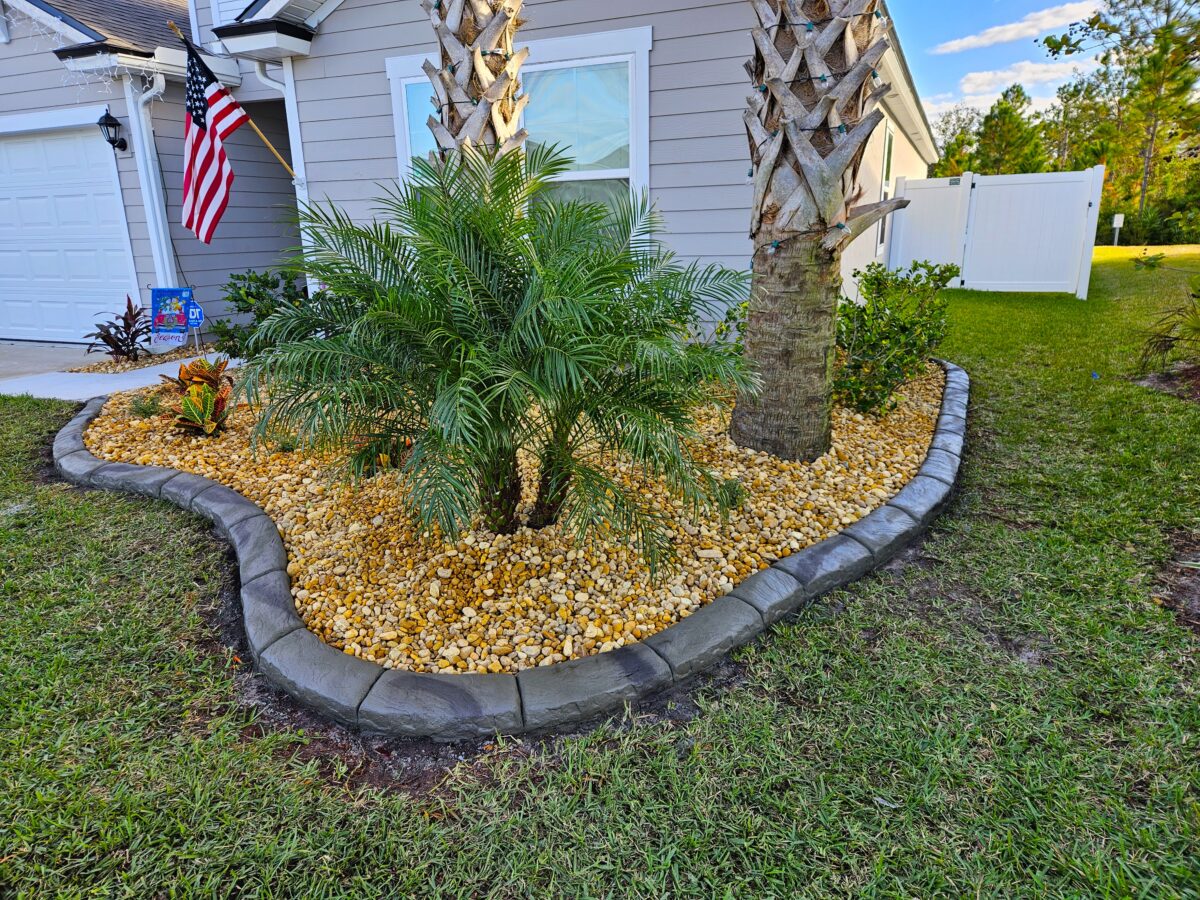
Once the plants are chosen, the finishing touches keep the redesign looking clean. Reshape the bed edge, adding curves if the old line was a stiff rectangle. Decide between mulch and stone based on how much you want to maintain. Then add a defined border so material stays in the bed. Plant at the correct depth, water steadily for the first several weeks, and give the new layout a season to fill in before judging it.
Frequently asked questions
Do I need to grind the stump of a large shrub?
If you plan to plant in the same spot, removing or grinding the stump makes planting much easier and helps prevent regrowth. If the area will just be mulched over, a flush cut may be enough for some shrubs, though many species will try to sprout again.
When is the best time to replant after removing shrubs?
You can replant right away once the bed is cleaned out and leveled. Fall and early spring are comfortable times in Flagler County, but summer works if new plants get steady water.
Will my HOA need to approve a bed redesign?
Many Palm Coast associations require approval for changes visible from the street, especially if you are removing plants or changing the layout. Check with your HOA before work starts so there are no surprises.
Udell’s Landscape Services removes old shrubs and redesigns beds for homeowners in Palm Coast and throughout Flagler County. You can see examples of our work in the gallery or learn more about landscape design in Palm Coast. When you are ready, request a free estimate or call (386) 931-6539.