How to Tell if Palm Coast Landscaping Advice Is Actually Useful
May 4, 2026Palm Coast Landscape Design for Front Yards
May 4, 2026Good landscape design for homes near the coast starts with plants that tolerate salt spray, wind and dry sandy soil, then arranges them so the toughest plants shield everything behind them. In Palm Coast and around Flagler Beach, that usually means salt tolerant natives like sea grape, saw palmetto, sabal palm and beach sunflower on the exposed side, with more delicate plants tucked closer to the house. Layout, hardscape materials and drainage matter just as much as the plant list.
A yard a few blocks from the ocean faces very different conditions than one by a pond in western Palm Coast. Here is how we plan coastal landscapes so they hold up year after year.
Figure out how much salt your yard really gets
Salt exposure is not the same everywhere near the coast. It drops off quickly with distance, buildings and existing vegetation. Before choosing plants, it helps to sort your property into rough zones.
| Exposure | Typical location | What it means for plants |
|---|---|---|
| High | Oceanfront, directly facing the dunes, or windward sides with nothing in between | Only highly salt tolerant plants will thrive |
| Moderate | A few lots back, or protected by a wall, fence or row of tough plants | Many salt tolerant shrubs and groundcovers do well |
| Low | Sheltered courtyards, the leeward side of the house, or farther inland near the Intracoastal | A wider range of Florida-Friendly plants will work |
A single property can have all three. The east facing front yard might take a beating while a fenced back courtyard is fairly protected. Signs of heavy salt include browned leaf edges on the side facing the wind and plants that look burned after a strong onshore breeze.
Build a windbreak with layers
Along the coast, plants work as a team. A layer of very tough, salt tolerant shrubs on the exposed edge slows wind and catches salt spray, which creates calmer conditions for the plants behind it.
- Front line: Highly salt tolerant plants such as sea grape, saw palmetto and sabal palm.
- Middle layer: Moderately salt tolerant shrubs that fill in behind the front line.
- Inner layer: Plants near the house or in courtyards that would struggle in direct spray.
Layering also looks natural, echoing the way coastal vegetation grows on its own. Our post on why Flagler Beach homes need salt-tolerant landscaping goes deeper on plant choices for the most exposed lots.
Plants that handle coastal conditions
These plants are commonly used in Northeast Florida coastal landscapes. Salt tolerance varies, so match each one to the zones above.
- Sea grape: Big round leaves and very high salt tolerance. It can be kept as a hedge or allowed to grow into a small tree, though it can be damaged by hard freezes.
- Saw palmetto: A tough native palm that handles salt, wind and sand. The silver form is especially striking.
- Sabal palm: Native, wind firm and well suited to coastal sand.
- Beach sunflower: A cheerful spreading groundcover for sunny, sandy spots.
- Coontie: A slow growing native cycad with good salt tolerance for low borders.
- Muhly grass: A native clumping grass that adds soft texture and fall color.
- Yaupon holly: A native that takes salt reasonably well and can be shaped as a hedge.
One important note for oceanfront properties: sea oats and other dune plants are protected in Florida, and work on or near the dune is regulated. Check with the city and state before disturbing any dune vegetation.
Plan the layout around wind and storms
Coastal homes get the full force of tropical storms during hurricane season, June 1 through November 30. A few design choices reduce damage and cleanup:
- Place trees thoughtfully. Keep large trees a safe distance from the house and roofline. Native palms like sabal palms tend to handle wind better than many broadleaf trees.
- Avoid tall, top heavy plantings in the most exposed spots, where they can be blown over.
- Use heavier materials. Larger stone and well anchored borders stay put better than light mulch or small gravel when wind and water move through.
- Leave room for water to move. Storm surge is beyond what landscaping can control, but heavy rain needs a path away from the home. Beds and borders should not block natural drainage.
Our post on preparing Palm Coast landscaping for hurricane season covers seasonal steps to take before storms.
Choose hardscape and lighting that resists salt
Salt air does not just affect plants. It corrodes metal and wears down finishes faster than you might expect.
- Pick lighting fixtures made of brass, copper or quality composite rather than thin painted metal.
- Choose stainless or coated hardware for trellises, gates and edging.
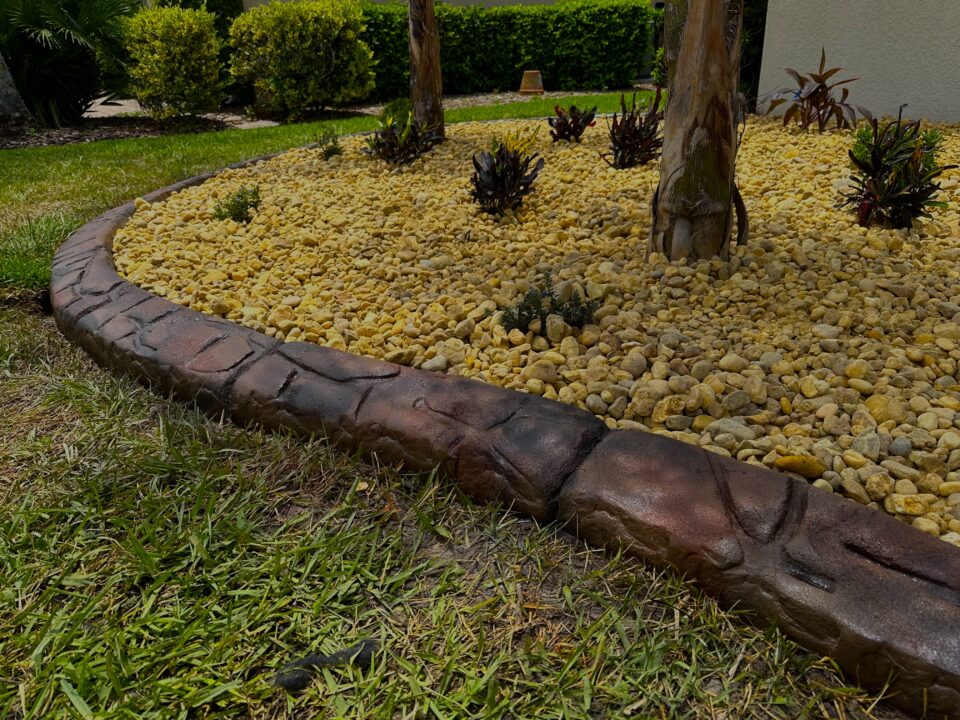
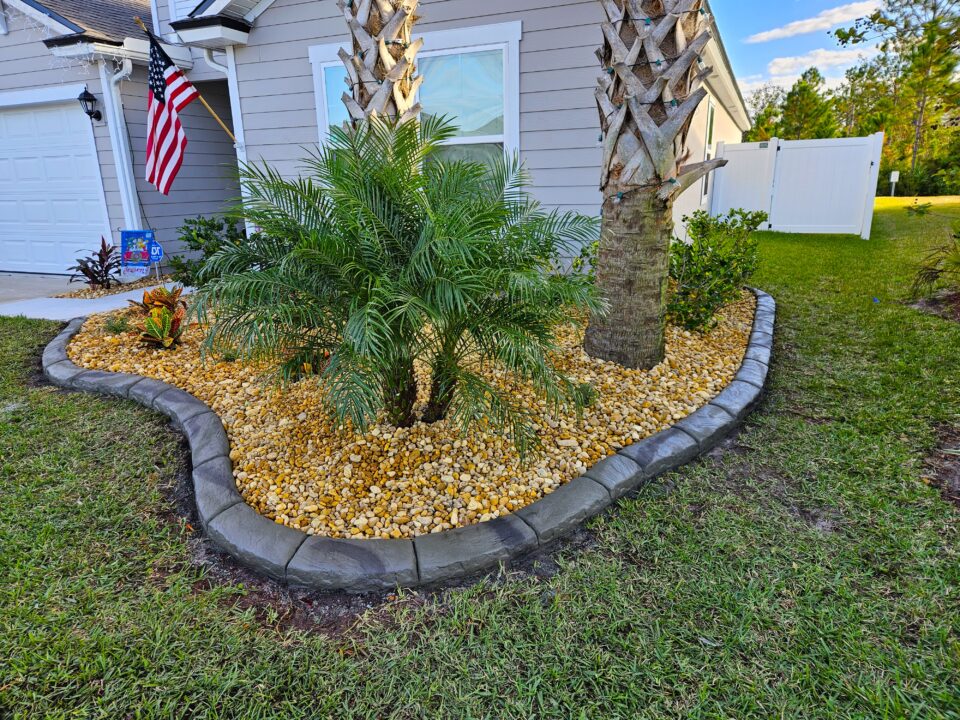
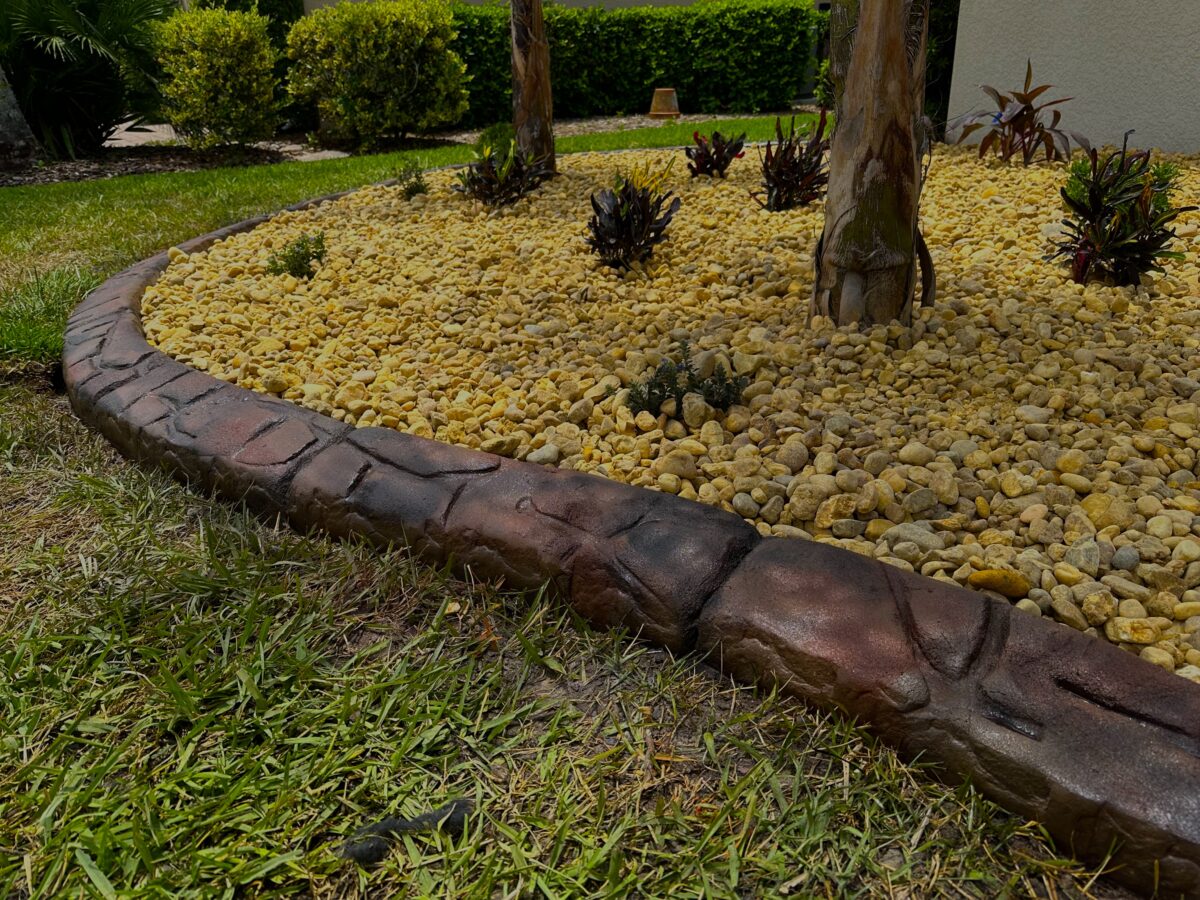
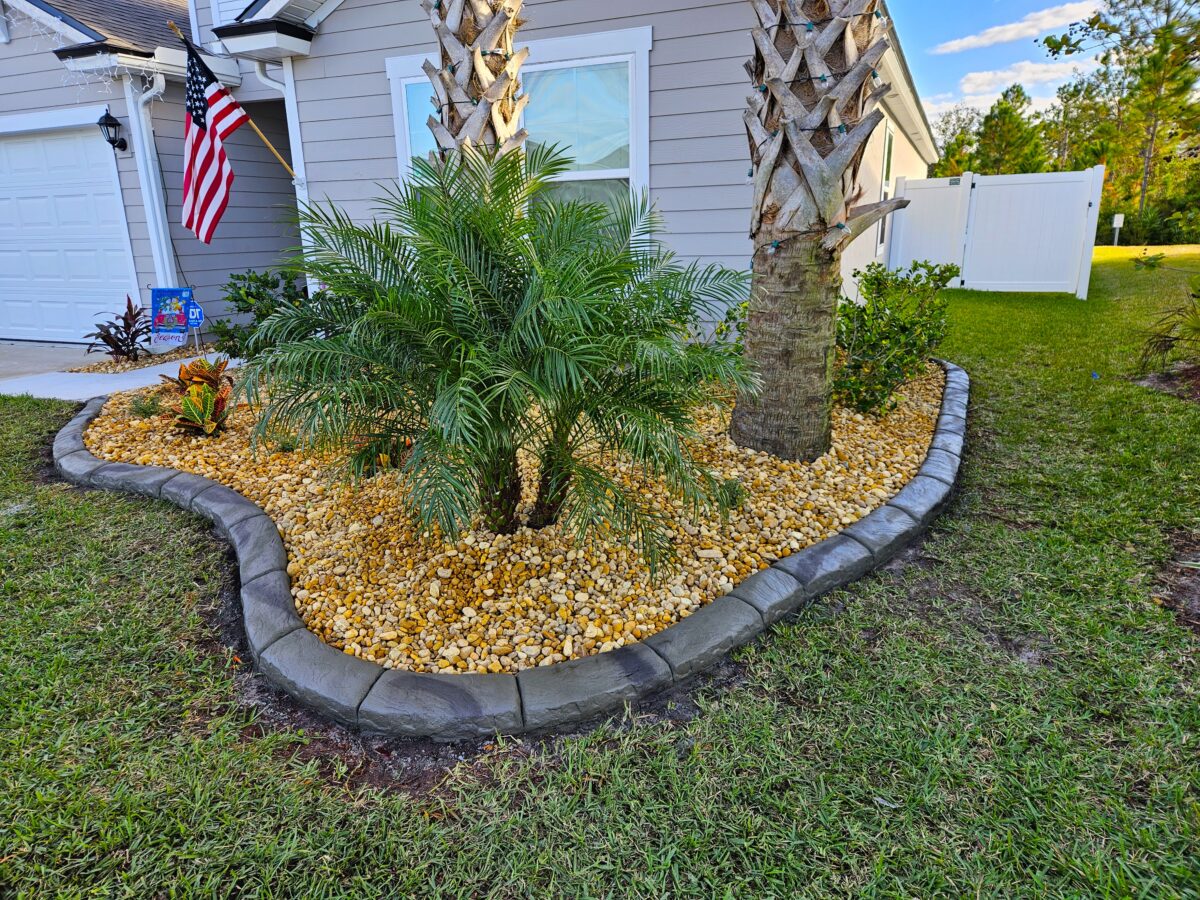
- Concrete curbing and natural stone hold up well to salt air and give coastal yards a clean, durable structure.
- Rinse outdoor fixtures and furniture with fresh water now and then, especially after onshore storms.
You can find more on durable borders on our decorative concrete curbing page.
Keep coastal maintenance realistic
Coastal landscapes can be low maintenance, but they still need some care. Sand blows into beds, salt can build up on leaves, and fast draining soil means new plants need careful watering while they establish. A good coastal design leans on plants that want these conditions, so ongoing work stays light. In HOA communities near the beach, check with your HOA about plant lists and approved materials before you start.
Frequently asked questions
How far inland does salt spray affect plants in Palm Coast?
The heaviest exposure is in the first few rows of homes from the ocean, and it falls off as buildings and trees block the wind. Homes farther inland usually have much less salt to worry about, though strong storms can carry spray farther.
Can I have a lawn near the beach?
Yes, but it may need extra care. Some turfgrasses tolerate salt better than others, and many coastal homeowners shrink the lawn and use salt tolerant groundcovers and beds instead.
What is the toughest hedge plant for a coastal yard?
Sea grape is one of the most salt tolerant options for exposed spots, and saw palmetto works well for a lower, natural border. A licensed professional can help match a hedge to your exact exposure.
Udell’s Landscape Services is a locally owned company serving homes near the water and farther inland across Palm Coast and Flagler County, and owner Corey Udell brings more than 20 years of experience to every yard. If you are planning landscape design in Palm Coast close to the water, you can request a free estimate or call (386) 931-6539.