Spring Landscape Refresh Ideas for Palm Coast Properties
April 22, 2026Storm Debris Removal for Flagler County Yards
May 4, 2026A cleanup for an overgrown Palm Coast yard usually means clearing brush and vines, pulling weeds out of beds, cutting back shrubs, re-establishing edges, hauling away the debris and finishing with fresh mulch. Most overgrown properties can be brought back to a clean, manageable state in one visit or a short series of visits, depending on size. The goal is not just a tidy afternoon but a yard that is easy to keep up afterward.
Yards get away from people for all kinds of reasons. A long trip, a busy year, a rental between tenants, a new house that sat empty, or just a rainy summer where everything doubled in size. In Flagler County, a few months of heat and rain is all it takes. Here is what the process looks like, step by step.
Step one: walk the property and decide what stays
Before any cutting starts, we walk the yard with the owner. Overgrowth hides things, and it is much easier to save a plant than to replace it. During the walkthrough we look for:
- Shrubs and trees worth keeping, even if they are shaggy right now
- Plants that are dead, diseased or simply in the wrong place
- Invasive or volunteer plants, such as seedlings that sprouted in beds or along fences
- Hidden obstacles like irrigation heads, landscape lights, sprinkler lines and old edging
- Drainage problems that may have helped the overgrowth along
This is also a good time to agree on what “done” looks like. Some people want a full reset. Others just want the jungle pushed back so they can see the house again.
Step two: clear the heavy growth
The biggest visual change comes from removing brush, vines and volunteer saplings. Vines can climb into shrubs, wrap around fences and even work their way under siding or into screen enclosures, so they need to be cut and pulled at the base, not just trimmed back.
A word of caution if you are tackling this yourself: overgrown Florida yards can hide poison ivy, fire ant mounds, wasp nests and the occasional snake. Wear gloves, long sleeves and closed shoes, and look before you reach into thick growth.
Step three: bring the beds back
Once the brush is gone, the beds usually need the most hands-on work.
- Pull weeds by the root. In our sandy soil, many weeds come out fairly easily when the ground is moist. Grasses that have crept into beds need to be dug out, or they come right back.
- Remove old, matted mulch if it has broken down into a crust or is piled against plant stems and the house.
- Reshape the bed line. Lawn grass often creeps into beds over time, so the original shape can get lost.
- Check irrigation for broken heads and spray patterns blocked by growth.
Step four: trim shrubs and hedges the right way
Overgrown shrubs are tempting to shear hard all at once, but many plants do not handle that well, especially in the heat of summer. Some respond to a hard cut by pushing new growth from the base. Others struggle or thin out badly. A gradual approach often works better: take off a portion now, then shape again later in the season.
We also clear plants away from the house, windows, AC units and walkways. Keeping a gap between shrubs and walls helps air move, cuts down on moisture against the house and discourages pests. If your hedges need regular attention after the cleanup, our post on hedge trimming for clean Palm Coast landscaping has more on shaping and timing.
Step five: haul away, edge and mulch
Clearing an overgrown property produces a surprising amount of debris. Part of a proper cleanup is removing it all, so you are not left with a pile at the curb waiting for yard waste pickup.
Then come the finishing touches that make the yard look cared for again:
- Crisp edges along beds, walkways and driveways
- A fresh layer of mulch or stone, kept a few inches back from plant stems and the foundation
- A final blow-off of hard surfaces
Mulch is more than cosmetic here. It holds moisture in fast-draining sand, keeps roots cooler and slows down new weeds. Our lawn cleanup services page lists what a typical cleanup visit can include.
Keeping it from getting overgrown again
A cleanup is a fresh start, and a little planning keeps it that way. A few ideas that help:
- Replace plants that will always outgrow their spot with ones that fit at mature size.
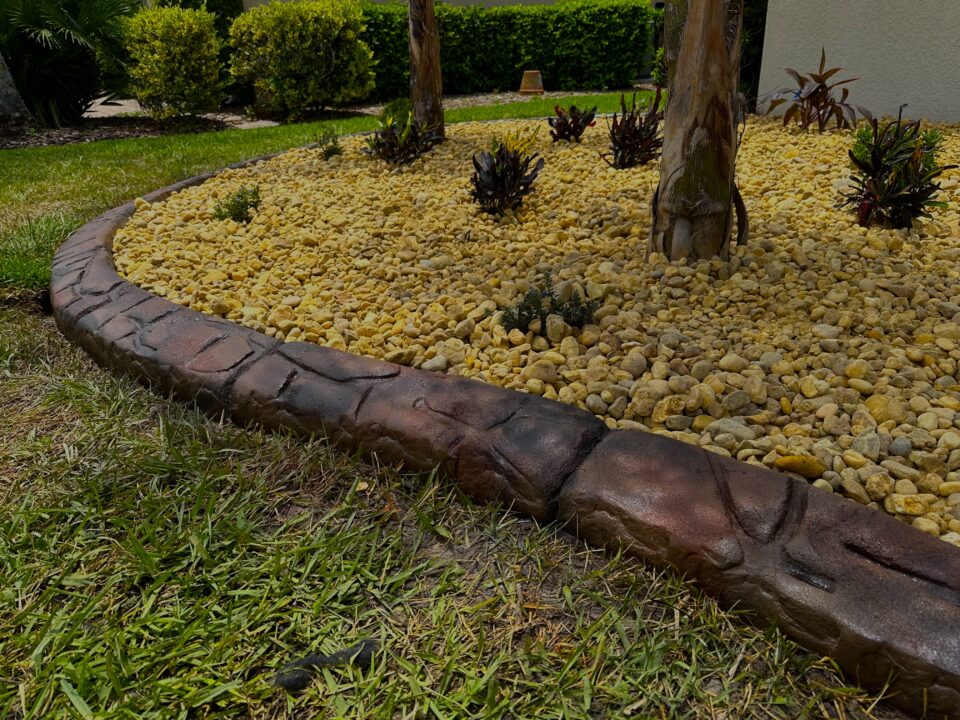
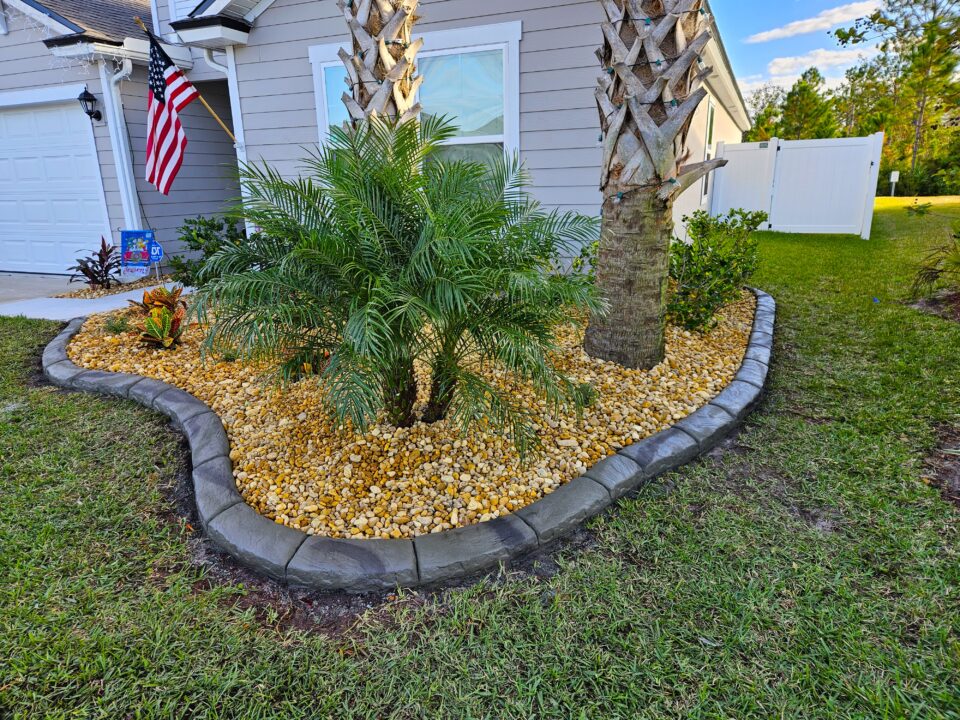
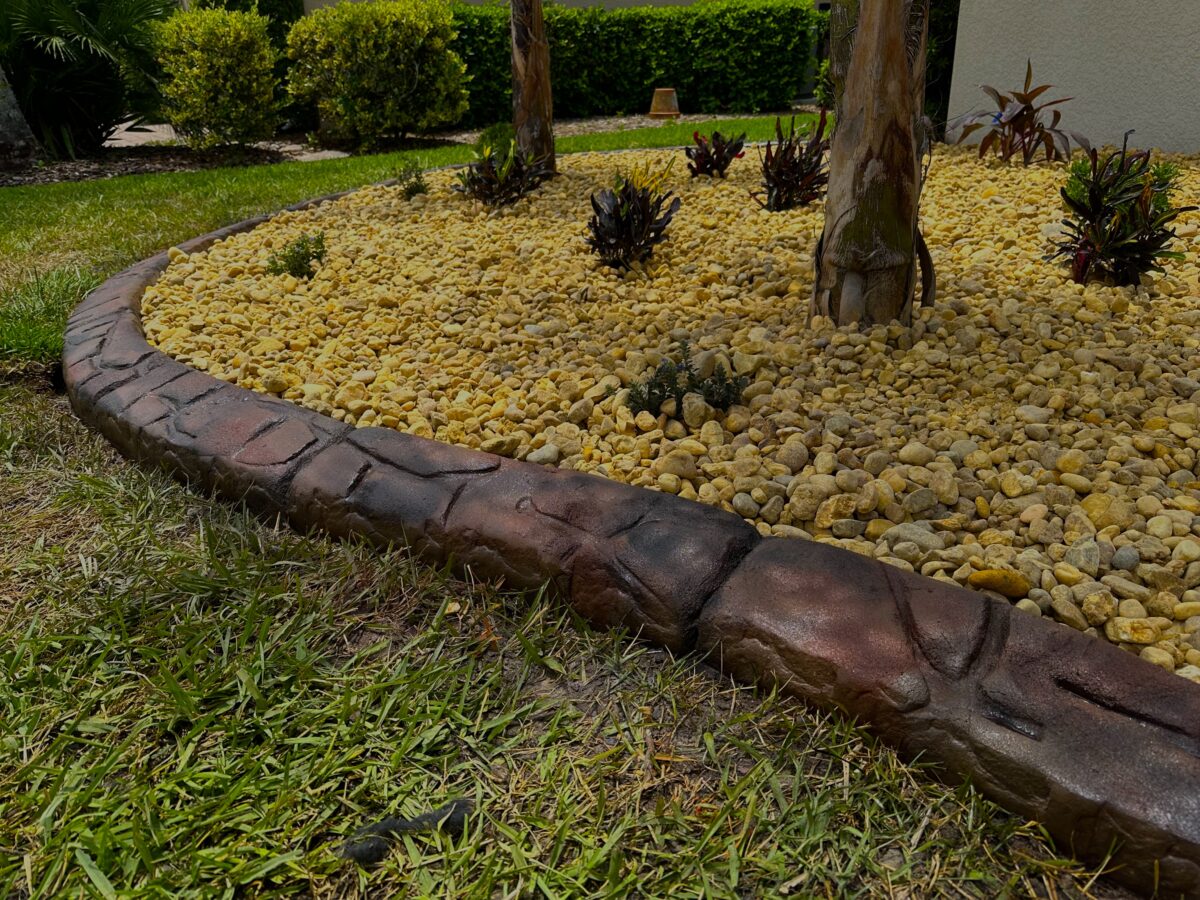
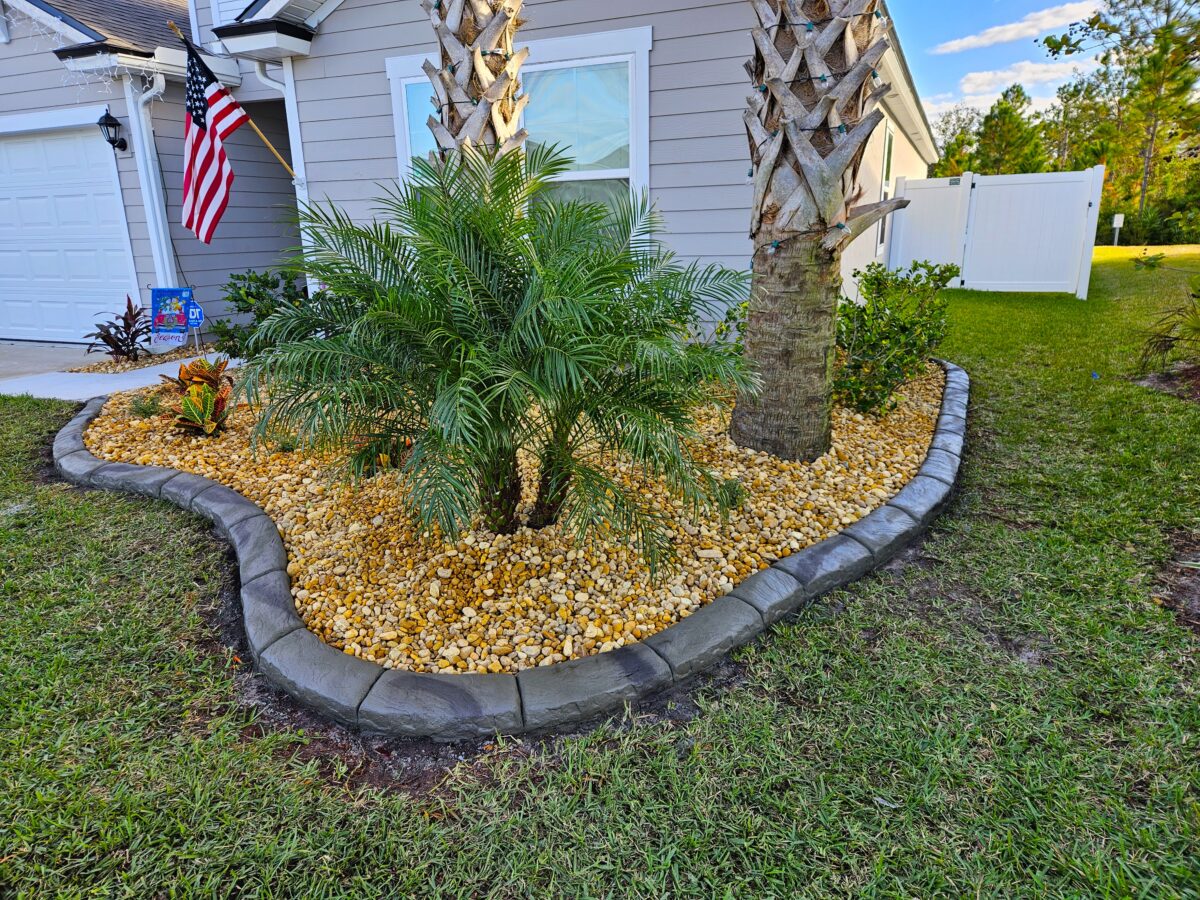
- Add a solid border such as concrete curbing so grass does not creep into beds.
- Schedule a few touch-up visits during the summer growing season, when things move fastest.
- If you are away for long stretches, arrange regular care before you leave.
Sometimes a cleanup reveals that a bed is beyond saving or just poorly laid out. In that case, it may be worth looking at shrub removal and bed redesign instead of putting the same problems back.
Frequently asked questions
How long does it take to clean up an overgrown yard?
It depends on the size of the property and how far things have gone. A typical residential yard with overgrown beds can often be handled in a day or two, while larger lots with heavy brush may need more time.
Can overgrown shrubs be saved?
Many can. Healthy shrubs often recover well from careful pruning spread over a season. Plants that are dead in the center, badly diseased or far too big for the space are usually better replaced.
Will my HOA care about an overgrown yard?
Most Palm Coast HOAs have standards for yard upkeep and may send notices if a property looks neglected. A cleanup is usually the quickest way to get back in good standing. Check your community’s rules for specifics.
If your yard has gotten ahead of you, Udell’s Landscape Services can help get it back under control. We handle cleanups throughout Palm Coast and Flagler County and can talk through options for keeping it neat afterward. Learn more about landscape design in Palm Coast, request a free estimate, or call (386) 931-6539.