Spring Landscape Refresh Ideas for Palm Coast Properties
April 22, 2026Storm Debris Removal for Flagler County Yards
May 4, 2026Landscape design and concrete curbing work best as one plan: the design sets the shape, size and purpose of each bed, and the curbing locks those lines in permanently. When the bed layout is decided first and the curbing follows it, a Palm Coast yard looks finished and intentional, with clean borders that hold mulch and stone in place. When curbing is added to beds that were never really planned, it can end up outlining the wrong shapes.
Why the order matters
Curbing is permanent. Once concrete is poured along a bed line, moving that line means breaking it out. So the most important rule is simple: settle the design before the curb goes in.
A typical sequence for a finished yard looks like this:
- Design the beds. Decide what each bed is for, how big it needs to be and what plants will go in it.
- Remove and prep. Take out old plants, sod and edging, and grade the beds.
- Run any wiring or irrigation changes that need to cross under the bed edge.
- Install the curbing along the final bed lines.
- Plant, then add mulch or stone inside the new borders.
Doing lighting wire and irrigation before the curb is a small detail that saves a lot of trouble. It is much easier to run a line under an open bed edge than to tunnel under concrete later.
Designing bed shapes that look good with curbing
Because a curb draws a clear line around every bed, it shows off a good bed shape and exposes an awkward one. A few design ideas help the two work together.
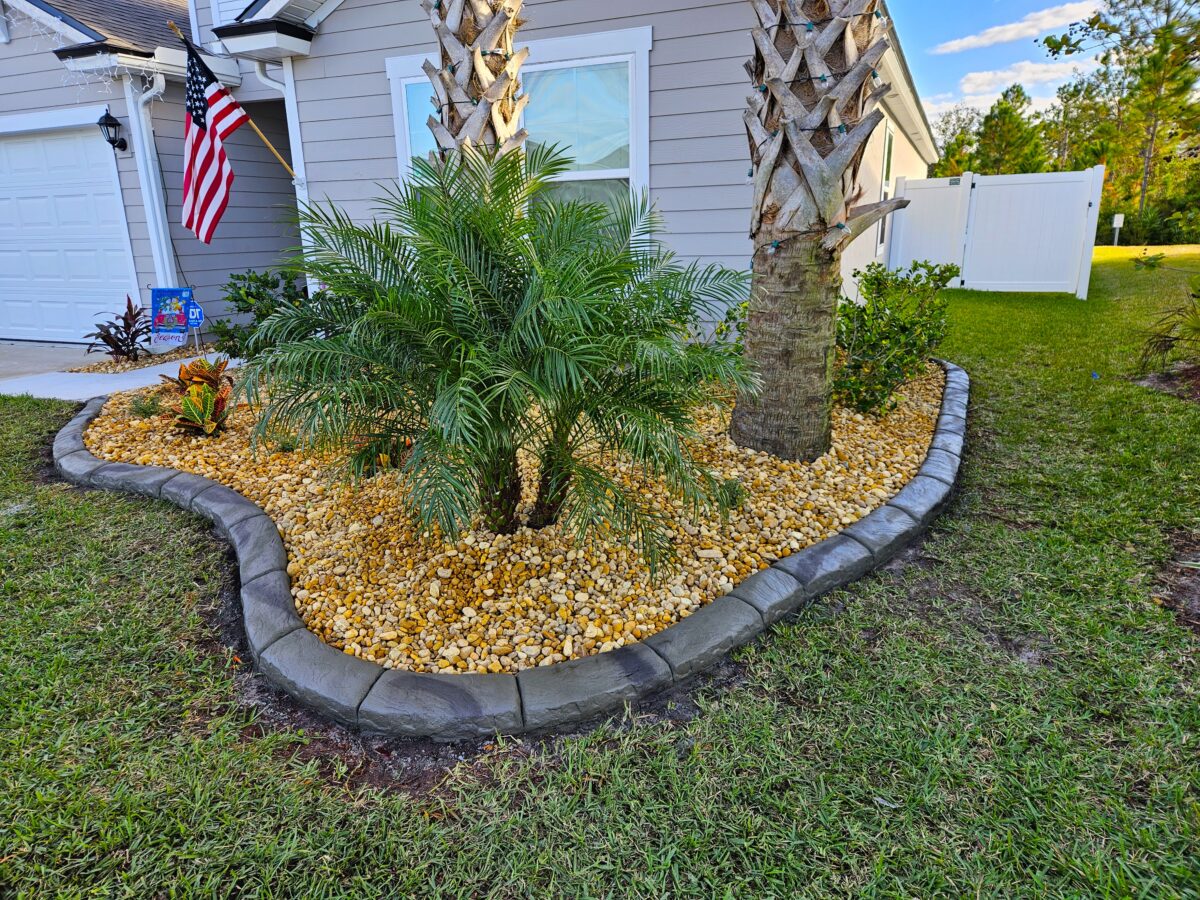
- Use smooth, generous curves. Big, sweeping curves look natural and are easy to mow along. Tight wiggles look busy and are hard to trim around.
- Size beds to the plants. Leave room for shrubs to reach mature size without hanging over the curb into the lawn. A bed that is too narrow ends up with plants spilling over the border.
- Connect beds where it makes sense. Joining a few small island beds into one larger bed often looks cleaner and cuts down on mowing around obstacles.
- Repeat a shape or line. When front beds echo each other or follow the line of the house, the yard feels unified.
- Think about the mower. Gaps between beds and fences or walls should be wide enough to mow, or included in the bed.
Our post on bed design with curves, borders and plant layers goes deeper on layout, and questions to settle before curbing installation is a helpful checklist once your design is close.
Matching the curb style to the design
Decorative curbing comes in several profiles and finishes, and the right one depends on the look of the home and the job each bed does.
| Choice | What to consider |
|---|---|
| Profile | A flatter mower-edge style gives a mowing strip, while taller or slanted styles hold deeper mulch and stone. |
| Color | Neutral tones tend to suit most Palm Coast homes. Picking up a color from the house trim, roof or pavers ties things together. |
| Texture or stamp | A stamped pattern can echo brick, stone or pavers nearby. A plain finish reads cleaner and more modern. |
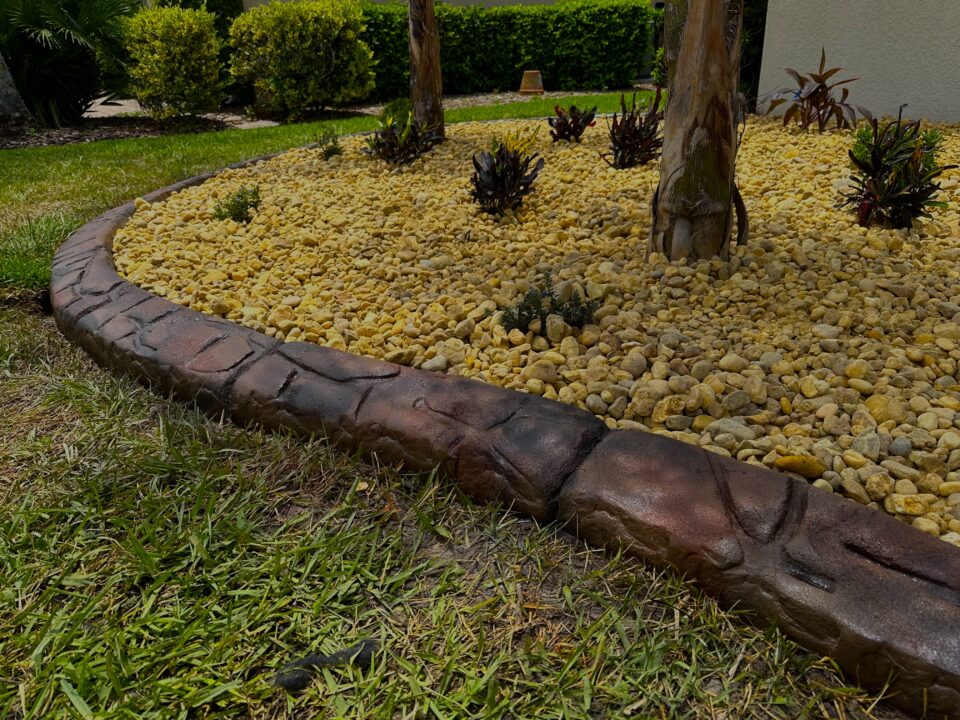
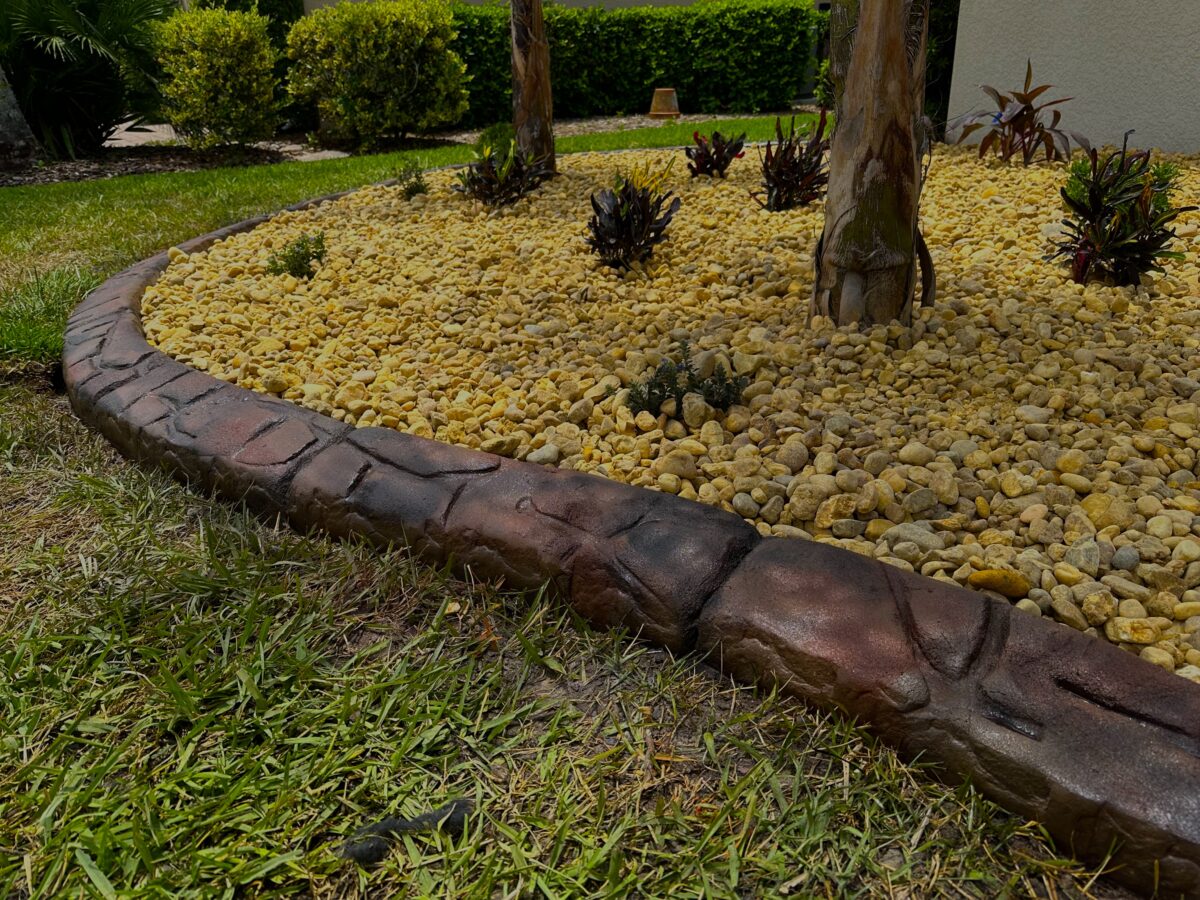
Generally, the curb should support the planting, not compete with it. Our decorative concrete curbing page shows the options we offer.
Where curbing fits and where it may not
Curbing does a lot for most yards, but it is not right everywhere. It works especially well:
- Along front beds that frame the house and walkway
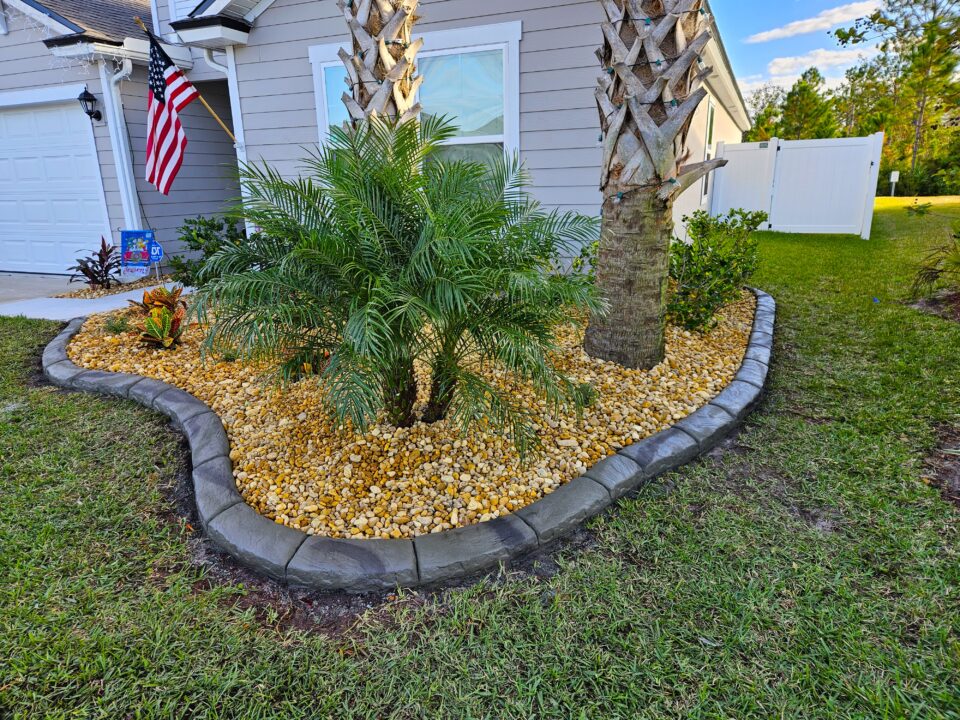
- Around tree rings, keeping mowers and trimmers away from trunks
- Around stone beds, where loose rock needs a solid edge
- Along driveway and sidewalk beds that see a lot of runoff
It may not be the best choice:
- Right against the trunk of a large tree, where digging could damage surface roots
- In beds you expect to reshape or expand soon
- In low spots where water needs to flow across freely
Drainage deserves a careful look in any Palm Coast yard. Summer storms bring a lot of water, and a curb in the wrong place can trap it. Planning bed lines so water moves around beds or through intended paths keeps the yard healthy.
Finishing touches that complete the look
Once the design and curbing are in, a few final details pull everything together:
- A consistent mulch or stone inside all the beds, kept just below the top of the curb
- Healthy sod or lawn right up to the curb on the outside
- Plants with a clear mix of heights, with taller ones toward the back
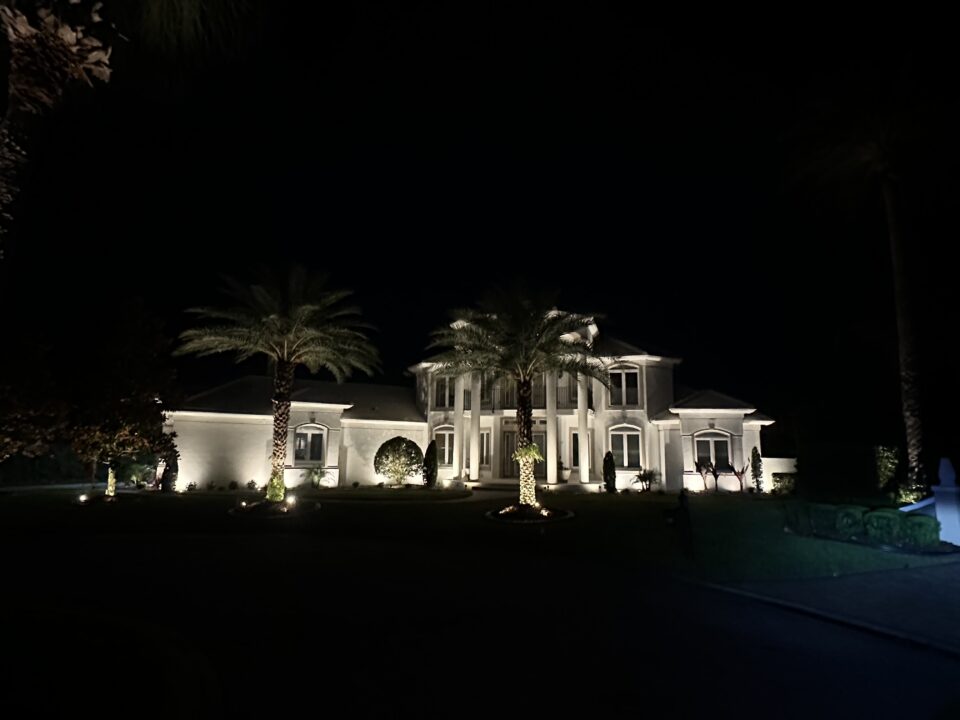
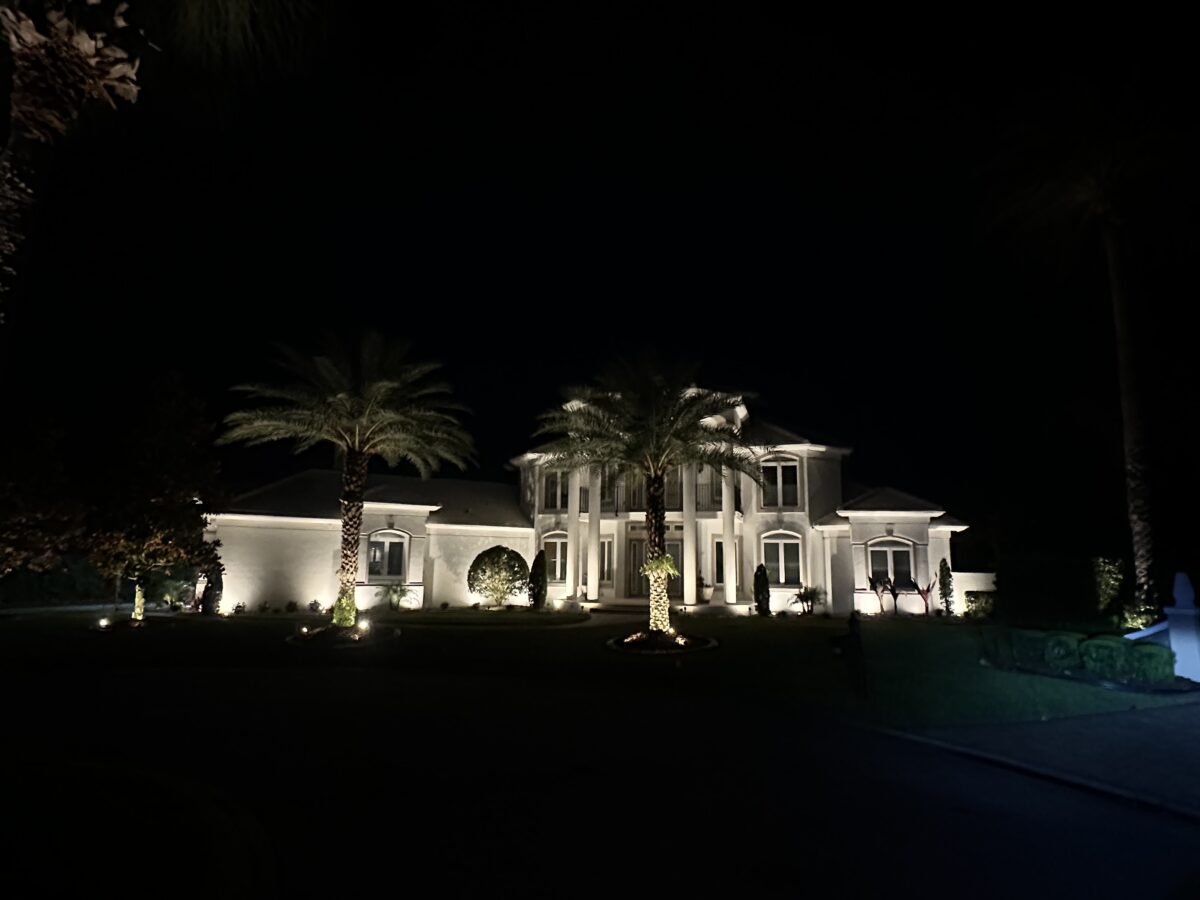
- A few low-voltage lights to show off the bed lines and plants at night
That combination of a planned layout, a permanent edge and well-chosen plants is what makes a yard look done instead of in progress.
Frequently asked questions
Should I do landscape design or curbing first?
Design first. Curbing is permanent, so the bed shapes, sizes and plant choices should be settled before any concrete is poured.
Can curbing be added to existing beds?
Yes, and it is common. It is a good moment to reshape any beds that feel awkward, since the curb will make the current shape permanent.
How wide should beds be when using curbing?
Wide enough that plants can reach mature size without spilling over the border. That depends on the plants, so it is worth deciding on them before setting the curb line.
If you want design and curbing planned together, Udell’s Landscape Services handles both for homes across Palm Coast and Flagler County. Learn more about our landscape design in Palm Coast, request a free estimate, or call (386) 931-6539.