Landscape Design in Palm Coast: How the Process Works
October 2, 2026
Landscape Design for New Construction Homes in Palm Coast
October 9, 2026
The cost of landscape design in Palm Coast comes down to a handful of things: the size of the area, how much of the old landscape has to come out, the plants and materials you choose, and extras like curbing, lighting or irrigation changes. Two yards on the same street can land in very different places because of soil prep, access and how finished you want the result to look. The good news is that once you know what drives the number, you can steer it.
We get this question on almost every first visit, so here is an honest look at what moves the price of a landscape project in Palm Coast and Flagler County, and where you have room to adjust. You will not find dollar figures here, because every property is different and a number without a site visit is just a guess.
What affects the cost of landscape design in Palm Coast?
Most of the price comes from labor and materials, and both scale with the size and condition of the yard. These are the factors we look at first when we walk a property:
- Size of the area. A single front bed by the entry is a very different job from a full front yard, side yards and a backyard around the pool cage.
- What has to come out. Removing overgrown shrubs, old roots, rock, weed fabric or tired sod takes time and hauling before anything new goes in.
- Soil and grade. Our sandy soil drains fast and holds few nutrients. Beds sometimes need fresh soil, regrading or a fix for a low spot where water sits after a summer storm.
- Plant size and quantity. Larger plants fill in faster but cost more. Smaller plants cost less up front and need a season or two to grow in.
- Bed materials. Mulch, river rock and decorative stone each have different material and labor needs.
- Access. Narrow side yards, fenced backyards and tight spots near the house mean more hand work.
None of these are surprises once you see them on site, which is why we always start with a walk around the property before talking numbers.
Why do two similar yards get very different quotes?
From the street, two Palm Coast homes on the same block can look almost identical. Up close, they are often not. One yard might have healthy soil and a working sprinkler system. The other might have a buried layer of old rock, shrubs that have grown into the eaves, and a corner that floods every afternoon in August.
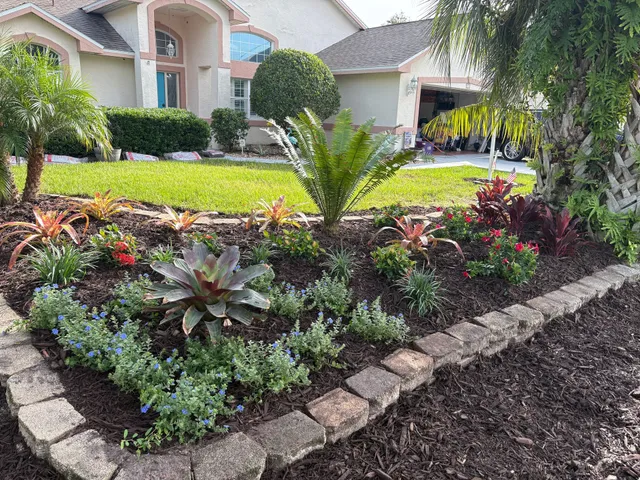
The finish level matters too. A simple refresh with new mulch and a few replacement plants is a different project from a full redesign with new bed lines, layered planting, decorative concrete curbing and lighting. Both can look great. They just solve different problems.
Here is a simple way to think about the range of projects we see:
| Project type | What it usually includes | What drives the cost most |
|---|---|---|
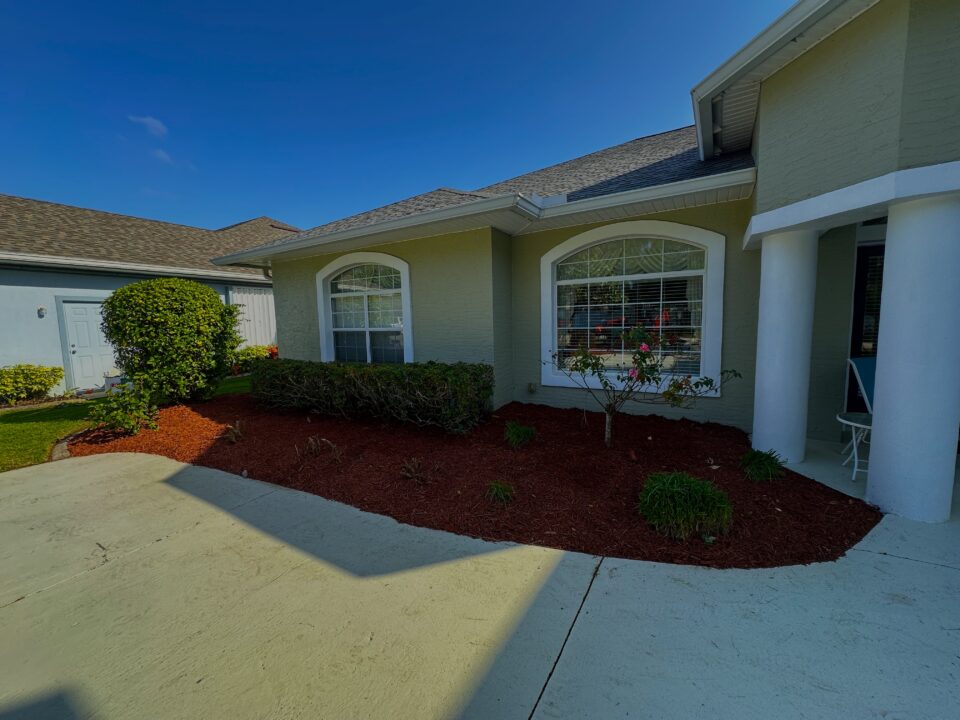
| Bed refresh | Cleanup, edging, fresh mulch or rock, a few replacement plants | Bed size and material choice |
| Partial redesign | New layout for one area, like the front entry or a side yard | Removal work and plant count |
| Full landscape design | New plan for front and back, plants, borders, often lighting or curbing | Total area, soil prep and add-ons |
How do plant choices change the price?
Plants are one of the biggest line items, and one of the easiest places to make smart choices. A few things to keep in mind:
- Container size. The same shrub might come in several pot sizes. Bigger means more instant impact and a higher price.
- Spacing. Packing plants tight looks full on day one, but it costs more now and leads to crowding and extra trimming later. Spacing for mature size is cheaper and healthier.
- Right plant, right place. Plants matched to the sun, soil and salt exposure of each bed are far less likely to need replacing. That saves money over the life of the landscape.
Florida-friendly and native plants are a strong fit for many Palm Coast yards because they are suited to our heat, sandy soil and rainy summers. They still need watering while they get established, but once rooted, many need less water and fuss than plants that were never meant for this climate.
What extras add to a landscape project?
Some features are not required but make a big difference in how the yard looks and how long it stays tidy. Each one adds to the project, so it helps to decide early which ones matter to you.
- Concrete curbing. Clean, permanent borders that keep mulch and rock in the beds and make mowing easier.
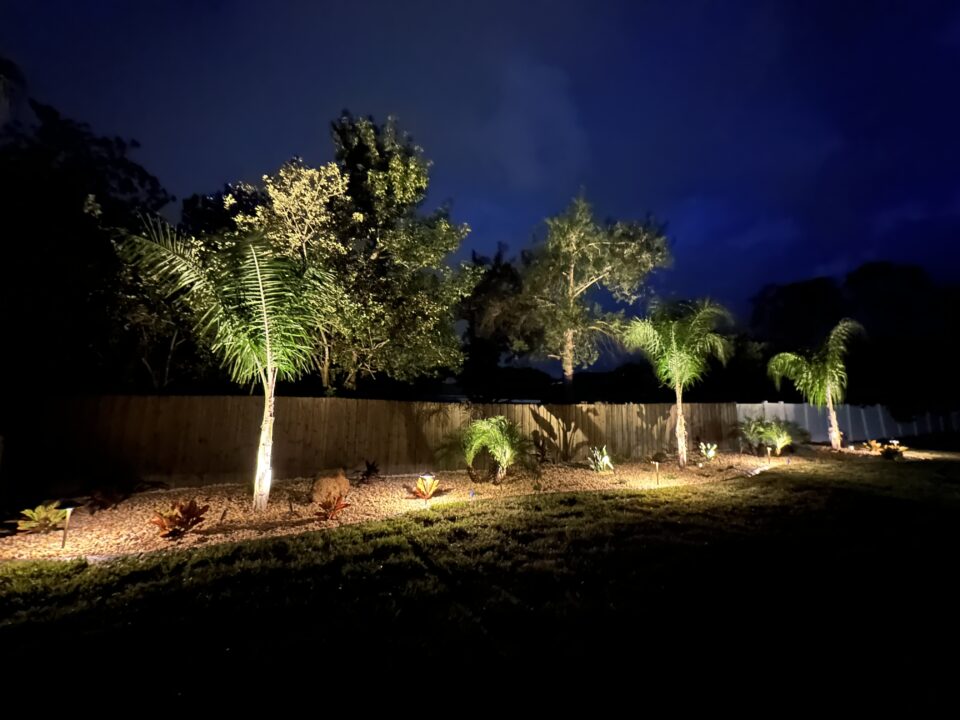
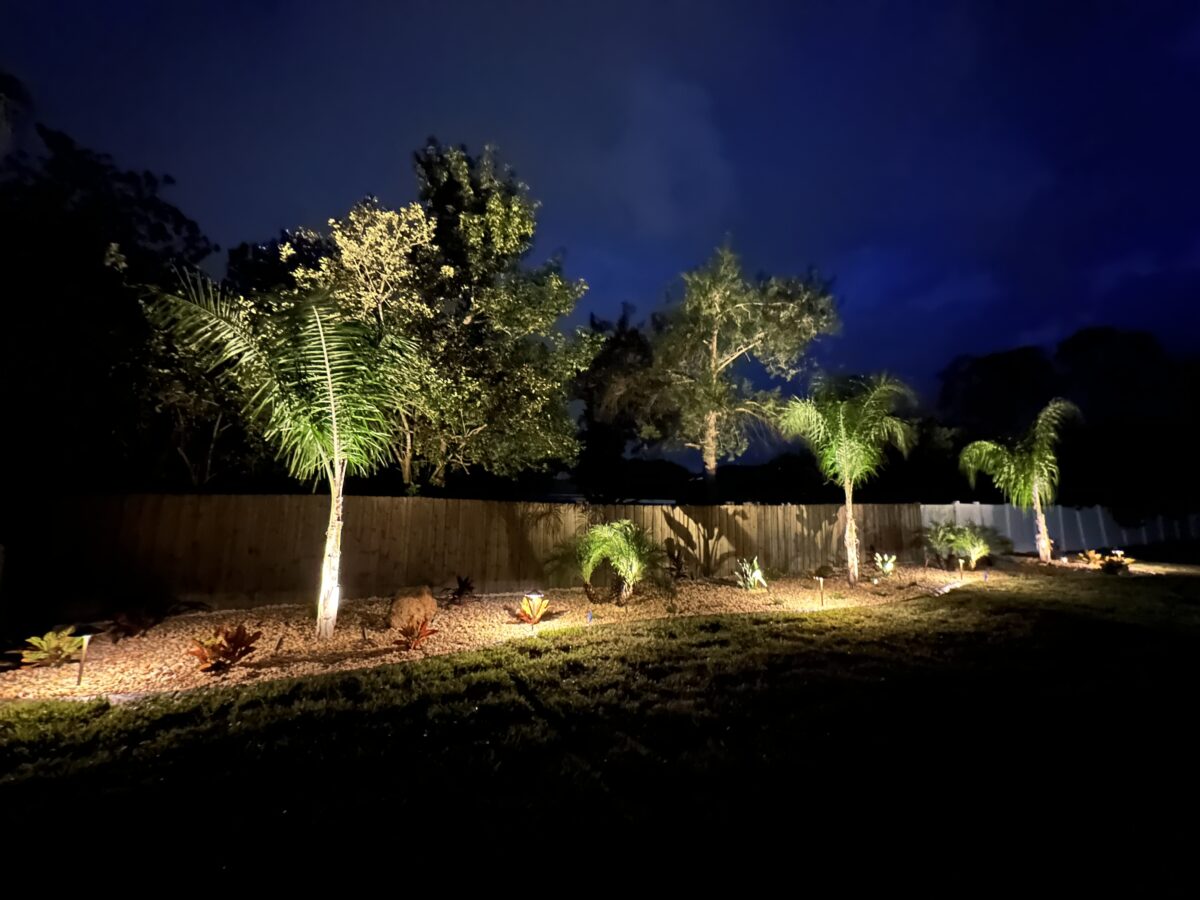
- Landscape lighting. Low voltage landscape lighting for paths, entries, palms and beds, so the yard looks finished after dark too.
- Irrigation changes. New beds often mean moving or adjusting sprinkler heads so plants get water and the house and walkways do not.
- Drainage fixes. Regrading or rerouting water where it pools after heavy rain.
- Sod. Replacing worn or patchy lawn areas next to new beds.
Planning these together usually costs less than adding them one at a time later, because the crew is already on site and the beds are already open.
How can you keep a landscape design budget under control?
You have more control over the cost than most people think. These are the approaches we suggest most often:
- Start with the area people see most. For many homes that is the front entry and the beds along the driveway.
- Work in phases. A good plan can be installed in stages, front this season, backyard next. The design keeps everything consistent.
- Keep healthy plants. Mature shrubs and trees that are in good shape can often stay and be worked into the new layout.
- Choose smaller plants where patience is fine. Use larger plants at the entry and smaller ones in the background beds.
- Think about upkeep, not just install. A low-maintenance layout with clean borders and fewer fussy plants costs less to keep looking good year after year.
If you want to see how a plan comes together from the first visit to the finished yard, we wrote a step by step guide on how the landscape design process works in Palm Coast.
What should a landscape quote include?
A clear quote makes it easy to compare options and avoid surprises. When you get one, look for:
- The areas being worked on, described clearly
- Removal and haul-away of old plants, rock or sod
- Soil prep and any grading
- Plant types, sizes and rough quantities
- Mulch, rock or stone type
- Any curbing, lighting, irrigation or drainage work
- Cleanup at the end of the job
If something is missing, ask. Our guide on what to ask before hiring a Palm Coast landscaper covers more of the questions worth raising before you sign off on a project.
Frequently asked questions
Can I get a price for landscape design without a site visit?
We can talk through ideas on the phone, but an honest price needs a look at the property. Soil, drainage, access and what needs to come out all change the work, and those are hard to judge from photos alone.
Is it cheaper to do landscaping in phases?
Phasing does not always lower the total, but it spreads the cost out and lets you start with the area that matters most. With one plan behind every phase, the finished yard still looks like it was designed together.
Do native and Florida-friendly plants cost less?
Plant prices vary by type and size more than by whether a plant is native. Where Florida-friendly choices often save money is over time, with fewer replacements and less water once they are established.
Does a free estimate mean I have to commit?
No. A free estimate is a chance to walk the yard together, talk about goals and get a clear picture of the work. You can take your time deciding.
Udell’s Landscape Services brings more than 20 years of landscaping experience to homeowners across Palm Coast and Flagler County, from simple bed refreshes to full landscape design in Palm Coast. If you want a clear picture of what your yard would take, reach out for a free estimate or call us at (386) 931-6539. We are happy to walk the property with you and talk it through.