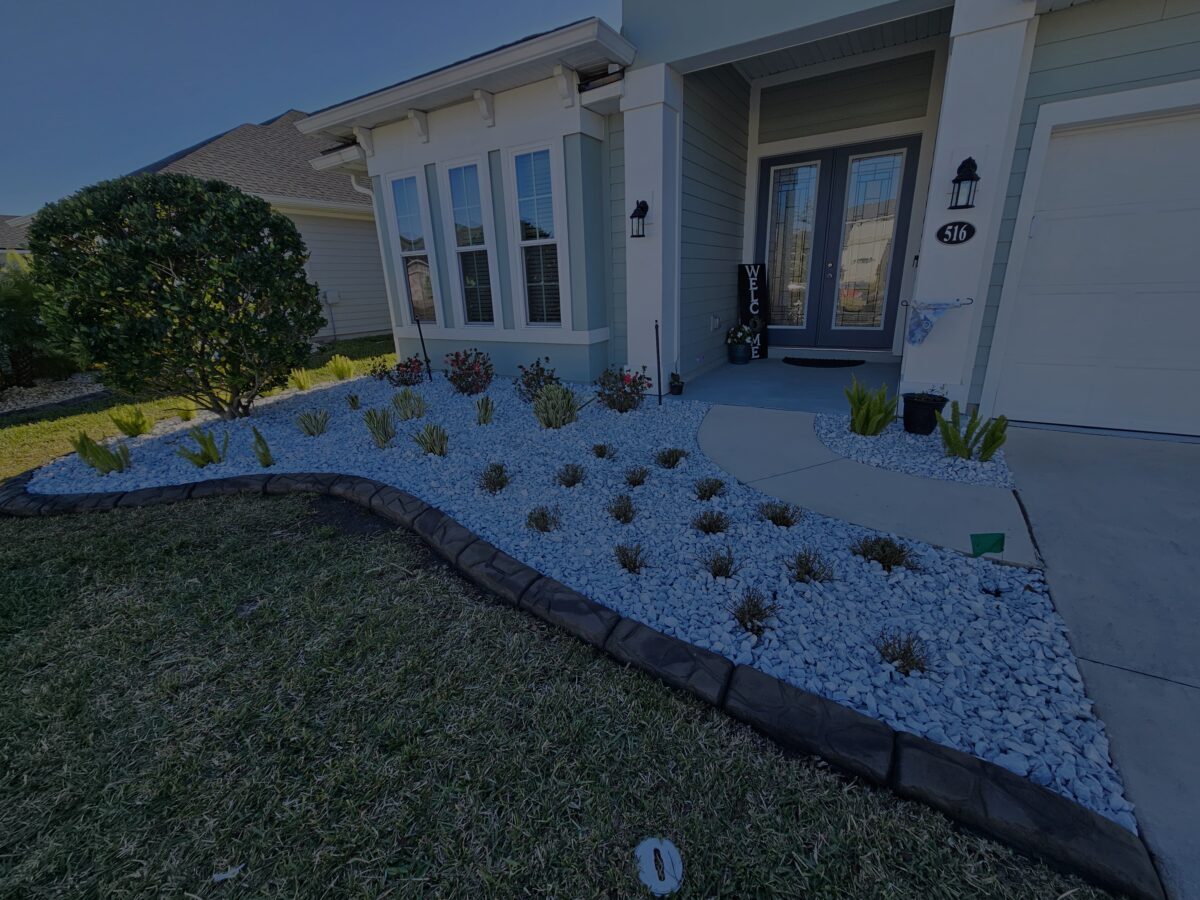
What Affects Landscape Design Cost in Palm Coast, FL?
October 7, 2026
Fall Planting in Palm Coast: What to Plant and When
October 12, 2026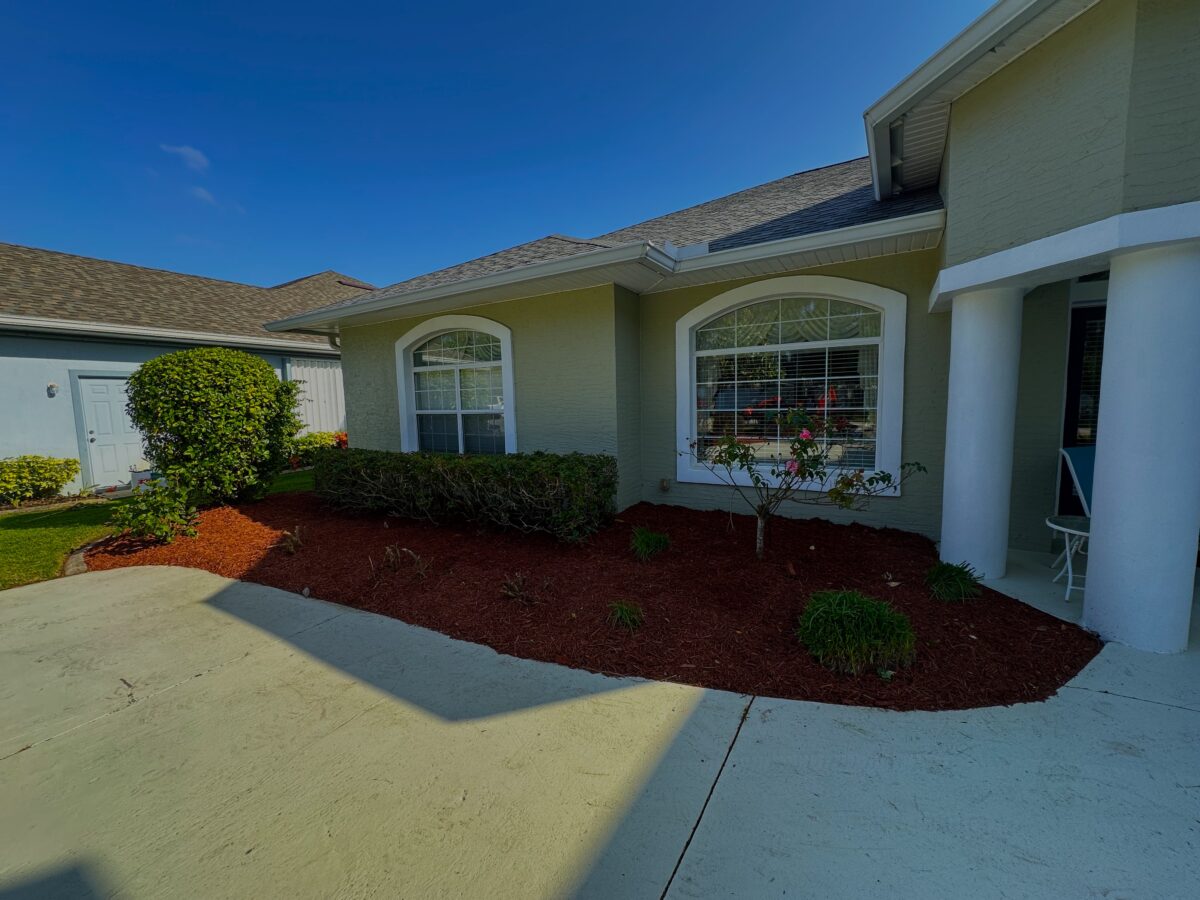
Landscape design for a new construction home in Palm Coast works best when it starts with the site, not the plant list. Most new builds come with a basic builder package, usually sod and a few foundation shrubs, so the real design work is deciding what to keep, how to fix the soil and drainage the build left behind, and how to lay out beds, irrigation and lighting so the yard grows in well. If you plan it in the first few months, you avoid tearing out and redoing work later.
What does a builder landscape package usually include?
Every builder is different, but a typical new home package in our area covers the basics needed to finish the lot and pass inspection. It often includes:
- Sod in the front yard and sometimes the back
- A row of small shrubs along the front foundation
- A tree or two, depending on the community
- A thin layer of mulch or rock in the front beds
- An irrigation system with zones set up for the original layout
None of that is bad. It is a starting point. The trouble is that builder plantings are chosen to be quick and uniform, not to fit your sun, your style or how you want to use the yard. Shrubs are often spaced for how they look on day one, not how big they get in three years, and beds tend to be narrow straight strips that make the house look boxed in.
What should you check on a new build lot before planning?
Before we sketch a single bed, we walk the property and look at what the construction process left behind. A new lot can look clean on top and still hide a few problems underneath.
- Soil and fill. Lots are often graded with fill and then compacted by heavy equipment. Construction debris like concrete chunks, wire and block pieces can end up buried in the beds. Loosening and cleaning the soil where plants will go makes a real difference in how they root in.
- Drainage. Watch where water goes after a hard summer storm. Look for puddles that sit near the foundation, washouts along the side yards and downspouts that dump straight onto bare ground. Our post on designing around heavy Florida rain goes deeper on this.
- Sun and shade. Note which sides of the house bake all afternoon and which stay shaded. On a new lot with few trees, most of the yard is full sun, and that should drive plant choice.
- Utilities. Find the meters, the electrical box, the AC pad and any utility easements. In Florida, call 811 before any digging so underground lines get marked.
- Community rules. If your home is in a community with an HOA or an architectural review process, check its landscape guidelines before you change plantings, add curbing or remove trees.
How do you design a new build yard step by step?
Once we know the site, the design follows a simple order. Doing things in this order keeps you from installing something that has to come back out.
- Decide what stays. Healthy builder trees and shrubs in the right spot can stay. Plants that are too close to the house, in the wrong light, or already struggling usually get moved or replaced.
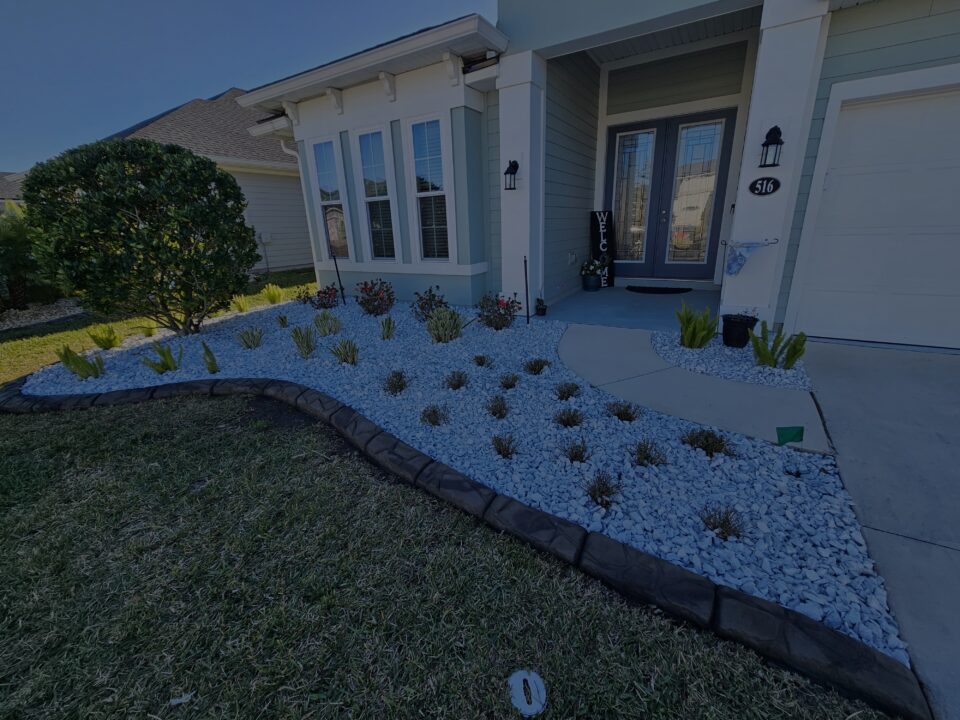
- Shape the beds. Widen front beds so the house has room to breathe, and use curves where they fit the architecture. This is where the yard starts to feel designed instead of default.
- Prep the soil. Remove debris, loosen compacted ground and improve the planting areas before plants go in.
- Adjust irrigation. Move or cap heads so the new bed layout gets watered correctly and the sidewalk does not.
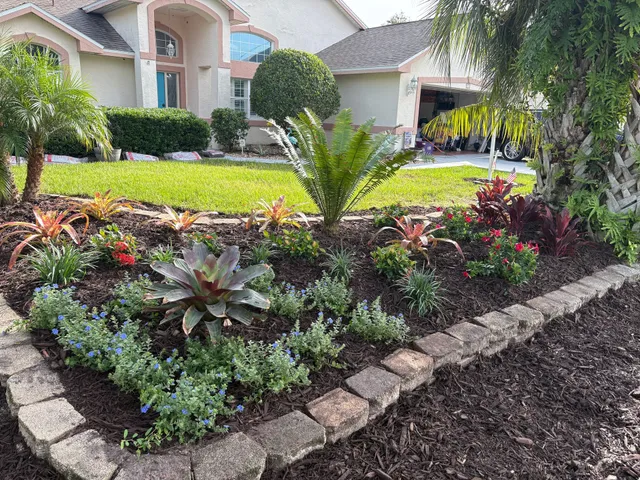
- Plant in layers. Taller plants at the back or corners, medium shrubs in the middle, and low groundcovers or accent plants at the front edge.
- Finish the edges. Add a clean border, then mulch or rock, so the beds hold their shape.
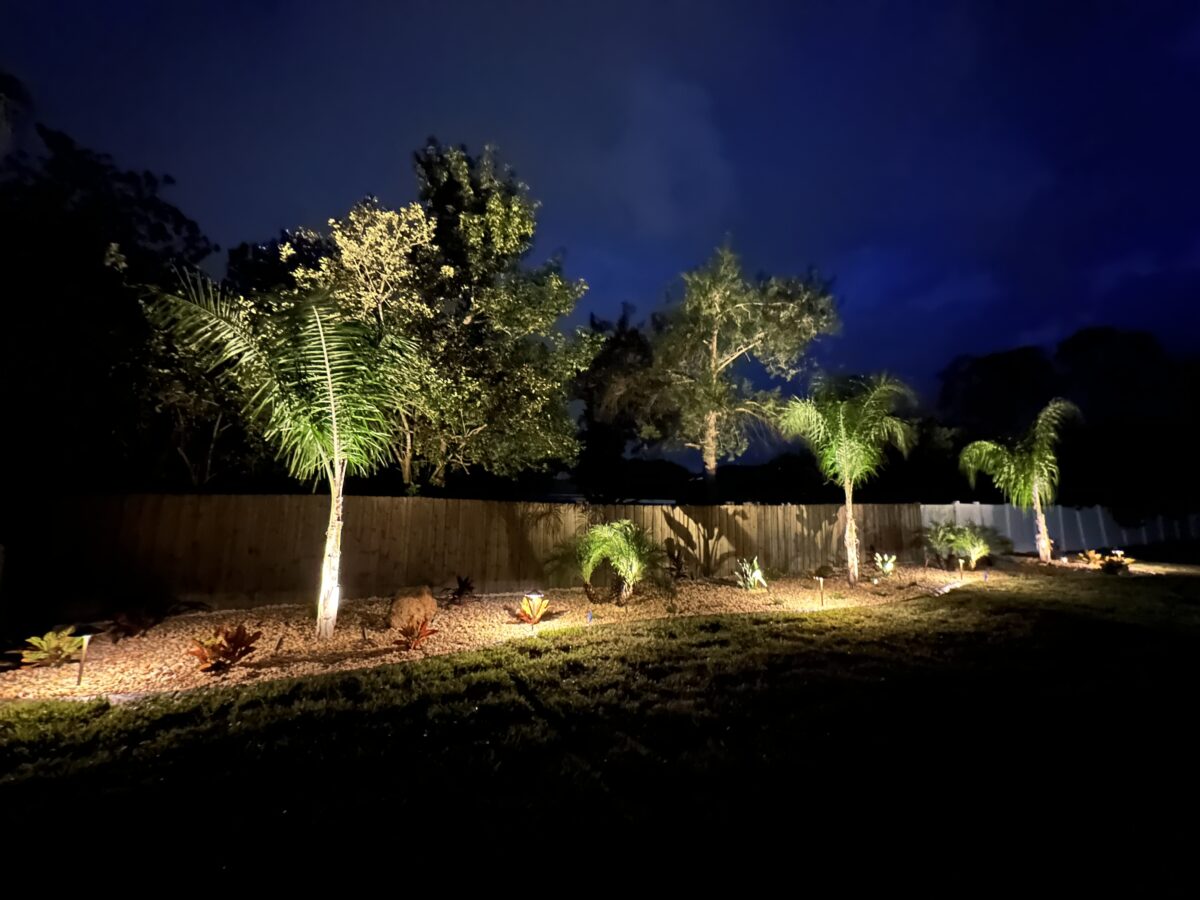
- Add lighting last. Plan wire runs while beds are open, then set fixtures once the plants are in.
Which plants make sense for a new Palm Coast home?
Our sandy soil, summer heat, heavy rain and, closer to the beach, salt air all narrow the list in a helpful way. We lean on Florida-friendly and native plants that handle full sun and do not need constant babying once they are established. The UF/IFAS Gardening Solutions planting guide is a good free resource if you want to read up on getting new plants established.
A few practical rules we follow on new builds:
- Choose plants for their mature size, then space them for it. A shrub that looks lonely the first year is better than one you are shearing off the windows by year three.
- Keep large shrubs and trees away from the foundation, the roofline and the AC unit so you have room for maintenance and airflow.
- Group plants by water need so one irrigation zone is not trying to serve a thirsty plant and a drought tolerant one at the same time.
- Expect new plants to need more water while they establish, then taper off as roots grow in.
Our list of native and Florida-friendly plants for Flagler County is a good place to start a wish list.
Should you add curbing, lighting or rock right away?
Not everything has to happen at once. Many new homeowners do the yard in phases, and that is fine as long as the order makes sense. Here is how we usually think about the extras:
| Feature | Best time to add it | Why |
|---|---|---|
| Bed reshaping and soil prep | First | Everything else sits on top of it |
| Irrigation changes | With the bed layout | Heads need to match the new beds |
| Decorative concrete curbing | After beds are shaped, before mulch or rock | Curbing locks in the bed lines |
| Landscape lighting | Wire during planting, fixtures after | Easier to run wire through open beds |
| Mulch or rock | Last | Top dressing goes on once edges are set |
If clean edges matter to you, decorative concrete curbing is worth planning early, because it is much easier to pour against freshly shaped beds than to work around established plants later.
How long does a new build landscape take to fill in?
It depends on plant size at installation, the season and how consistently the yard is watered during establishment. Groundcovers and smaller shrubs can start to look full within a growing season or two, while trees and larger shrubs take longer. Planting slightly larger material in key spots, like the front corners and the entry, gives the house a finished look sooner while the rest catches up.
If you are still deciding how much to do now versus later, our guide to what affects landscape design cost in Palm Coast walks through where the budget tends to go, and our overview of landscape design in Palm Coast explains how the process works from the first visit.
Frequently asked questions
Should I remove the builder shrubs on my new home?
Not automatically. If they are healthy, in the right light and spaced so they will not crowd the house, they can stay and become part of the new design. Shrubs planted too close to the foundation or in the wrong exposure are usually better moved or replaced early.
When is the best time to landscape a new construction home in Palm Coast?
Many homeowners start planning in the first few months after closing, once they have seen how the lot drains in a heavy rain. Fall and spring are comfortable times to install, and summer works too as long as new plants get steady water while they establish.
Do I need to change my irrigation if I redesign the beds?
Usually, yes. Builder irrigation is set up for the original layout, so wider or curved beds often need heads moved, added or capped. Planning the two together saves water and keeps new plants from drying out or staying soggy.
Udell’s Landscape Services has been helping homeowners in Palm Coast and across Flagler County for more than 20 years. If you just moved into a new build and would like a second set of eyes on the yard, take a look at our landscaping services, reach out through our contact page or call (386) 931-6539 for a free estimate.