Landscape Design for Palm Coast Curb Appeal
May 4, 2026How to Choose Landscaping That Complements Your Palm Coast Home
May 13, 2026The best landscape design ideas for Palm Coast homes are the ones that work with our conditions instead of fighting them: Florida-friendly plants grouped by water needs, simple bed shapes with clean edges, and materials that can take heat, heavy summer rain and salt air. A yard built that way looks good in August, not just in March, and it asks for less of your weekends.
Below are the ideas we come back to most often when we sit down with Palm Coast homeowners. You do not need all of them. Pick the two or three that solve the problems you actually have.
1. Start with fewer, larger beds
A lot of yards in Palm Coast have small, scattered beds: a ring around the mailbox, a strip by the driveway, a circle around each palm. Each one needs its own edging, mulch and trimming, and together they make the yard look busy.
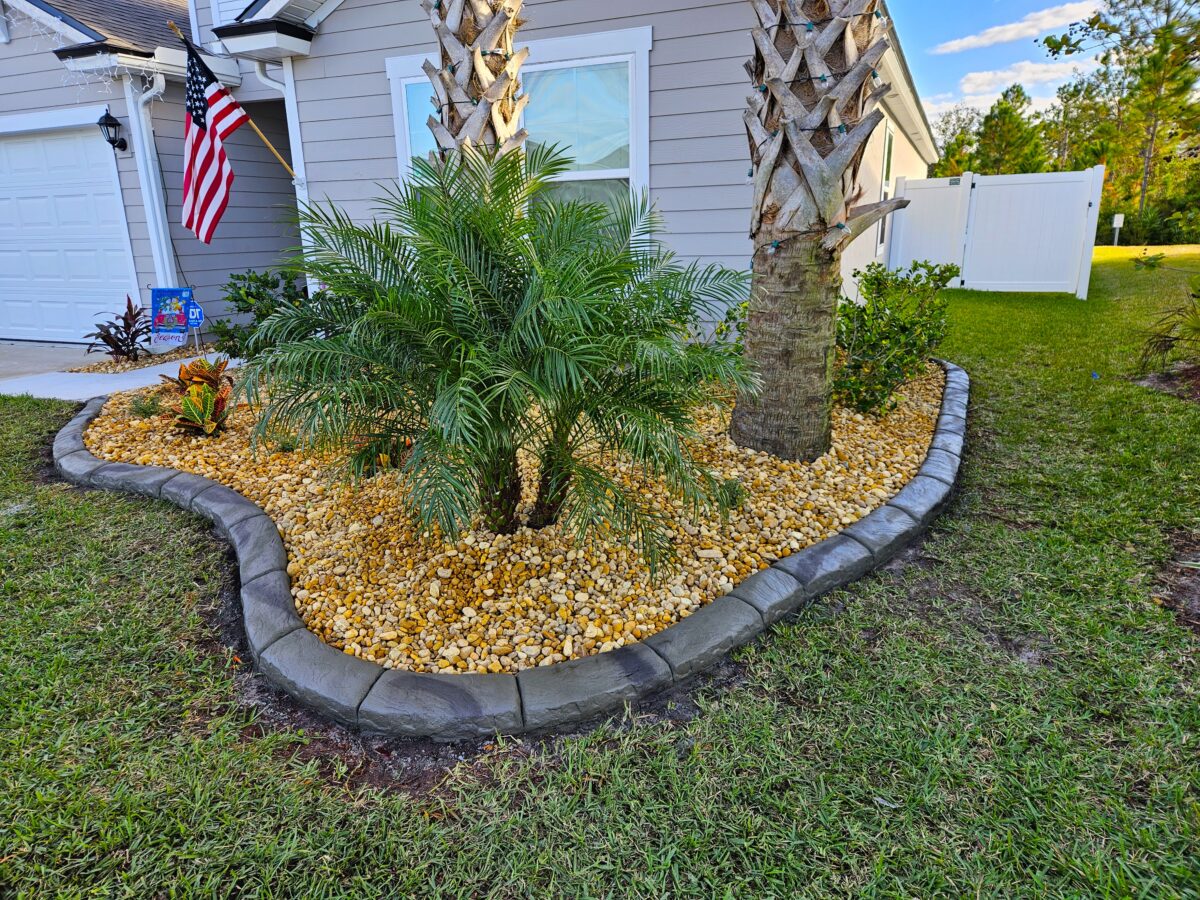
Combining those pieces into a few larger, connected beds is usually the single biggest improvement. It cuts down on string trimming, gives plants room to grow to their natural size, and makes the yard read as one plan instead of a collection of afterthoughts.
- Run the front bed the full width of the house, at least four to six feet deep, so shrubs are not jammed against the wall.
- Connect the mailbox or lamp post bed to the driveway bed with a gentle curve where it makes sense.
- Pull trees into a bed instead of mowing around them. Roots and trunks stay safer from mower damage.
If you want help laying out curves and layers, our post on bed design with curves, borders and plant layers goes deeper.
2. Group plants by how much water they need
Sandy Flagler County soil drains fast, so water and nutrients move through it quickly. Putting a thirsty plant next to a drought-tolerant one means one of them is always getting the wrong amount of water.
Instead, think in zones. Keep plants that like regular moisture closer to the house or in spots that already stay damp after storms. Put the toughest, most drought-tolerant plants in the hot, open areas near the street and along the driveway, where reflected heat is worst. This idea is one of the core UF/IFAS Florida-Friendly Landscaping principles, and it pays off in a lower water bill and fewer struggling plants.
3. Lean on plants that already like it here
Natives and well-adapted Florida plants handle our heat and humidity with far less fuss than plants shipped in from cooler climates. A few that work well in many Palm Coast yards:
- Coontie for a low, fern-like evergreen that tolerates sun or shade.
- Firebush for summer color that butterflies and hummingbirds visit.
- Muhly grass for soft texture and pink fall plumes.
- Dwarf yaupon holly for a tidy, rounded shrub that takes shearing.
- Cabbage palm for height that stands up well to wind and salt.
Plant choice always depends on sun, drainage and how close you are to the ocean, so treat this as a starting list rather than a prescription. We cover more options in native and Florida-friendly plants for Flagler County.
4. Plan for the rain you are going to get
Summer storms in Palm Coast can drop a lot of water in a short window. Designs that ignore that end up with mulch floating across the driveway and low spots that stay soggy for days.
- Watch where water runs during a real downpour and keep loose mulch out of those paths.
- Use river rock or larger stone where downspouts empty, so the force of the water does not dig a hole.
- Choose plants that tolerate occasional wet feet for low spots, rather than trying to keep those areas dry.
- Keep beds slightly crowned or level, not dished, so water does not pool against the foundation.
5. Give every bed a permanent edge
Edges are what make a landscape look finished. In our area, turfgrass like St. Augustine sends runners into beds constantly, and heavy rain pushes mulch out onto the lawn. A defined border solves both.
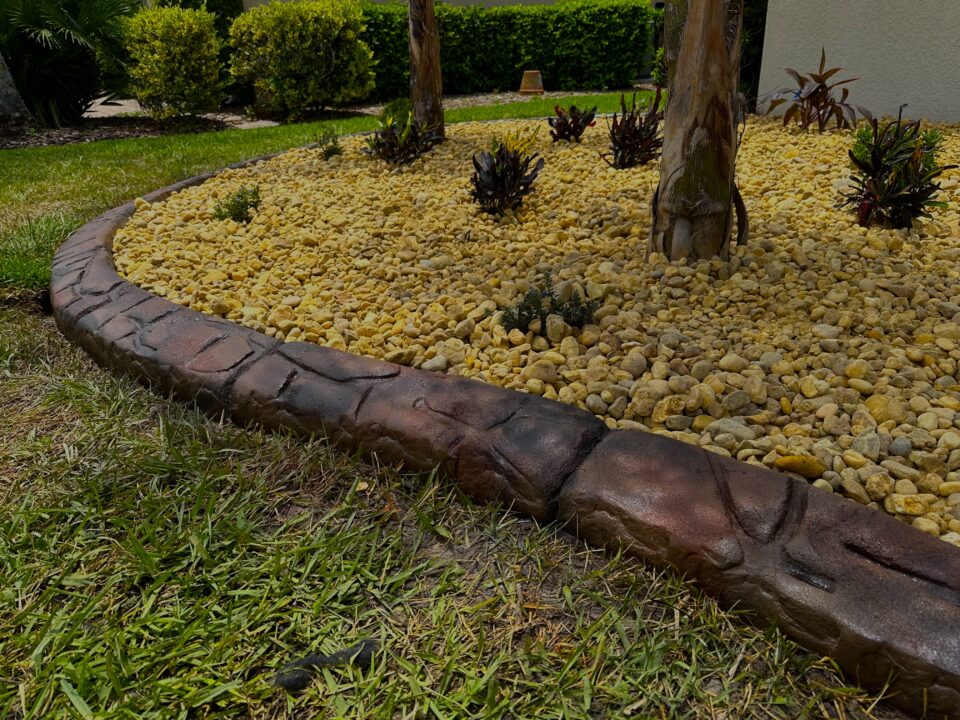
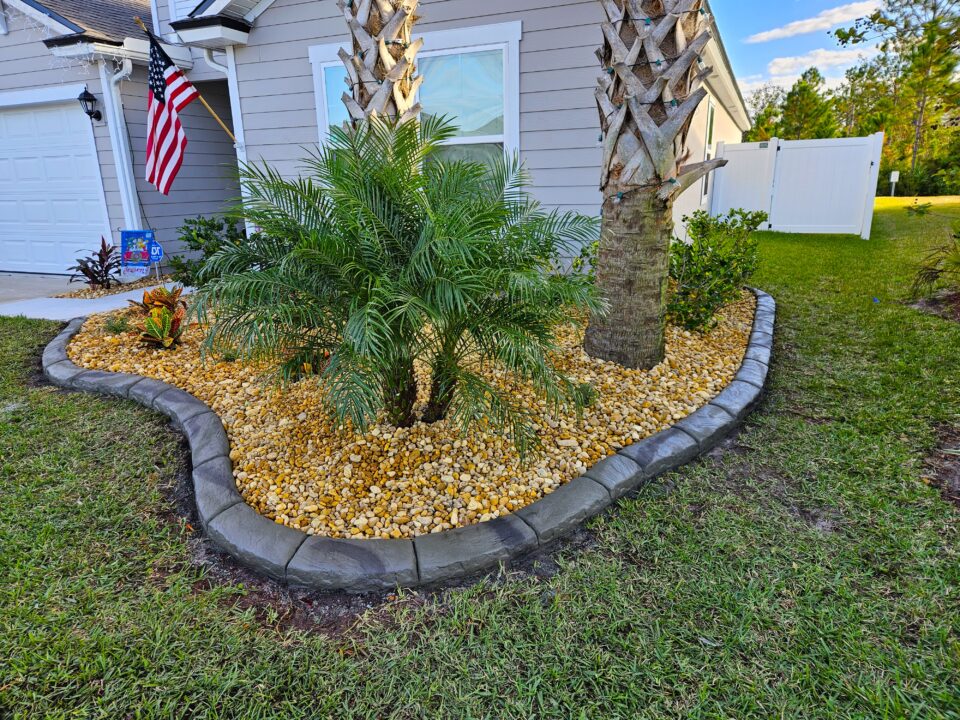
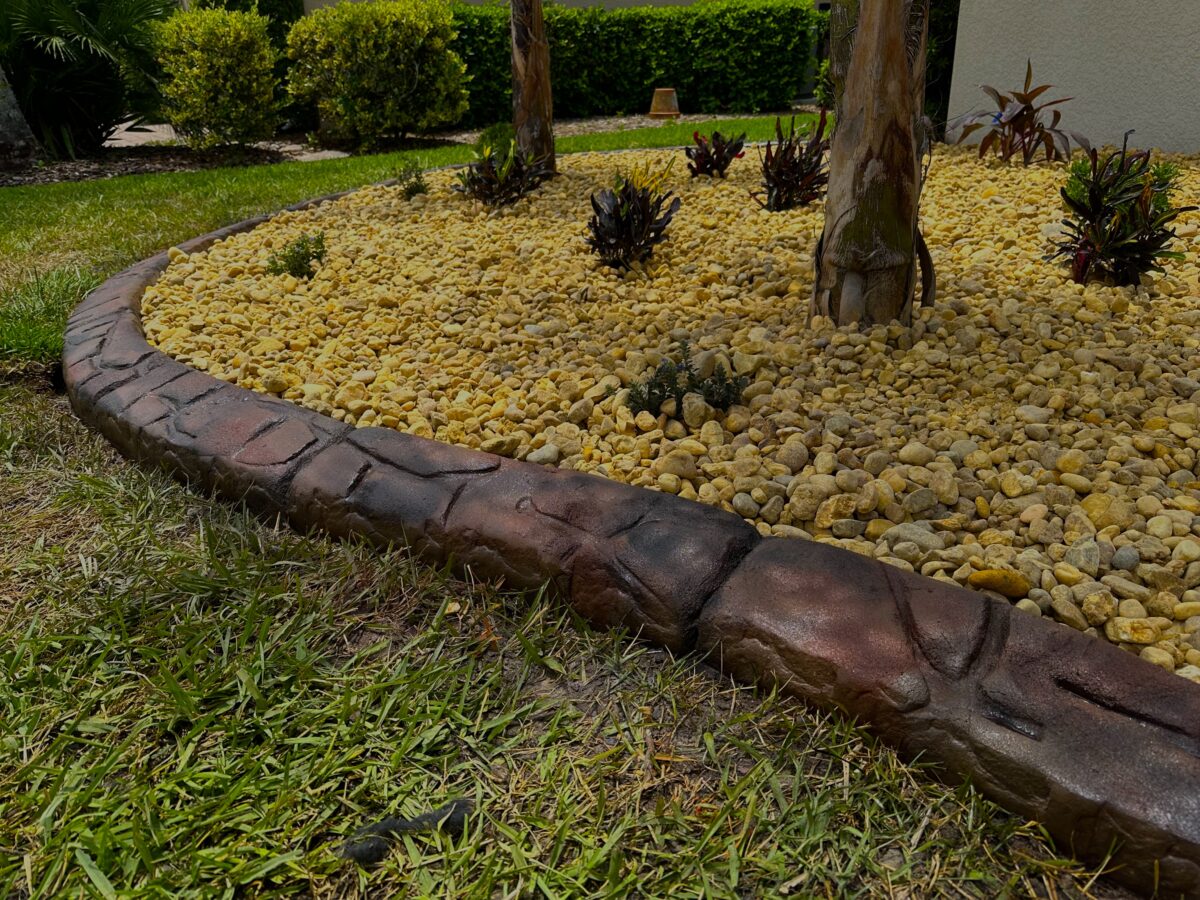
Many homeowners choose decorative concrete curbing because it follows curves smoothly, holds mulch or stone in place, and gives the mower a clean line to follow. Pavers and natural stone borders can also work, especially in smaller spaces. Whatever you choose, pick one edging style and use it throughout the yard so it all ties together.
6. Keep the hardscape and lighting simple
A few well-placed pieces go further than a lot of decoration. A wider front walkway, a small seating spot under a tree, or a stone area for trash cans often does more for daily life than another statue or fountain.
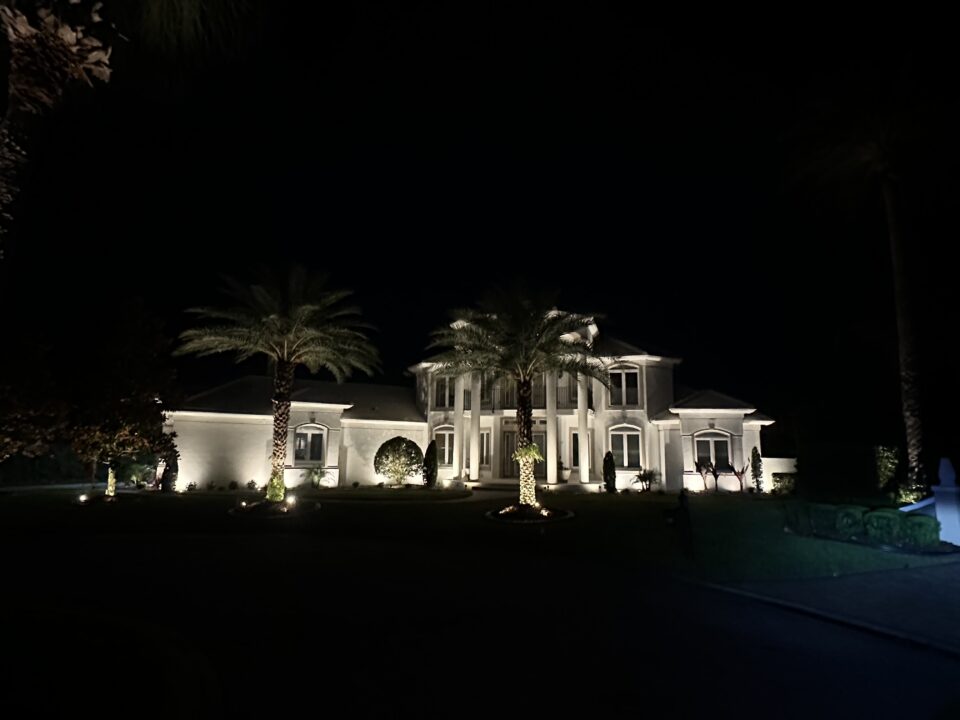
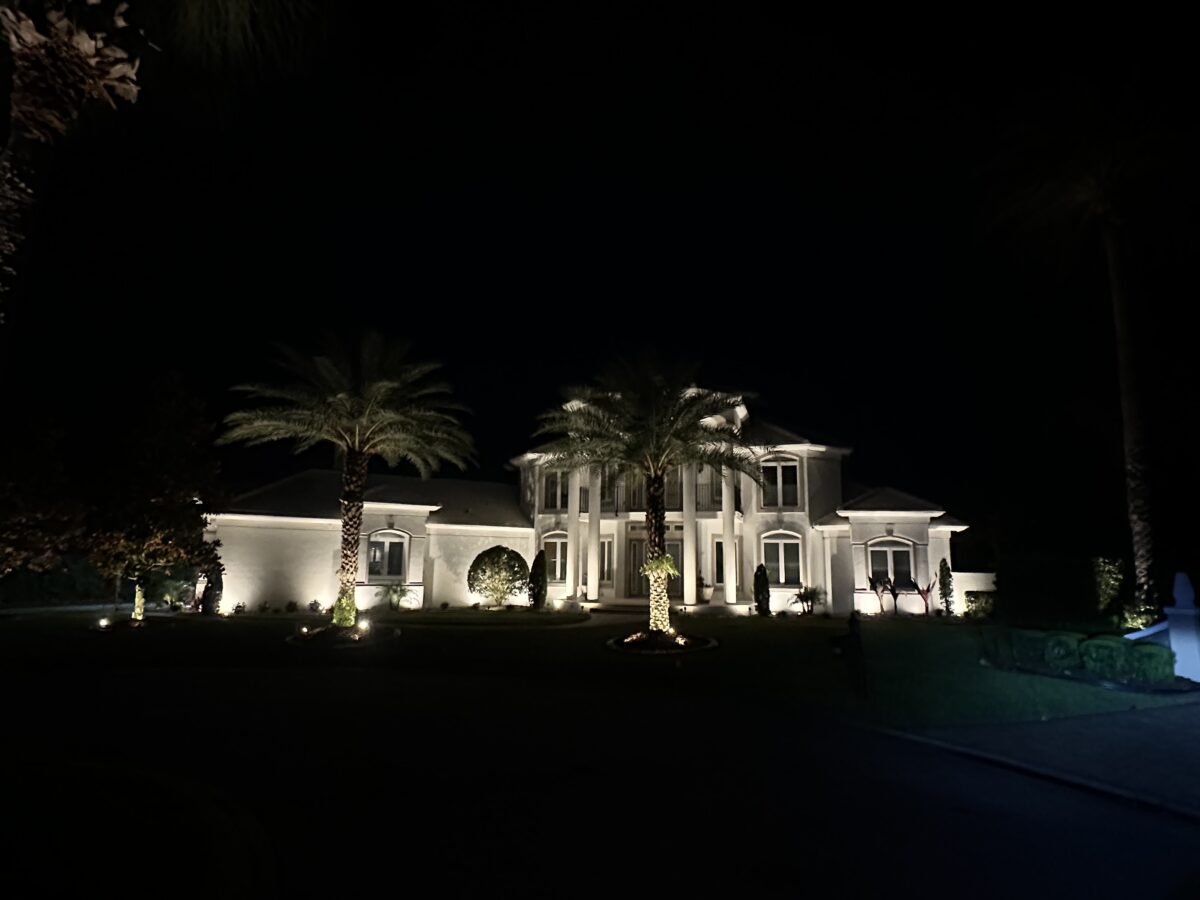
Lighting is the same. A handful of path lights along the walk and one or two uplights on a palm or the front of the house make the home safer to approach at night and show off the design after dark. Low voltage LED systems are a good fit here because they use little power and are easy to adjust as plants grow.
If you live in an HOA community, check with your HOA before changing bed shapes, adding curbing or installing lighting. Many associations want to approve plans first, and it is easier to design around their rules from the start.
Frequently asked questions
What is the most low-maintenance landscape idea for Palm Coast?
Fewer, larger beds with a permanent edge and plants spaced for their mature size. That combination reduces trimming, keeps mulch where it belongs and cuts down on replanting. Adding drought-tolerant plants in sunny spots helps even more.
Should I use rock or mulch in my Palm Coast beds?
Both have a place. Mulch helps sandy soil hold moisture and feeds it as it breaks down, which plants appreciate. Rock lasts longer and works well near downspouts and in contemporary designs, but it holds heat, so pair it with tough, sun-loving plants.
Can I add plants near the house without causing problems?
Yes, as long as you leave space. Keep shrubs a few feet off the walls so air can move and you can reach windows, irrigation and outdoor equipment. Choose plants whose mature size fits the space so you are not fighting them with shears every month.
When is the best time to start a new landscape design?
Fall and early spring are comfortable times to plant in Palm Coast because heat stress is lower. That said, planning can happen anytime, and many projects start with a design in summer and planting once temperatures ease.
If you would like a second set of eyes on your yard, Udell’s Landscape Services is locally owned and has been doing landscape design in Palm Coast and across Flagler County for more than 20 years. You can request a free estimate or call us at (386) 931-6539 and we will walk the property with you.