Landscape Design for Palm Coast Curb Appeal
May 4, 2026How to Choose Landscaping That Complements Your Palm Coast Home
May 13, 2026For most Palm Coast flower beds, an organic mulch like pine straw, pine bark or hardwood mulch is the best choice, because it keeps sandy soil cooler and moister and slowly improves it as it breaks down. Stone such as river rock is the better pick for downspout splash areas, tight side yards and low-water designs where you want something that will not wash away or need yearly topping off. Many yards end up using both, each in the spot where it works best.
How the main options compare
Here is a side-by-side look at the covers we install most often in Flagler County and how each one handles our heat, heavy rain and sandy soil.
| Cover | Heat | Heavy rain | Effect on sandy soil | Upkeep |
|---|---|---|---|---|
| Pine straw | Keeps soil cool | Needles interlock and resist washing out, even on slopes | Breaks down and adds organic matter | Refresh once or twice a year |
| Pine bark (nuggets or mini nuggets) | Keeps soil cool | Light pieces can float in standing water | Breaks down slowly | Top off about yearly |
| Shredded hardwood | Keeps soil cool | Knits together fairly well | Breaks down and feeds soil | Top off about yearly, fades in sun |
| River rock | Holds and reflects heat | Stays put, good for drainage areas | Adds nothing to the soil | Occasional leaf blowing and weed pulling |
| Crushed or decorative stone | Holds and reflects heat | Stays put if bordered | Adds nothing to the soil | Debris can collect between stones |
The case for organic mulch in our soil
Palm Coast soil is mostly sand. Water runs through it fast and it holds very little in the way of nutrients. An organic mulch helps on all fronts.
- It shades the soil, so roots are not cooking in July.
- It slows evaporation, which means plants need watering less often.
- As it decomposes, it adds organic matter that helps sand hold water and nutrients.
- It suppresses many weeds by blocking light to seeds.
Pine straw is a local favorite for good reason. It is light, easy to spread around existing plants, and the needles lock together so it stays in place during summer downpours. Pine bark and shredded hardwood give a darker, more uniform look that many homeowners prefer in front beds. UF/IFAS recommends a layer about two to three inches deep, kept a few inches away from trunks and stems.
One note on cypress mulch: UF/IFAS has raised concerns about harvesting cypress trees for mulch, and pine, eucalyptus or melaleuca mulches are commonly suggested alternatives.
Where stone makes more sense
Stone has real advantages in certain parts of a Palm Coast yard. It does not float, does not break down, and does not need to be replaced every year.
- Under downspouts and roof drip lines. Water from a gutter can dig a trench in mulch. River rock absorbs that force.
- Narrow side yards and AC pads. Areas that get little attention stay neat with stone.
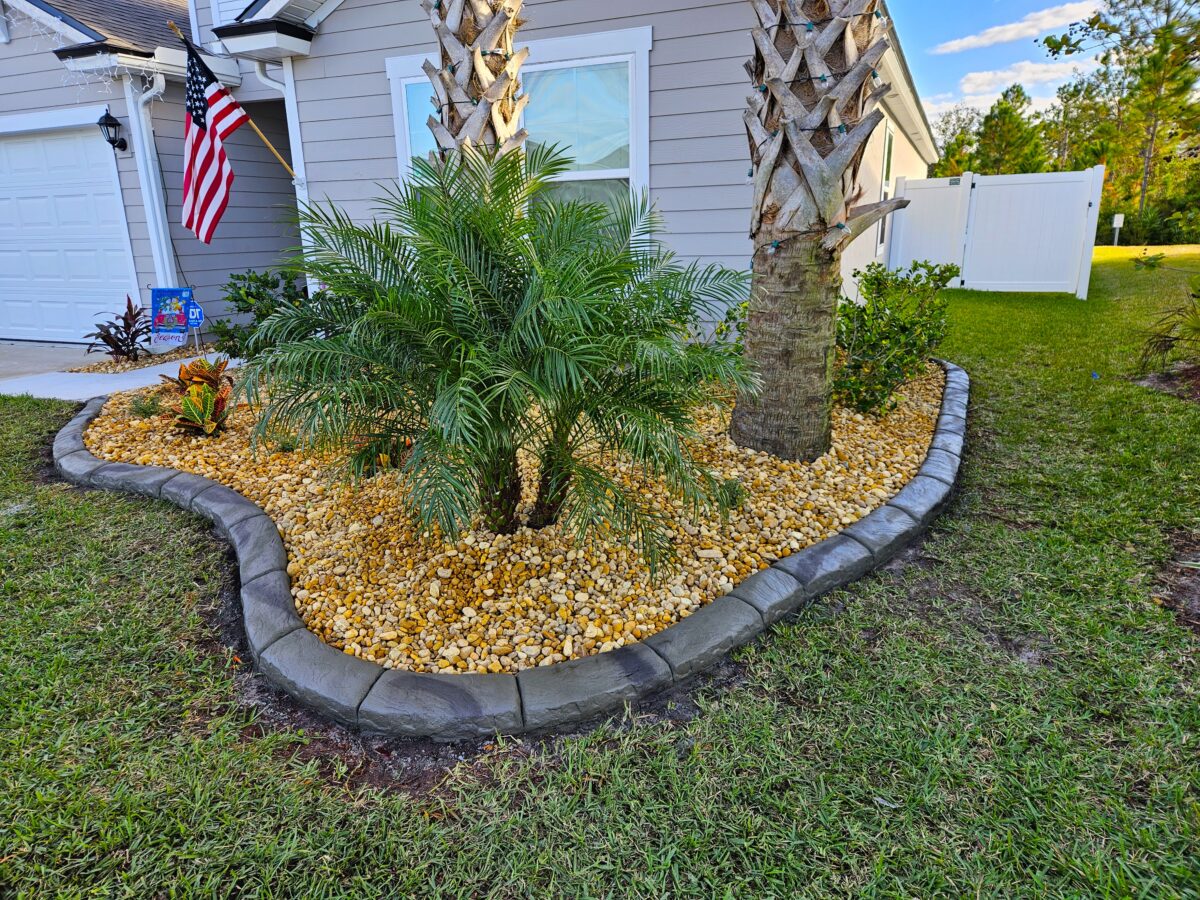
- Around palms and succulents. Plants that like dry roots and full sun do fine with rock around them.
- Contemporary designs. Light gray or white stone pairs well with modern homes and clean lines.
The tradeoff is heat. Stone in full sun warms up and radiates that heat back onto plants and nearby walls. Pick tough, sun-loving plants for rock beds and use landscape fabric underneath to keep stone from sinking into the sand. We go into more detail in decorative stone landscaping for low maintenance yards.
Matching the cover to your bed
If you are still unsure, run through these questions.
- Is the bed mostly flowering shrubs and perennials? Organic mulch will keep them happier.
- Does water rush through this spot during storms? Use stone, or at least pine straw rather than light bark nuggets.
- Is it next to the house in full afternoon sun? Mulch keeps that area cooler than rock.
- Do you want to add or move plants often? Mulch is easier to dig through than stone and fabric.
- Do you live in an HOA community? Check with your HOA. Some specify mulch color or limit stone in front yards.
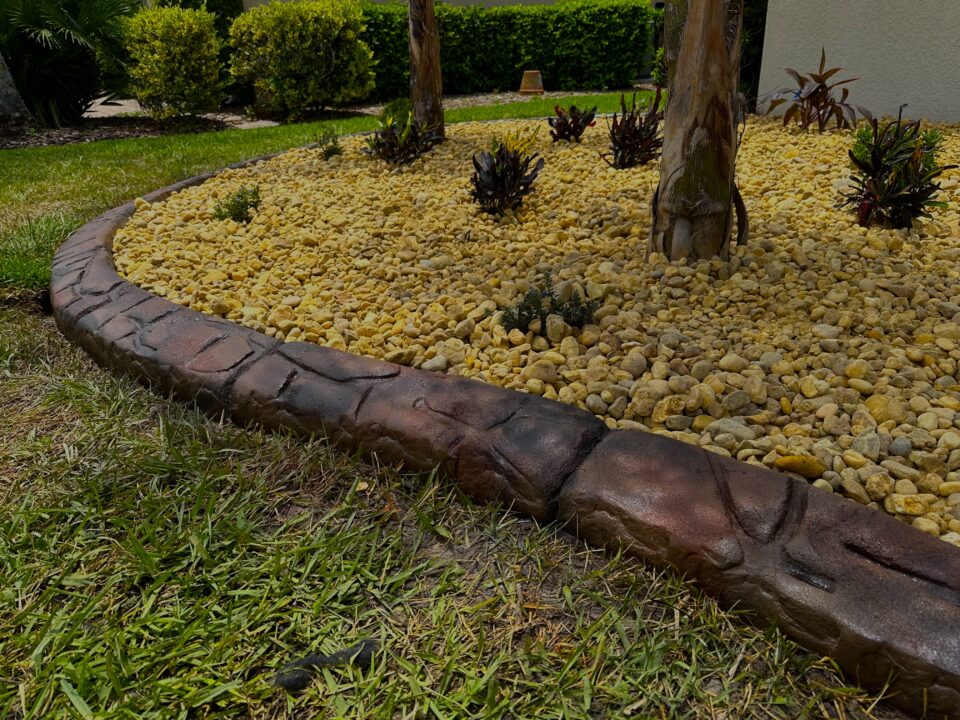
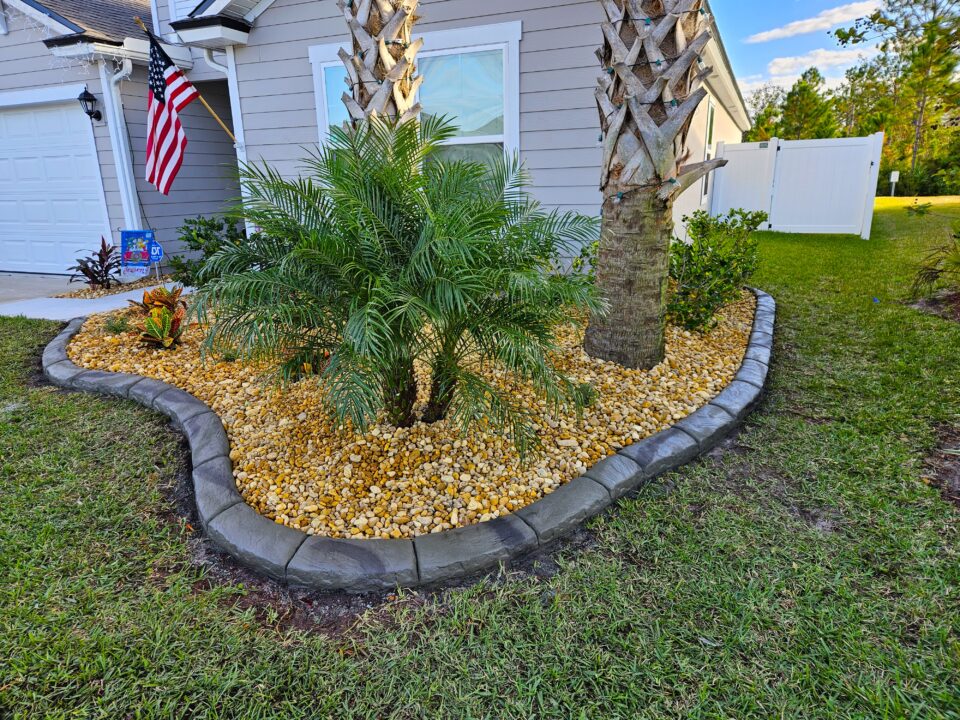
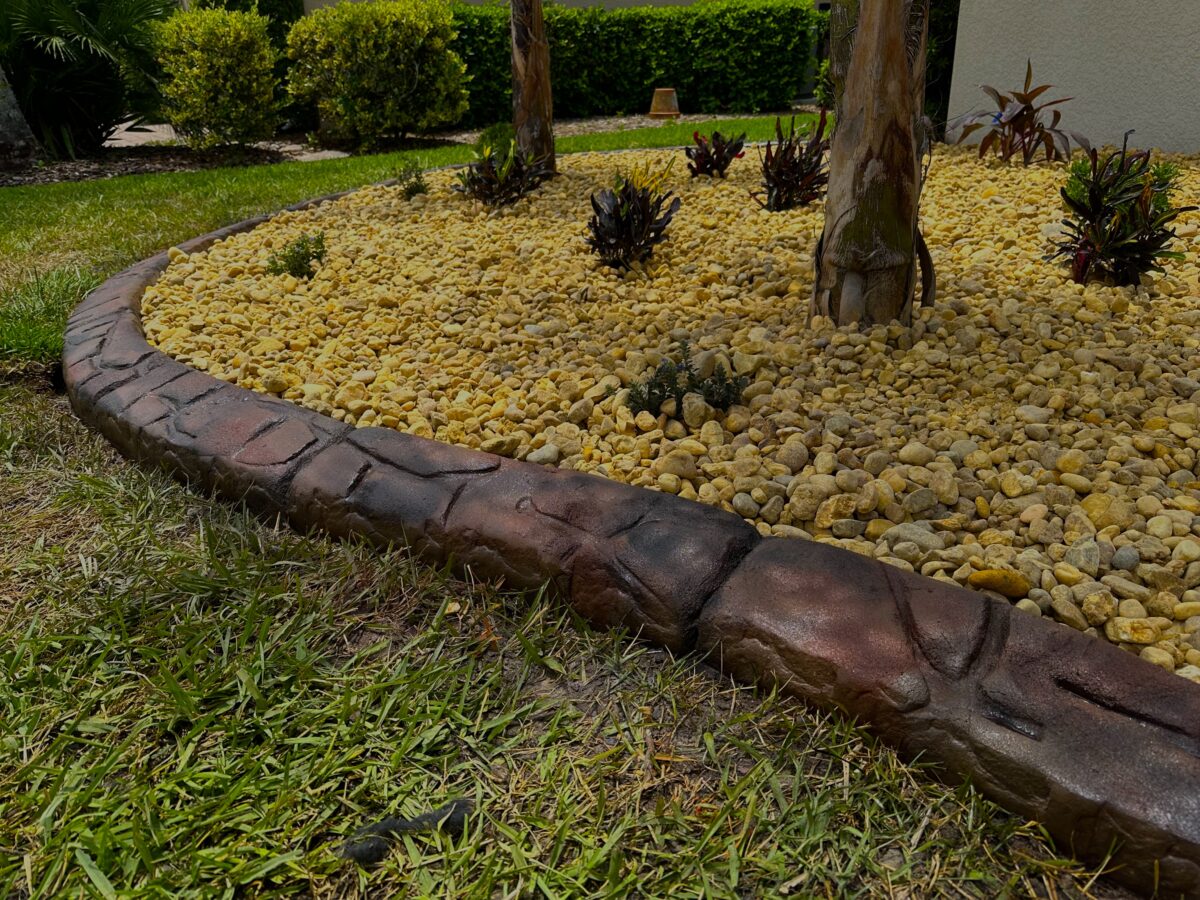
Whatever you choose, a solid edge keeps it in place. Decorative concrete curbing is a common pairing for both mulch and stone beds in our area.
Getting the amount right
Ordering too little means a thin layer that lets weeds through. Ordering too much leads to mulch piled against trunks, which can cause rot. Measure each bed’s length and width, multiply to get square footage, and work out the volume for your target depth. Our guide to measuring garden beds before ordering mulch or stone walks through it step by step.
Frequently asked questions
Does rock attract more heat than mulch in Palm Coast beds?
Yes. Stone absorbs sun during the day and gives off heat into the evening, while organic mulch shades and insulates the soil. Use rock with heat-tolerant plants and keep it away from shallow-rooted, moisture-loving ones.
How often should mulch be replaced in Florida?
In our heat and humidity, organic mulch breaks down fairly quickly. Most beds need a top-off about once a year, and pine straw may need refreshing a bit more often to keep its color.
Can I put mulch on top of old rock?
It is not ideal. Mulch settles between the stones and starts breaking down there, which creates a weedy mix that is hard to clean up. It is better to pick one cover for each bed.
Is rubber mulch a good choice here?
Rubber mulch does not break down, so it adds nothing to sandy soil and holds heat in summer. Most Palm Coast flower beds do better with an organic mulch.
Udell’s Landscape Services installs mulch, pine straw and stone as part of our landscape design and installation in Palm Coast and throughout Flagler County, with more than 20 years of local experience. To talk through the right cover for your beds, request a free estimate or call (386) 931-6539.