How to Tell if Palm Coast Landscaping Advice Is Actually Useful
May 4, 2026Palm Coast Landscape Design for Front Yards
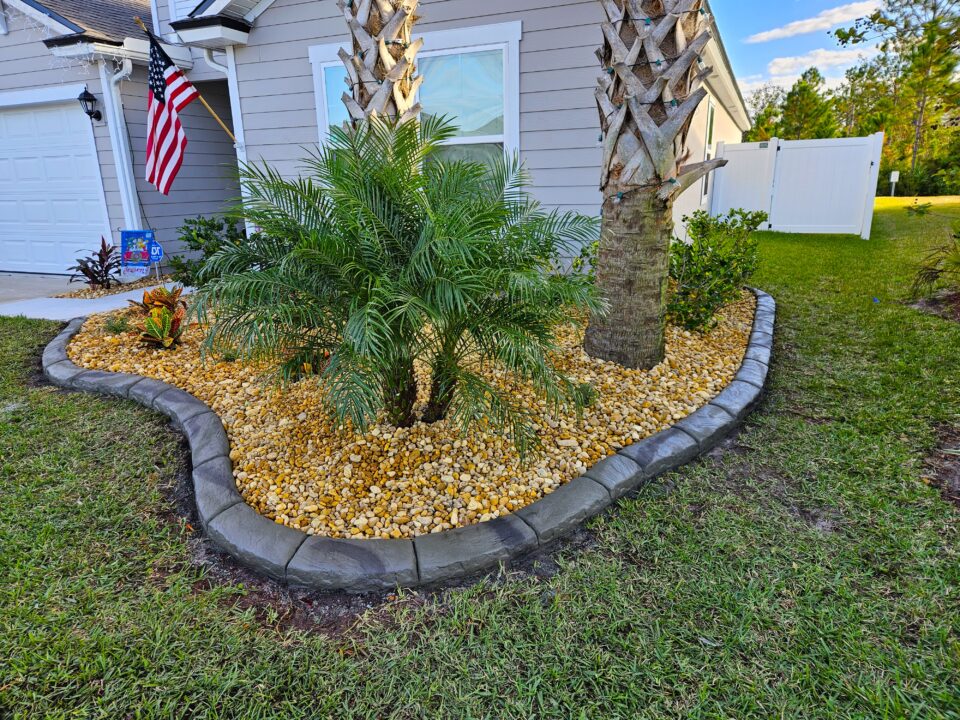
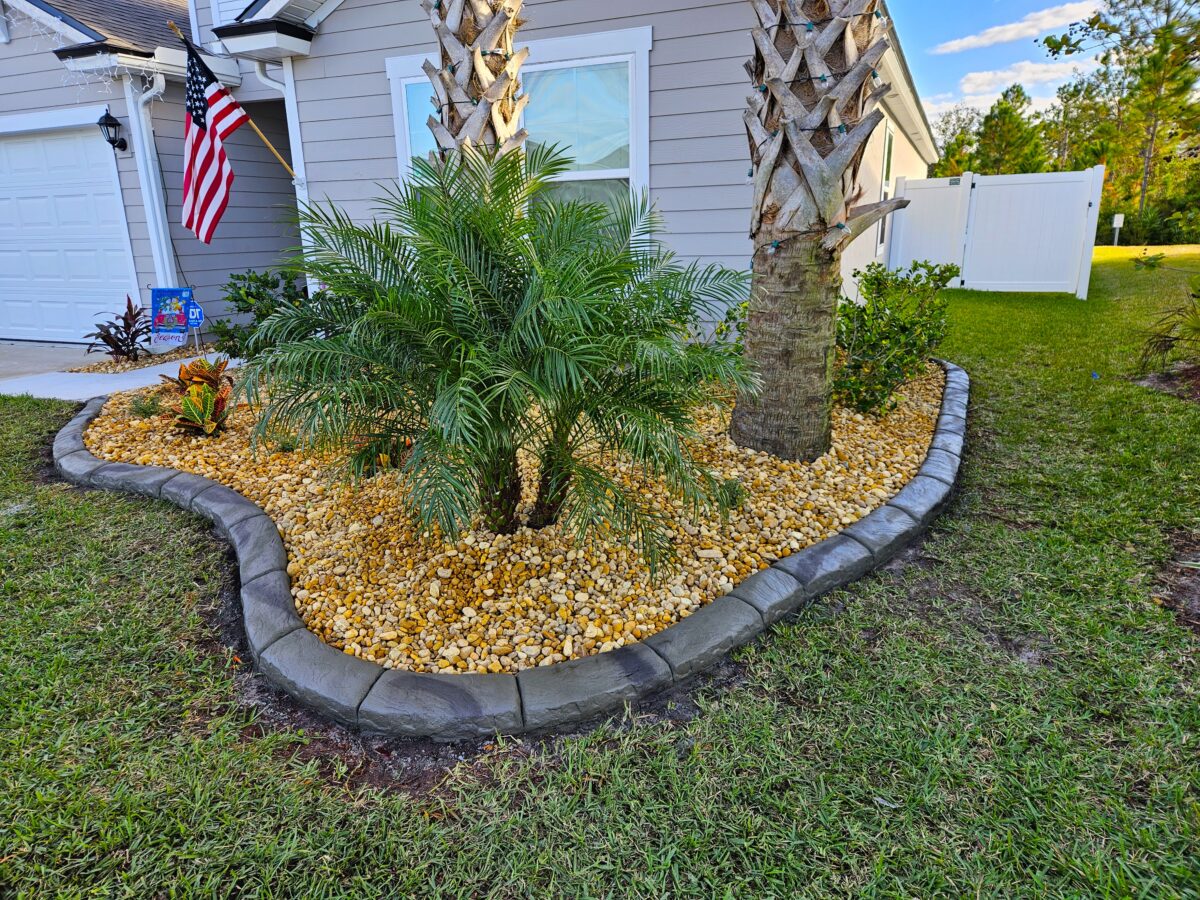
May 4, 2026Decorative stone makes a yard lower maintenance because it does not break down, so you are not refilling beds every year the way you would with mulch, and a properly prepared stone bed sprouts fewer weeds. In Palm Coast, stone works best in sunny spots, narrow strips, side yards and around tough, drought tolerant plants. It is not zero maintenance, though, and it is not the right choice for every bed.
Here is an honest look at where rock shines, where it struggles in our climate, and how to set it up so it actually saves you work.
Where decorative stone makes the most sense
Stone is a great tool when it is used in the right places. Around Flagler County, these are the spots where we see it pay off most:
- Side yards and utility areas. Narrow strips next to AC units, pool equipment and trash can pads get foot traffic and shade from the house. Rock handles both without turning to mud.
- Along the foundation. A stone strip next to the house keeps organic material away from the slab and stays clean when rain splashes off the roof.
- Drainage paths. Larger river rock can line a swale or the area under a gutter downspout, slowing water and preventing washouts.
- Sunny beds with drought tolerant plants. Succulents, agaves, ornamental grasses and coastal shrubs look natural in rock.
- Coastal looks. Near Flagler Beach and the Intracoastal, light colored stone pairs nicely with palms and salt tolerant plants. Our post on stone bed landscaping for a cleaner coastal look has ideas for that style.
Stone versus mulch: the real tradeoffs
| Decorative stone | Organic mulch | |
|---|---|---|
| Refilling | Rarely, mainly topping up thin spots | Once or twice a year |
| Upfront effort | Higher, more material weight and prep | Lower |
| Heat | Absorbs and reflects heat in full sun | Keeps soil cooler |
| Soil | Adds nothing to the soil | Slowly adds organic matter |
| Washouts | Heavier rock stays put in rain | Light mulches can float away |
| Changing your mind | Hard to remove later | Easy to rake out |
The heat point is the one people underestimate. In a south or west facing bed in July, rock can get very hot and radiate that heat onto plants and the wall of the house. Plants that like cool, moist roots, such as many ferns and azaleas, are usually happier in mulch.
Picking the right stone
Different rocks behave differently, so it is worth choosing with more than color in mind.
- River rock: Smooth, rounded and heavy. It stays put in heavy rain and works well for drainage areas, though it can be harder to walk on.
- Pea gravel: Small and comfortable underfoot, good for paths and seating areas. It can migrate onto lawns if it is not contained.
- Crushed granite or similar angled stone: The pieces lock together, so it holds a surface well on paths.
- Lava rock: Lightweight and porous, with a deep red or black color. Light weight means it can shift in strong storms.
- White marble chips: Bright and clean looking. Marble is a calcium-based stone, so over time it can nudge soil pH up, which some plants do not enjoy.
Whatever you choose, size matters. Small stone moves more easily under feet, rain and leaf blowers. Larger stone stays put but can look chunky in a small bed.
How to set up a stone bed that stays low maintenance
Most of the long term work in a stone bed comes from shortcuts at the start. A careful install pays you back for years.
- Remove grass and weeds completely, including roots and runners. St. Augustine left under the fabric will find its way back up.
- Grade the bed so water flows away from the house and does not pool.
- Install a quality landscape fabric that lets water through. It separates stone from sand so the rock does not sink in over time.
- Cut neat openings for plants and leave room around each one to grow.
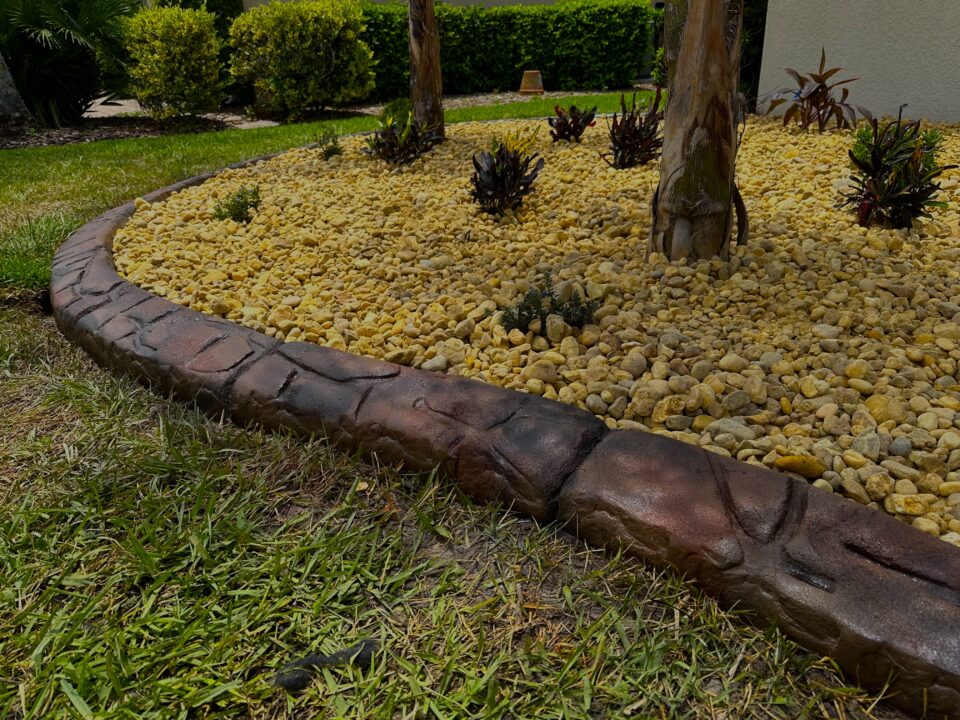
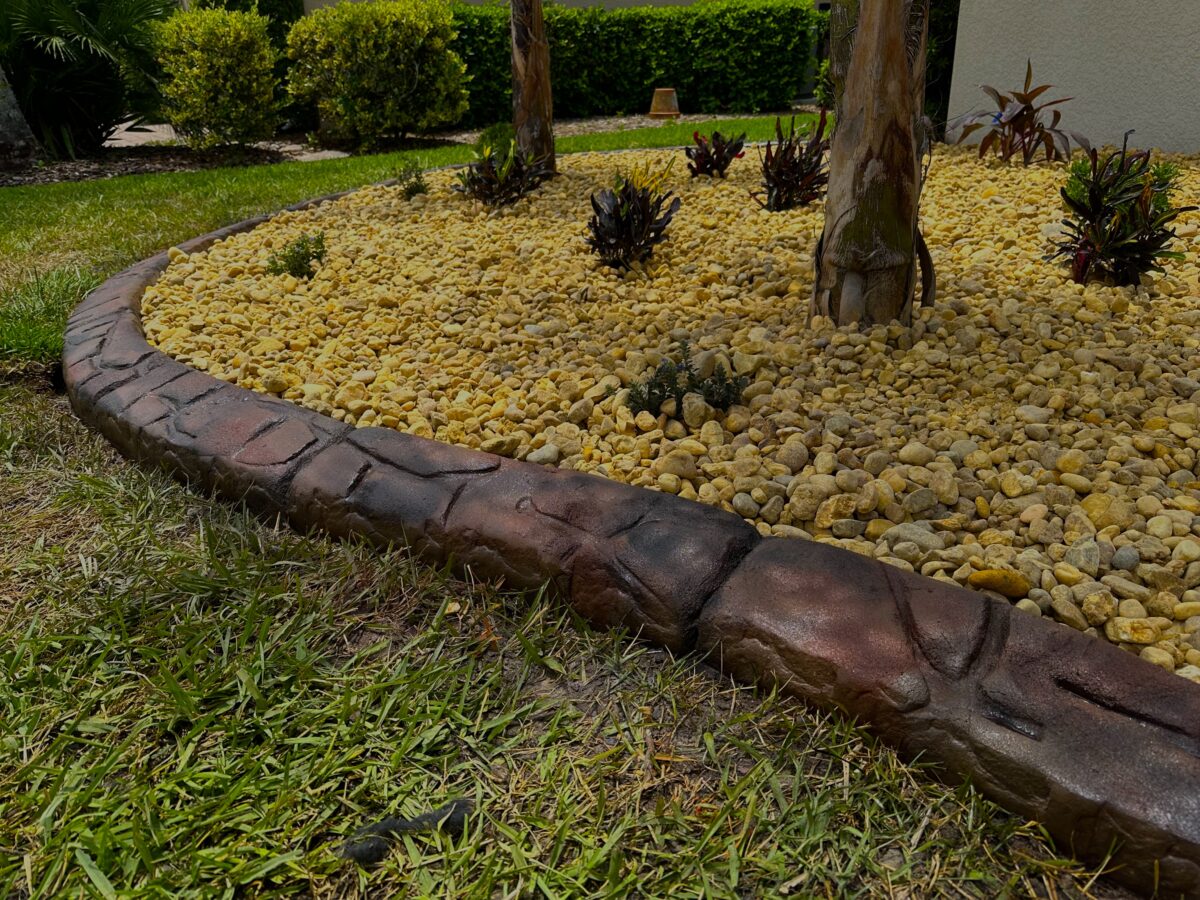
- Use a solid border. A firm edge is what keeps stone out of the lawn and off the mower blades. Concrete curbing is a common choice, and our post on landscape borders that keep mulch and stone in place compares options.
- Spread stone to an even depth, usually a couple of inches, enough to hide the fabric completely.
The maintenance that still comes with rock
Stone saves time, but it does not eliminate yard care. Expect to handle:
- Leaves and debris. Organic matter that collects on top of stone breaks down into a thin layer of soil, and weeds will happily sprout in it. A leaf blower on a low setting every few weeks keeps the surface clean.
- Occasional weeds. Seeds blow in and land on the surface. Pulling them while small takes only a few minutes.
- Thin spots. Heavy storms, foot traffic and kids can scatter rock. A bag or two every so often keeps coverage even.
- Plant care. The plants in the bed still need pruning, and in a hot stone bed they may need more water than you would expect while they are getting established.
Check with your HOA before converting large areas from mulch or grass to rock, since some communities have rules about how much of the front yard can be hardscape or stone.
Frequently asked questions
Is decorative stone better than mulch in Florida?
Neither is better everywhere. Stone suits sunny, drought tolerant beds and utility areas, while mulch is better for plants that like cooler, moister roots and for improving sandy soil over time.
Do weeds grow through landscape rock?
Some will, especially if grass was not fully removed or leaves are allowed to build up on top. Good prep, a quality fabric and keeping the surface clean keep weeds to a minimum.
Can I put stone over existing mulch?
It is better to remove the old mulch first. As the mulch underneath breaks down, the stone sinks and mixes with it, and weeds grow in that rich layer.
At Udell’s Landscape Services, we install decorative stone, mulch and plantings for homes throughout Palm Coast and Flagler County as part of our landscaping services. If you are weighing rock for your beds, you can request a free estimate or call us at (386) 931-6539. You can also learn more about our approach to landscape design in Palm Coast.