Spring Landscape Refresh Ideas for Palm Coast Properties
April 22, 2026Storm Debris Removal for Flagler County Yards
May 4, 2026A solid landscape maintenance plan for a Flagler County property covers four basics on a regular schedule: trimming shrubs and hedges, keeping beds weeded, refreshing mulch or stone, and maintaining clean edges along lawns, walks and driveways. Visits are usually more frequent in the hot, rainy months and lighter in winter. Add seasonal checks for irrigation and storm readiness, and the property stays neat all year instead of swinging between overgrown and freshly cleaned.
Here is what we think belongs in a good plan, how often each task tends to need doing in our climate, and how to adjust the plan for your own property.
The core tasks in a maintenance plan
Shrub and hedge trimming
In Palm Coast, many common shrubs put on a lot of growth between late spring and early fall. Regular light trimming keeps them shaped and sized for their spot, which is healthier for the plant than letting them get huge and then cutting them back hard. Trimming also keeps plants clear of windows, walls, walkways and AC units.
Bed weeding
Weeds grow fast with summer heat and rain. Pulling them while they are small, before they set seed, keeps the job quick. Letting them go for a month or two can turn a light weeding into a full cleanup.
Mulch and stone upkeep
Mulch breaks down over time in our heat and humidity, and some of it washes away in heavy rain. Topping it up keeps beds looking dark and fresh, holds moisture in sandy soil and helps suppress weeds. Stone beds need less but still benefit from occasional raking, leaf removal and weed control.
Clean edges
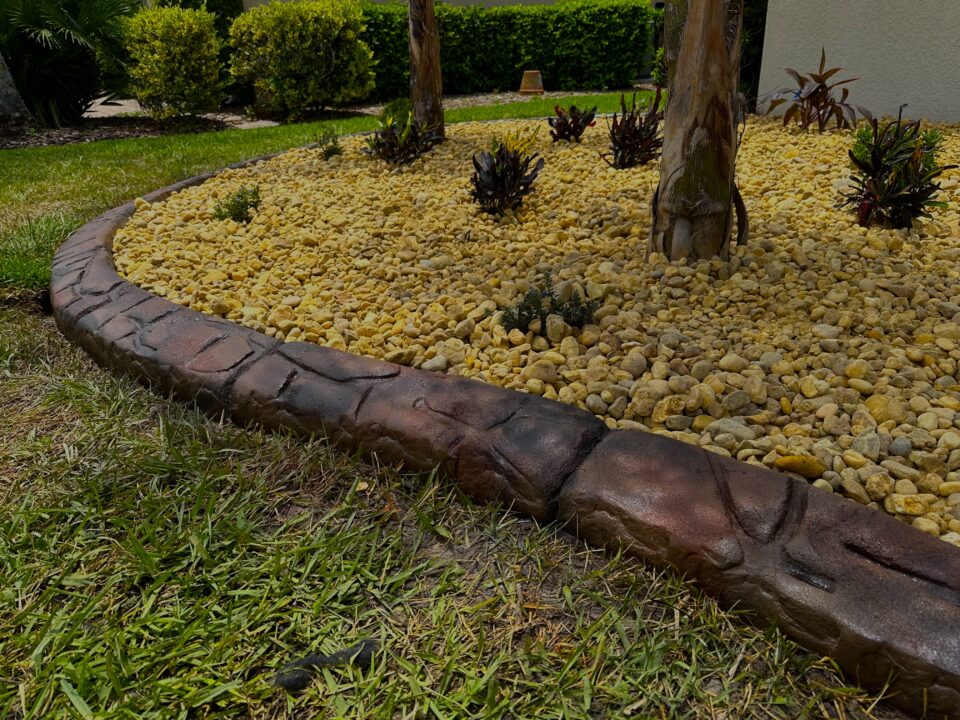
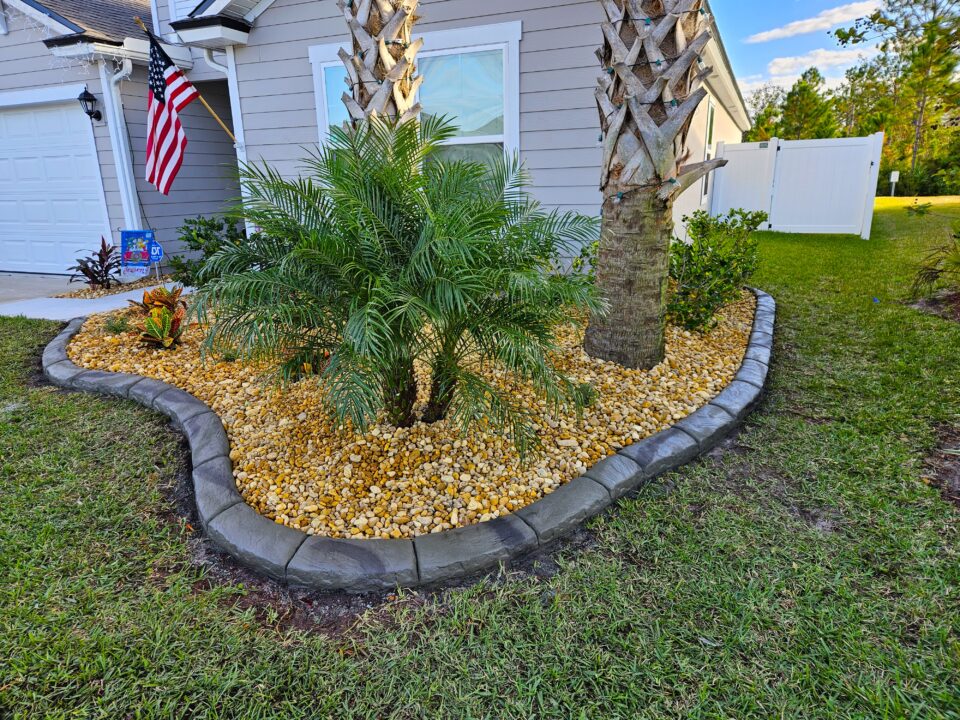
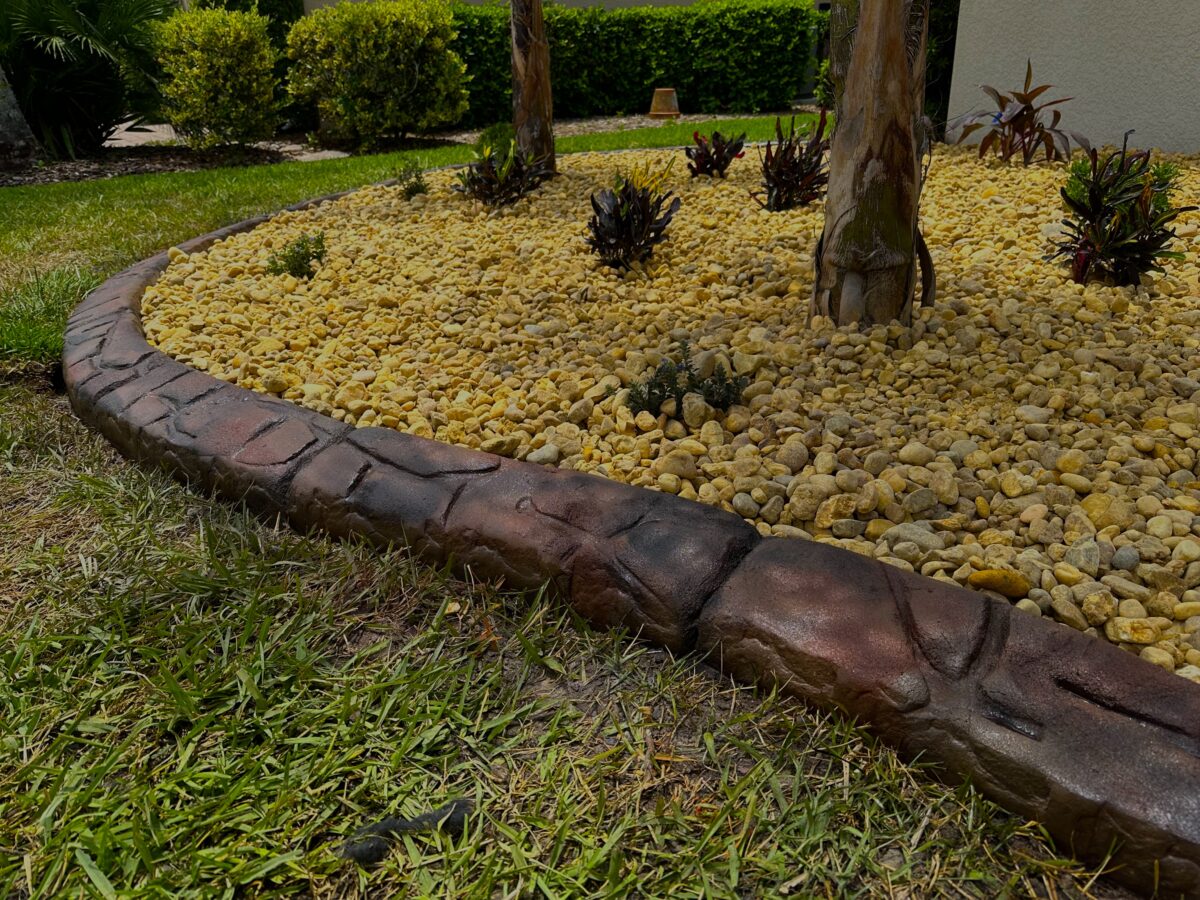
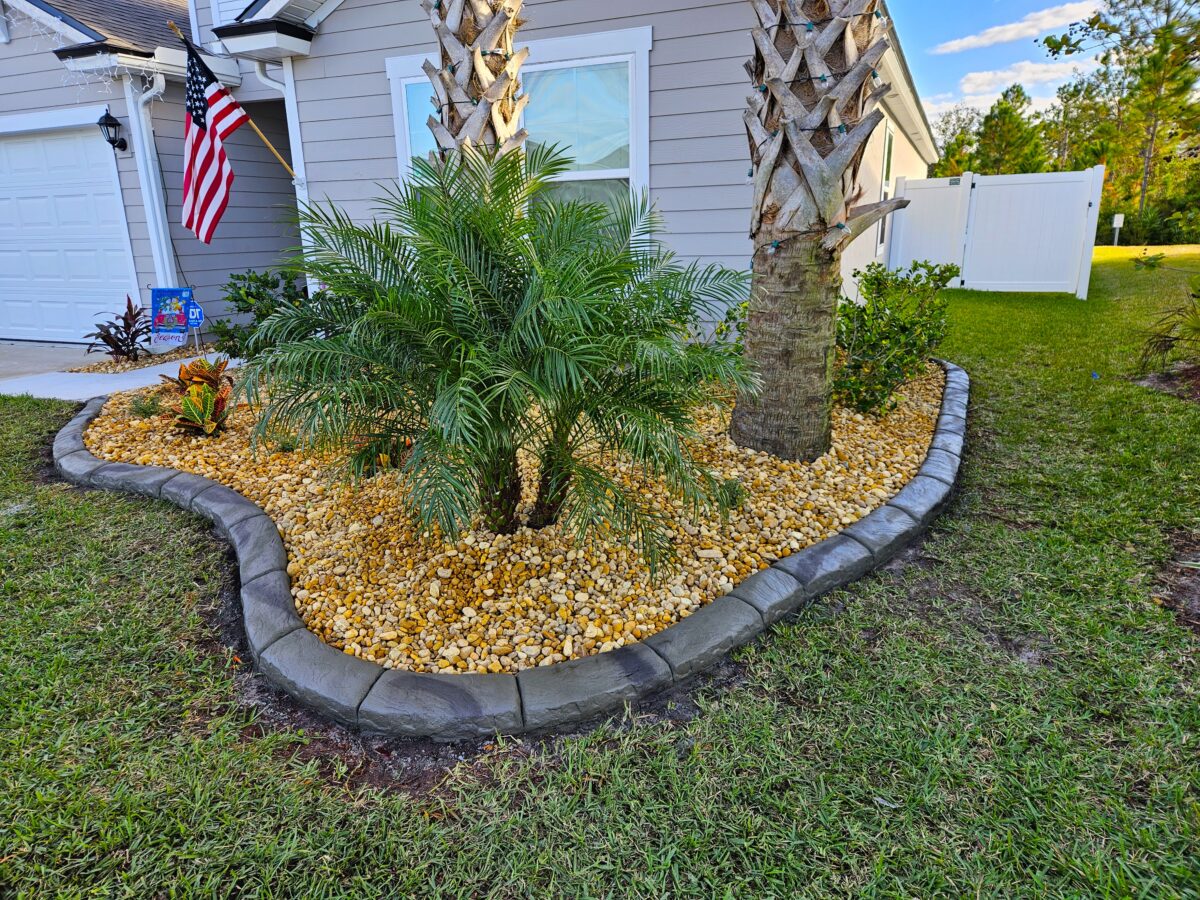
Crisp edges along beds, sidewalks and driveways make a bigger visual difference than almost anything else. St. Augustine and other spreading grasses constantly try to creep into beds and over pavement, so edging is an ongoing task. A permanent border like concrete curbing cuts down on how much edging work is needed.
How often does each task need doing?
Every property is different, but here is a general idea of how frequency shifts with our seasons.
| Task | Late spring to early fall | Late fall to winter |
|---|---|---|
| Shrub and hedge trimming | Every few weeks for fast growers | Light touch-ups as needed |
| Bed weeding | Frequently, since weeds grow fast | Less often |
| Mulch refresh | Top off as it thins or washes out | A good time for a full refresh before spring |
| Edging | Regularly with mowing | Less often as grass slows |
| Irrigation check | Early in the season and after any problems | Adjust run times as rain and temperatures change |
Some owners prefer a regular visit schedule. Others like a seasonal approach with a few larger visits per year. Either can work, as long as the gaps are not so long that the property gets ahead of you during summer.
Seasonal extras worth adding
Beyond the regular tasks, a few seasonal items keep a Flagler County property in good shape.
- Before hurricane season (by June 1): remove dead branches, thin dense growth that catches wind, and clear anything loose that could become debris. Hurricane season runs through November 30.
- After storms: clear debris, check plants for damage, and look for washed-out beds or displaced mulch and stone.
- Late winter: cut back cold-damaged growth once the risk of frost has passed, and refresh beds ahead of spring.
- Fall: a good time to replace plants that struggled over the summer, since mild weather helps new plants settle.
Our seasonal yard cleanup checklist for Flagler County lays out these jobs through the year.
Adjusting the plan to your property
A one-size plan does not fit every yard. A few factors change what you need:
- Plant choices. Fast-growing hedges need more trimming than slow, compact shrubs. If maintenance feels endless, swapping a few plants may help more than adding visits.
- Bed coverage. Mulch beds need more frequent refreshing than stone beds.
- Coastal exposure. Homes near Flagler Beach and the Intracoastal deal with salt spray and wind, so plant health checks matter more.
- HOA requirements. Many Palm Coast communities have standards for hedge height, bed upkeep and lawn condition. Check your HOA rules so the plan meets them.
- Time away. Seasonal residents and frequent travelers usually need a more regular schedule, since nobody is watching the yard between visits.
If the maintenance load has become too much, it may be worth looking at low maintenance landscaping for busy Flagler County homeowners, which focuses on design changes that reduce ongoing work.
What you can handle yourself between visits
Even with professional help, a few small habits keep things tidy:
- Pull the occasional weed when you notice it.
- Blow or sweep walks after mowing so clippings do not collect along edges.
- Watch your irrigation for broken heads or sprinklers hitting the house.
- Keep mulch pulled back a few inches from the foundation and plant stems.
Our lawn cleanup services page describes the kinds of visits we offer.
Frequently asked questions
How often should shrubs be trimmed in Palm Coast?
Fast-growing shrubs may need trimming every few weeks during the warm, rainy months and much less in winter. Slower plants can go longer between trims. Matching plants to their space reduces how often trimming is needed.
When is the best time to refresh mulch?
Many homeowners refresh mulch in late winter or early spring before the growing season, then top off in summer where heavy rain has thinned it. Keep the layer a few inches deep and away from stems and the foundation.
Does a maintenance plan include lawn mowing?
It depends on the company and the plan. Ask exactly what is included, such as mowing, edging, trimming, weeding and debris removal, so you know what to expect.
If you would like a regular plan that keeps your property neat, Udell’s Landscape Services works with homeowners across Palm Coast and Flagler County. Learn more about our landscaping in Palm Coast, request a free estimate, or call (386) 931-6539.