Best Landscaping Services for Palm Coast Property Enhancements
May 4, 2026Why Flagler Beach Homes Need Salt-Tolerant Landscaping
May 4, 2026The landscape borders that do the best job of keeping mulch and stone in place in Palm Coast are solid, continuous edges that sit a little higher than the bed material, such as poured concrete curbing, set pavers or heavy metal edging. Thin plastic edging and simple cut edges can work, but heavy rain, mowers and foot traffic tend to push material past them over time. The right choice depends on your budget, the shape of your beds and how much upkeep you want.
Why mulch and stone keep escaping
If you have ever raked pine bark out of your lawn after a storm, you already know the problem. In Flagler County, a few things work against a clean bed edge:
- Heavy summer rain. Afternoon downpours move light mulch easily, especially on sloped beds or under roof edges.
- Sandy soil. Loose sand does not hold an edge for long. A neatly cut trench softens and fills in within weeks.
- Mowers and string trimmers. Each pass along the edge kicks a little stone or mulch into the grass, and runner grasses like St. Augustine creep back into the bed.
- Foot traffic. Kids, pets and people cutting corners step on bed edges and push material out.
Decorative stone has an extra downside. Pebbles that end up in the lawn can be thrown by a mower blade. A good border is as much about safety and cleanup time as it is about looks.
Comparing common border options
| Border type | How well it holds material | Upkeep | Best fit |
|---|---|---|---|
| Decorative concrete curbing | Very good; continuous with no gaps | Low | Curved beds, long runs, front yards |
| Pavers or brick | Good when set on a firm base | Moderate; pieces can shift or settle | Formal looks, matching patios or walks |
| Steel or aluminum edging | Good; thin, clean line | Low to moderate | Modern designs, straight or gentle curves |
| Plastic roll edging | Fair; can heave or get pushed out | Moderate to high | Short term fixes, small beds |
| Natural cut edge | Poor in sandy soil | High; needs recutting often | Informal beds where a soft look is wanted |
There is no single best answer for every yard. A quick bed by the mailbox might be fine with metal edging, while a long front bed that wraps the house often benefits from something more permanent.
What makes concrete curbing hold up well here
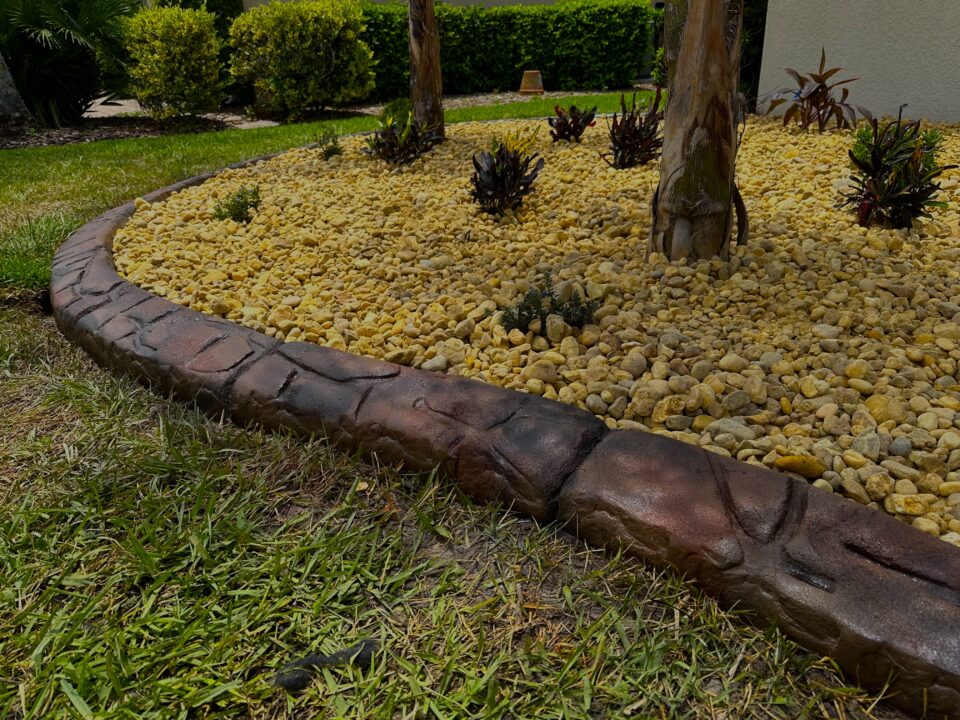
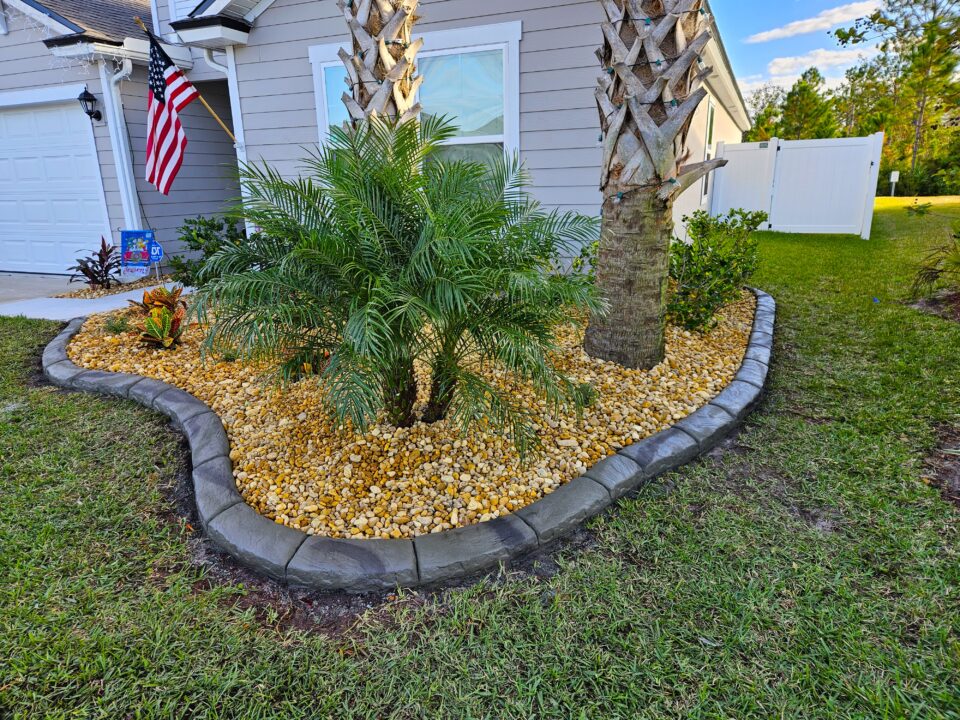
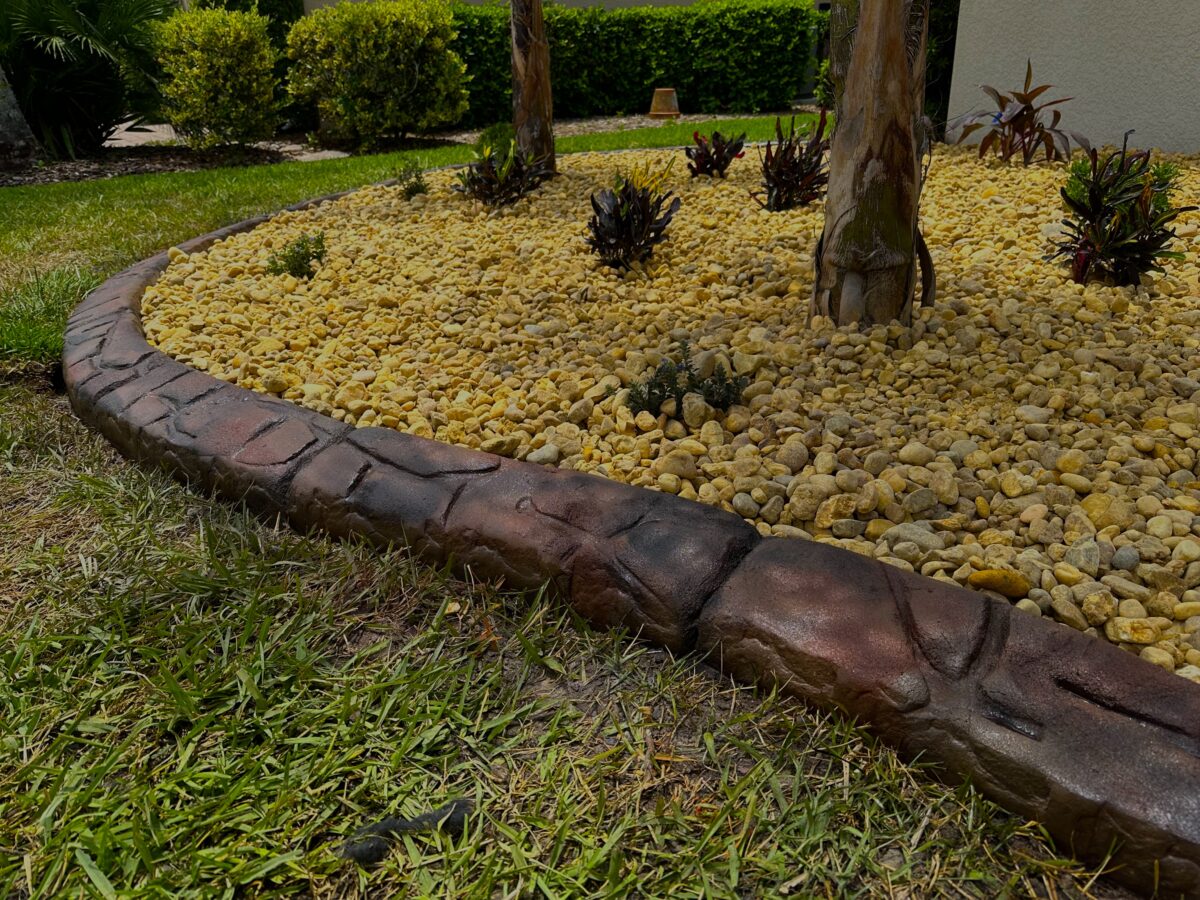
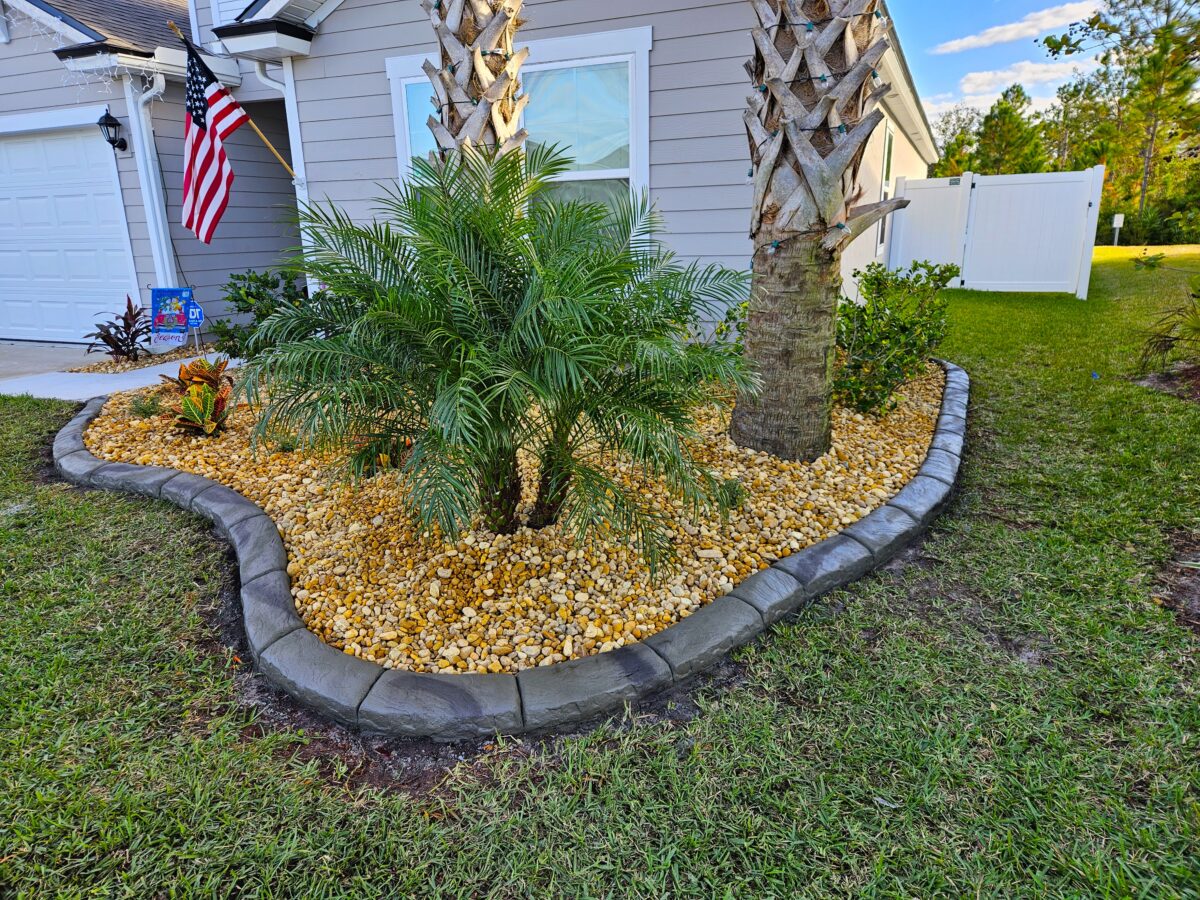
Decorative concrete curbing is poured in place as one continuous piece, which means there are no seams for mulch or stone to slip through. It follows curves smoothly, so it works with the flowing bed shapes many Palm Coast homes use. Because it sits slightly above the lawn, it acts as a small wall that keeps bed material in and grass runners out.
Curbing also gives mower wheels a hard surface to ride on, which makes trimming along the edge quicker and cleaner. It can be colored or stamped to suit the house, and it does not rot or rust in our humid, salty air. You can read more on our decorative concrete curbing page and in our article on how concrete curbing helps control mulch, gravel and soil.
Curbing is a long term choice, so the layout deserves care. It is worth settling bed shapes, irrigation head locations and any future plans before the concrete goes down.
Matching the border to the bed material
Different fill materials put different demands on the edge.
- Pine bark and shredded mulch are light and float in heavy rain. A border that sits at least an inch or two above the finished mulch level helps keep it from washing out.
- Pine straw knits together and stays put better than bark, but it still drifts at the edges. Any solid border helps.
- River rock and larger stone are heavy and rarely wash away, but they roll and scatter when stepped on. A taller, firm edge keeps them contained.
- Small gravel and pea stone migrate easily into lawns. Pair them with a solid edge and keep them away from spots where people walk across the bed.
If you are still deciding what goes in the bed, our guide to the best mulch and stone options for Palm Coast flower beds compares the choices.
Small details that keep edges sharp
Whatever border you choose, a few habits help it work better for years:
- Do not overfill beds. Keep mulch or stone slightly below the top of the border.
- Point downspouts away from bed edges or add stone where roof water lands.
- Adjust sprinkler heads so they do not blast directly at the bed line.
- Trim grass runners at the edge regularly so they do not climb over.
- Check with your HOA if you live in a community with rules about edging materials or colors.
Frequently asked questions
How high should a landscape border be?
For mulch beds, the border should stand a bit above the finished mulch so material cannot float over it in heavy rain. For stone, a slightly taller edge helps keep pebbles from rolling into the lawn.
Will a border stop weeds and grass from getting into my beds?
A solid border like curbing slows down creeping lawn grasses a great deal, but it will not stop every weed. Seeds still blow in, so occasional hand weeding and a fresh layer of mulch are still part of bed care.
Can a border be added to an existing bed?
Yes. Most borders, including concrete curbing, can be installed around beds that are already planted. The bed edge is usually cleaned up and reshaped first so the new border follows a clean line.
Udell’s Landscape Services installs decorative concrete curbing and handles mulch, stone and landscape design in Palm Coast for homeowners throughout Flagler County. If your beds keep spilling into the lawn, request a free estimate or call (386) 931-6539.