Best Landscaping Services for Palm Coast Property Enhancements
May 4, 2026Why Flagler Beach Homes Need Salt-Tolerant Landscaping
May 4, 2026Stone beds give a Palm Coast yard a clean, coastal look because rock keeps its color, does not break down like mulch, and heavier stone stays in place through summer storms. The keys to a good stone bed are choosing a rock size that suits your slope and rainfall, laying landscape fabric over a well graded base, and finishing the bed with a solid edge so stone does not migrate into the lawn. Pair it with heat tolerant, salt tolerant plants and you have a bed that looks neat with very little upkeep.
Stone is not right for every bed, though, so we will start there before getting into rock types, prep and edging.
Where stone works best, and where mulch is better
We often use both in the same yard. Each has its place.
Stone tends to work well:
- Along driveways and walkways, where mulch gets kicked out or tracked around
- Under roof drip lines, where water would scatter mulch
- In narrow strips beside the house, AC units or pool equipment
- Near the beach, where wind can blow lighter mulch out of the bed
- In modern or coastal designs with a few bold plants and lots of open space
Mulch is usually better:
- Around shrubs and perennials that like organic matter in the soil
- Under trees, where roots benefit from mulch breaking down over time
- In beds that get frequent planting changes
Stone also holds and reflects heat. In full sun against a south or west wall, it can make that spot noticeably hotter for plants and for the house. Light colored stone reflects more, and dark stone absorbs more. If you are torn between the two, our comparison of the best mulch and stone options for Palm Coast flower beds goes through the tradeoffs.
Choosing rock for a coastal look
The stone you pick sets the tone. A few common choices and how they behave here:
- River rock. Smooth, rounded and available in mixed earth tones. Medium sizes stay put well in heavy rain and suit a relaxed coastal style.
- Beach pebbles. Small, smooth and dark or gray. They look polished and modern but cost more and show debris easily.
- Crushed shell. A traditional coastal Florida look. Light in color and soft underfoot, though it can break down and scatter over time.
- White marble or limestone chips. Bright and crisp. These can nudge soil toward alkaline over time, so we keep acid loving plants out of these beds.
- Lava rock. Lightweight and colorful, but light enough to wash or blow around. We rarely recommend it in open, windy or sloped spots.
Size matters as much as type. On flat ground, smaller rock is fine. On slopes, under downspouts, or anywhere water runs during a storm, go with larger, heavier stone that water cannot easily move.
Preparing the bed: grade, fabric and depth
Most problems with stone beds trace back to rushed prep. Here is what we look at before any rock goes down.
- Clear it fully. Remove weeds, roots and old mulch. Mulch left under stone breaks down into soil that grows weeds right through the rock.
- Grade for drainage. The bed should slope gently away from the house so rain moves away from the foundation instead of pooling.
- Lay landscape fabric. A permeable fabric lets water through while keeping stone from sinking into our sandy soil. Overlap seams and pin them well.
- Cut neat openings for plants. An X cut in the fabric, folded back around each root ball, keeps the fabric intact around the plant.
- Use the right depth. About 2 to 3 inches of stone covers fabric well for most rock sizes. Deeper is heavier and wasteful.
Before ordering, measure carefully. Our guide on measuring garden beds before ordering mulch or stone shows how to estimate quantities so you do not end up short or with a pile left over.
Edging that keeps stone where it belongs
A stone bed without a proper edge slowly spreads into the grass, where rocks get caught by the mower. A good edge solves that.
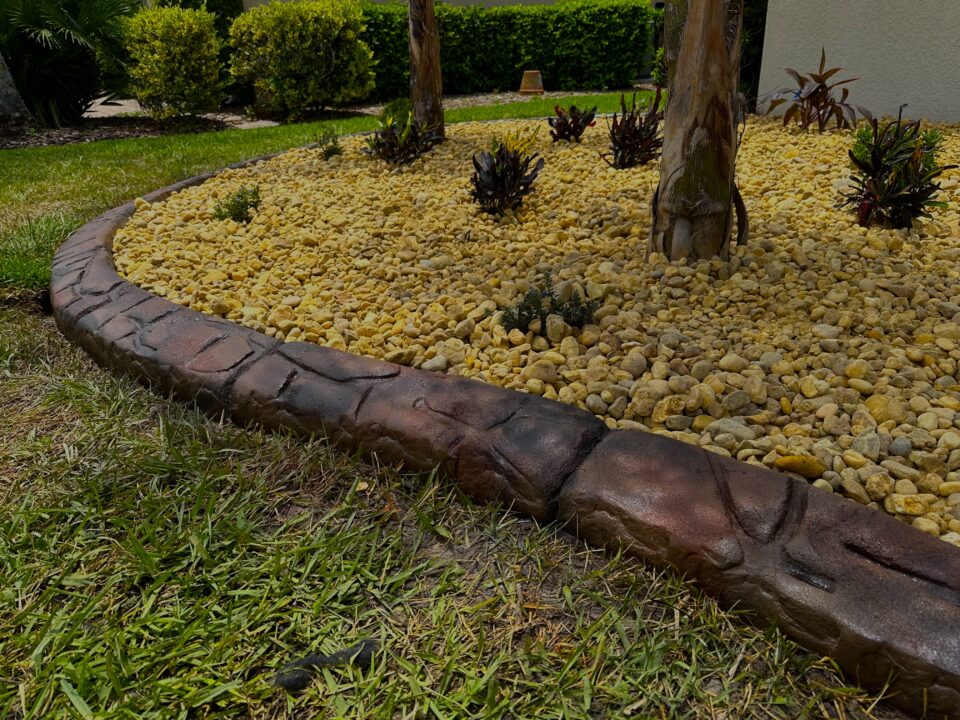
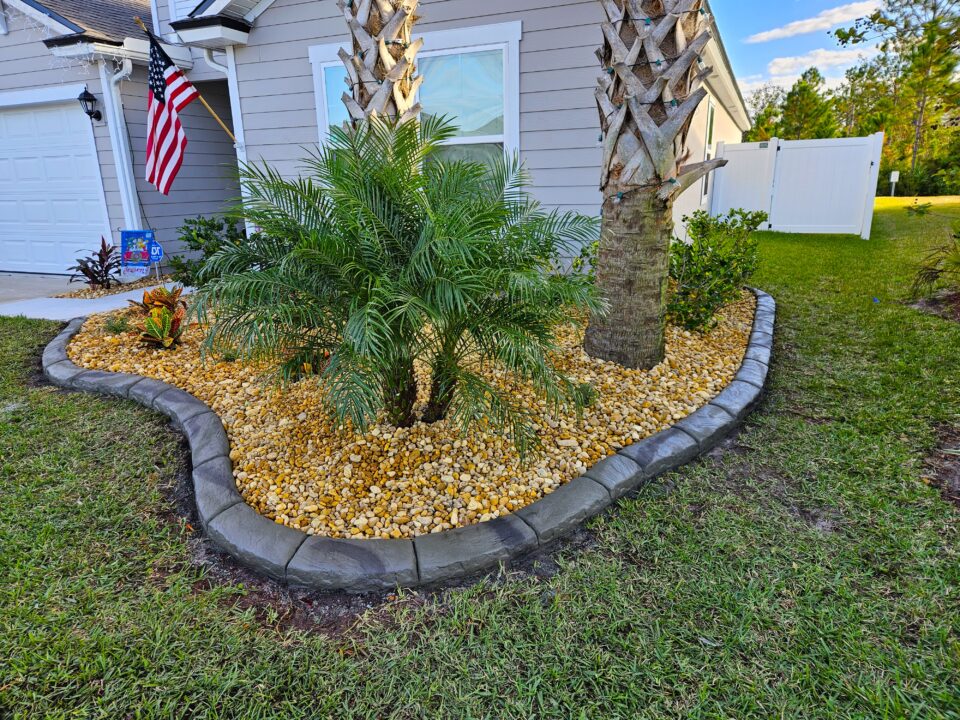
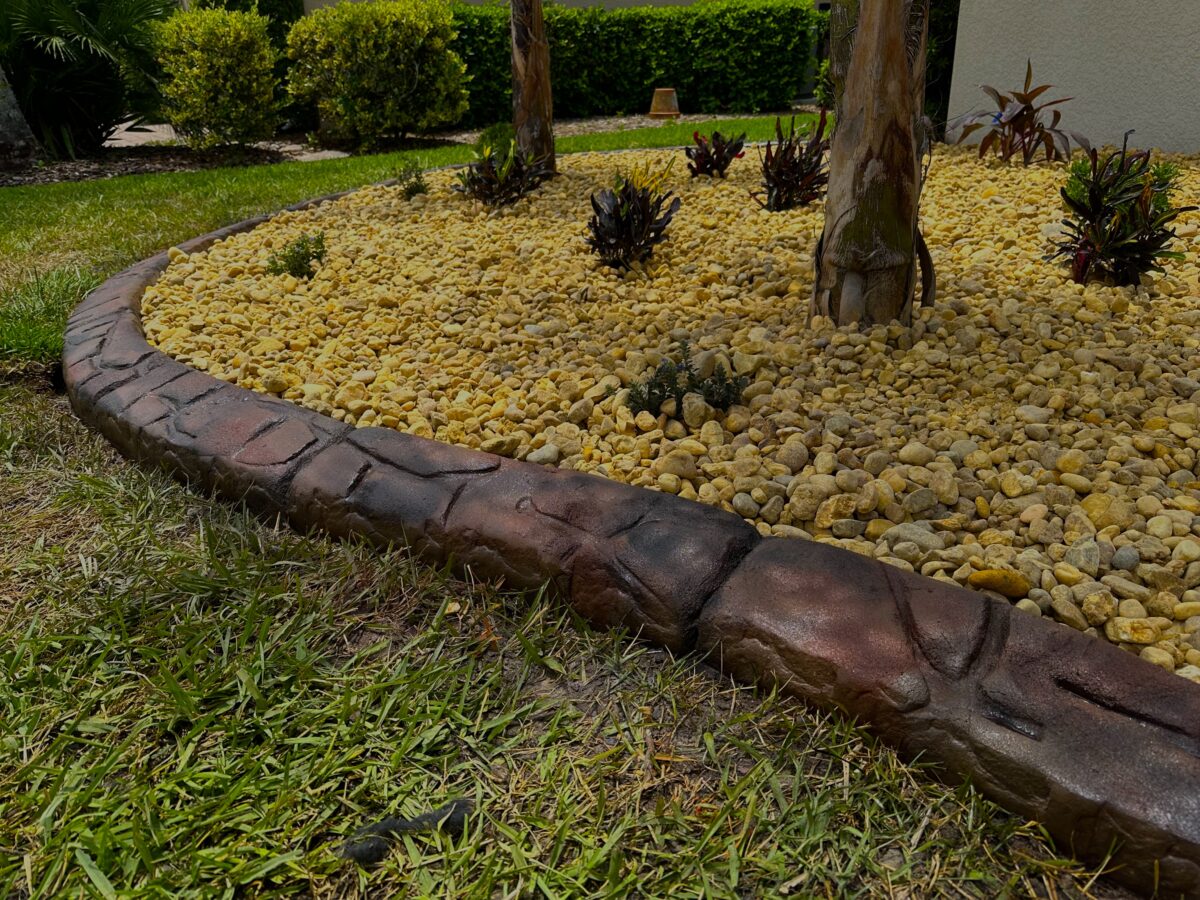
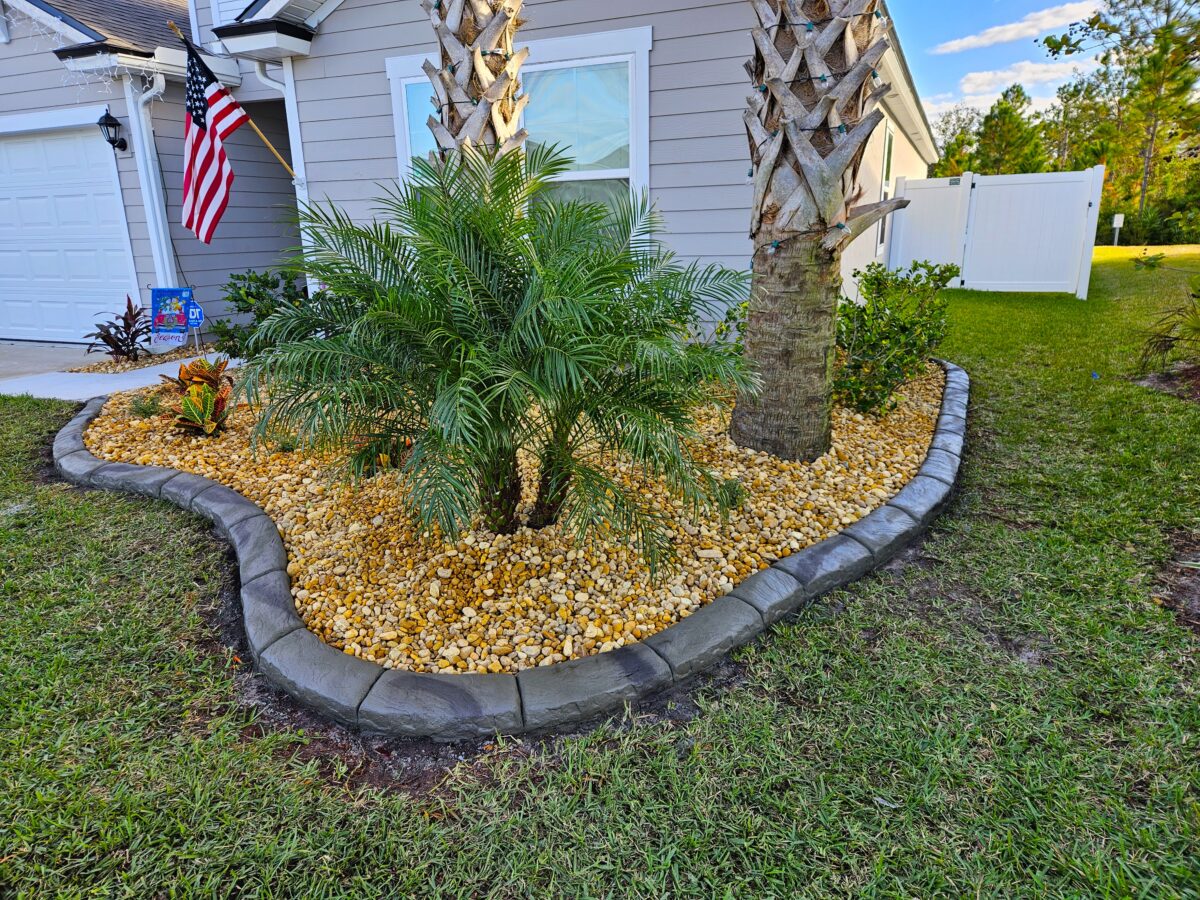
Decorative concrete curbing is one of the most reliable choices, because it is solid, continuous and tall enough to hold stone during heavy rain. Pavers set on a compacted base also work for formal designs. Thin plastic edging tends to lift in sandy soil and let stone slip under it.
Keep the stone surface slightly below the top of the edge. That small lip stops rock from rolling over during storms or when someone steps along the border.
Plants that look good in stone beds
Plants in stone beds need to handle reflected heat and drier conditions at the surface. Near the coast, they also need to tolerate salt spray. Some that tend to work well in Flagler County include:
- Muhly grass, for soft pink fall plumes
- Coontie, a tough native cycad
- Saw palmetto, for a natural coastal feel
- Dwarf yaupon holly, for small rounded shapes
- Fakahatchee grass, for a larger clumping grass
Fewer, well spaced plants usually look better in stone than a crowded bed. Let the rock be part of the design.
Frequently asked questions
Will stone beds stay weed free?
Not completely. Wind blows seeds in and leaves settle between rocks, so a few weeds will appear. Good fabric and occasional leaf blowing keep weeding light.
Is stone hard to clean?
Leaves and palm debris can be blown out with a leaf blower on a low setting. Every few years, a top up of fresh stone helps where rock has thinned out.
Does stone work in HOA communities?
Many HOAs allow stone, but some limit colors or the share of a bed that can be rock. Check with your HOA before you start.
Udell’s Landscape Services builds stone beds, plants and edging as part of our landscaping services and landscape design in Palm Coast and Flagler County. If you would like us to look at a bed, request a free estimate or call (386) 931-6539.