What to Photograph When a Landscape Bed Washes Out
September 9, 2026Measuring Garden Beds Before Ordering Mulch or Stone
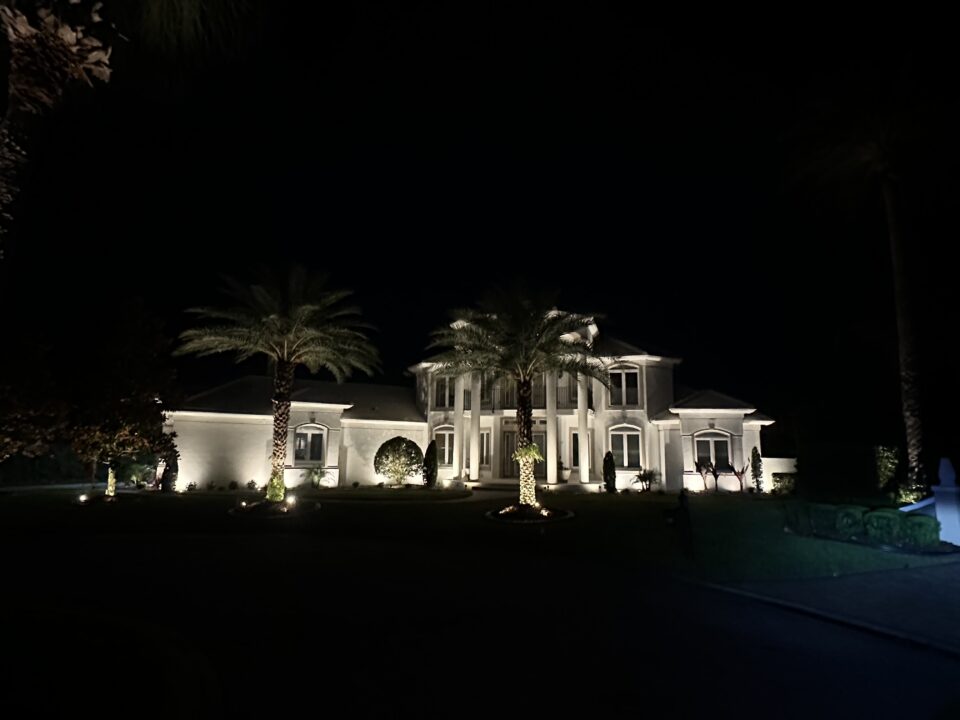
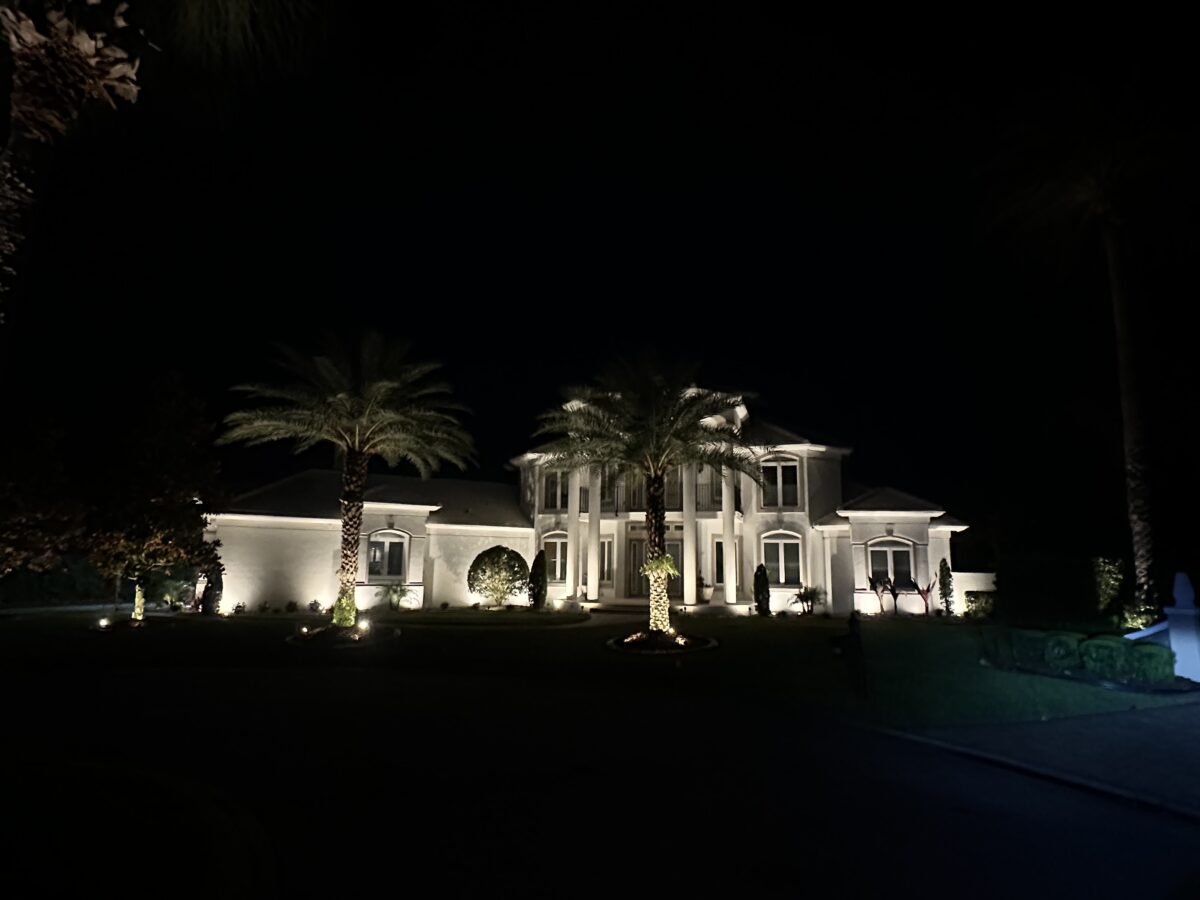
September 14, 2026A useful landscape lighting review happens after dark, from the places people actually walk and sit. For a Palm Coast home, the goal is to see the entrance, any changes in level and the route through the yard clearly, without uncomfortable glare. Walk the property at night, note each spot that feels dark or too bright, and count the problem areas before you count fixtures.
Doing this before fall makes sense because evenings get dark earlier as the season changes. A short walk now shows you which lights still work for your yard as it has grown, and which ones need to be moved, adjusted or added.
Walk the normal arrival route
Start where a visitor would park and follow the path to the front door. Move at a normal pace and pay attention to anything that makes you hesitate. Common things to note:
- A step, curb or slope that disappears into shadow
- A house number that is hard to read from the street or driveway
- A light aimed toward your eyes instead of the ground
- Dark gaps between pools of light along the walkway
- A door lock or keypad that is hard to see
Then repeat the walk from the opposite direction, leaving the house toward the car. Glare and shadows often look different on the way out. Write each observation in plain language, such as “second step from the porch is hard to see,” so a discussion of landscape lighting services focuses on a real need rather than a fixture count.
Separate plant growth from equipment problems
In Florida’s long growing season, shrubs and groundcovers can fill in quickly. A fixture that once lit a path nicely may now sit behind a larger shrub, throwing light into leaves instead of onto the walk.
To sort out what is going on, photograph the foliage around each questionable light during daylight, then photograph the resulting shadow at night. Comparing the two often makes the cause obvious. Possible fixes include:
- Moving the fixture to a clearer spot
- Trimming or relocating the plant that blocks it
- Changing the type or angle of the light
- Adjusting the planting design so it fits the mature size of the plants
Ask which option fits the landscape as it will look in a few years, not just today. For safety, do not open electrical components or handle damaged wiring yourself. Note the location and let a qualified person take a look.
Look outward from windows and seating
Lighting is not only about walking. Sit in the spaces you use in the evening, such as the lanai, patio or a favorite chair by the window, and look out. Check whether:
- A beam shines directly into a window or across a seating area
- Light spills beyond your property toward a neighbor’s home or the street
- One bright fixture makes the rest of the yard feel darker by contrast
More brightness is not automatically more comfortable. Softer, well-aimed light often makes a yard easier to see and more pleasant to sit in. Our walkway lighting ideas can help you describe a balanced approach to lighting routes and transitions. If your setup is older, our article on low voltage landscape lighting for Flagler County homes covers the basics of how these systems are typically laid out. Whatever you choose, ask for a nighttime aiming check as part of the proposed work.
Plan maintenance access at the same time
Fixtures need room for cleaning and inspection. Sand, mulch, leaves and spider webs collect on lenses, and sprinklers can leave mineral spots that dull the light over time. If a fixture is buried in a dense bed, it tends to get skipped.
Include fixture locations in the planting plan instead of treating them as an afterthought. The UF/IFAS Florida-Friendly Landscaping guidance recommends considering mature plant size when choosing plants, and that same principle helps avoid a layout that regularly buries lighting under new growth. A few practical habits help:
- Leave a small clear area around each fixture
- Choose lower or slower-growing plants near path lights
- Keep a simple sketch showing where every fixture and transformer is located
- Make sure you can reach each light without stepping into the middle of a bed
What should you request in an estimate?
Once you have your notes, a good estimate should answer a few clear questions:
- Which locations will be evaluated and lit?
- What equipment is included, such as fixtures, wiring and the transformer?
- How will timers or other controls be set?
- Who handles any electrical work that is needed?
- Will there be a nighttime check to fine-tune aiming?
Explain the hours you usually use the outdoor space and which existing fixtures you hope to keep. Share daylight photos along with your short list of nighttime visibility concerns. Lighting works best when it is planned along with the plants and beds around it, which is why it makes sense to treat it as part of overall landscape design in Palm Coast. The best starting point is always how the space works after sunset.
Frequently asked questions
What time should I do a lighting walkthrough?
Go out once it is fully dark, not at dusk, so you see the lights the way guests will. Try to walk on an evening when the lights are running on their normal schedule.
Do I need more fixtures if my yard feels dark?
Not always. Overgrown plants, dirty lenses or poorly aimed fixtures can make an existing system look weak. A walkthrough helps you tell whether you need adjustments, relocation or additional lights.
How do I reduce glare from landscape lights?
Glare usually comes from fixtures aimed toward eye level or toward windows and seating. Re-aiming lights downward or toward the feature you want to show, and choosing softer output, often solves it. A nighttime aiming check after installation is worth asking for.
Can I fix a broken landscape light myself?
Simple tasks like cleaning a lens or trimming plants around a fixture are fine. Leave damaged wiring, transformers and electrical connections to a qualified professional for safety.
If your evening walk turns up a few dark spots or bright glare, Udell’s Landscape Services can help you sort out what to adjust and what to add. We work with homeowners across Palm Coast and Flagler County. You can request a free estimate online or call (386) 931-6539 to set up a time to talk.