Palm Coast Landscaping in 2026: Designing for Beauty, Water Awareness and Long-Term Value
August 7, 2026What to Photograph When a Landscape Bed Washes Out
September 9, 2026A September landscape walkthrough is a slow lap around your Palm Coast yard to note where water collects, which plants crowd paths and windows, and which areas need the same repair again and again. The goal is to separate routine cleanup from problems that need a different design before you buy plants or materials. Take photos and written notes first, then decide what to maintain, what to investigate and what to redesign.
September is a good month for this because the yard has just come through the hottest, wettest stretch of the year. Summer rain and heat show you where the weak spots are. Fall and winter in Flagler County are usually milder and drier, which makes them a comfortable time to plan and complete many landscape projects.
Start with four photographs
Photograph the front approach, each side yard and the backyard from a spot you can return to later. Stand in the same place each time, such as the end of the driveway or the corner of the patio, so later pictures line up with the first set.
Then add close-ups of anything that looks off:
- Bare soil or thin mulch, especially below roof edges and downspouts
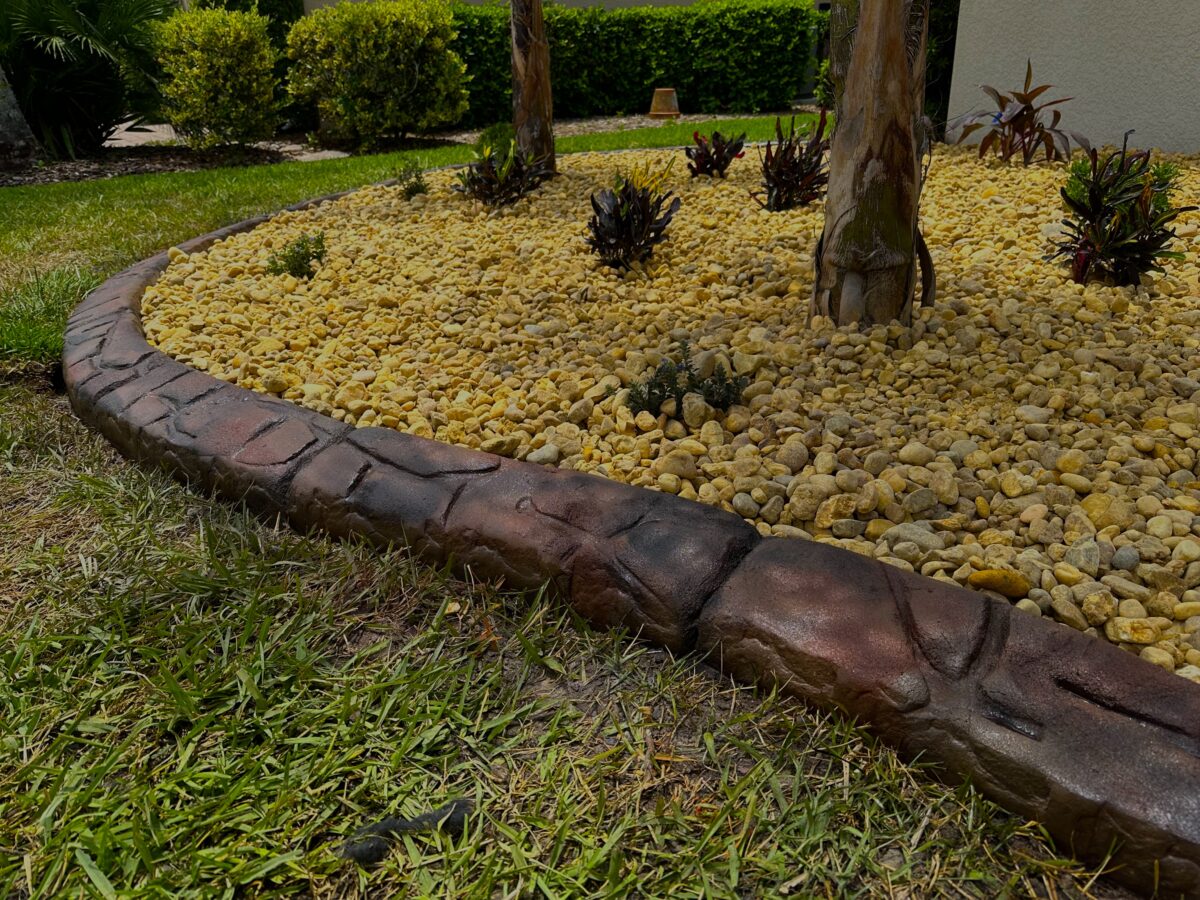
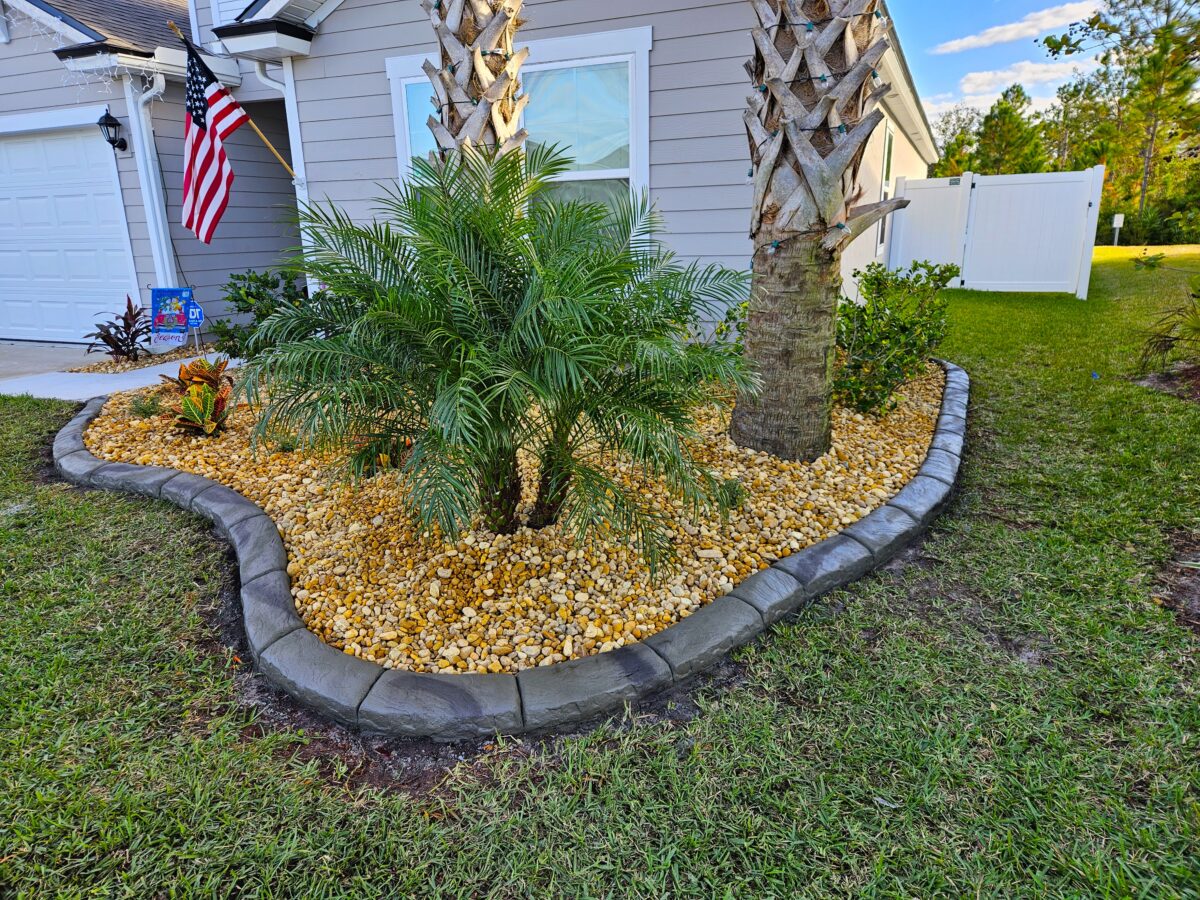
- Leaning or broken edging along beds and walkways
- Shrubs and palms touching the house, the roofline or the air conditioning unit
- Lawn areas that stayed soggy or turned thin over the summer
- Plants that look stressed while their neighbors look fine
Pictures taken from the same position after a heavy rain are especially useful. They make it much easier to explain a pattern during a consultation instead of trying to describe it from memory. Our summer heat and rain guide gives more context for the kind of weather stress you may be seeing now.
Record conditions before choosing a fix
For each problem area, write down when it shows up, how long it lasts and what is nearby. A bed below a downspout needs a different conversation than a dry strip just beyond the reach of the sprinklers, even if both beds look tired.
A few questions help keep your notes useful:
- Does the problem appear only after rain, or all the time?
- Is the area in full sun, part shade or deep shade for most of the day?
- Does irrigation reach it, and does it get too much or too little?
- Has anything changed nearby, such as a new fence, patio or tree removal?
Avoid assuming that every declining plant needs fertilizer. Plant identification and site conditions come first. A shrub that loves sun will struggle under a maturing oak no matter how much it is fed. The UF/IFAS Florida-Friendly Landscaping guidance emphasizes putting the right plant in the right place, matching each plant to the light, soil and moisture where it will actually grow.
Divide the work into practical phases
Once you have notes, sort every item under one of three headings: maintain, investigate and redesign. This simple step keeps cosmetic work from covering up the original problem.
- Maintain: weeding, removing loose leaf litter, trimming back growth from walkways, refreshing thin mulch where nothing else is wrong.
- Investigate: standing water that keeps returning, plants declining for no obvious reason, sprinkler coverage gaps and soil that washes out of a bed.
- Redesign: a narrow walk that mature shrubs keep blocking, foundation plants that have outgrown the space under a window, or a bed shape that makes mowing awkward.
Maintenance items can often be handled right away. Investigation items deserve a closer look before you spend money, because the fix depends on the cause. Redesign items are usually best planned as a project, sometimes in phases, so the work fits your budget and the season.
Choose one measurable outcome
Instead of asking for a better looking yard, pick a result you can actually check when the work is done. A few examples:
- An unobstructed front walk that two people can use side by side
- A planting bed that stays below the window sill at mature size
- A side yard where water no longer sits against the house after rain
- A lawn edge that is easy to mow without hand trimming every week
A clear goal makes it easier to compare options and to tell whether the work solved the problem. Bring that goal to a discussion of landscaping services, along with your photos. Keep a separate wish list for decorative upgrades, such as new lighting or a fresh bed shape, so the important corrections get attention first and the extras can follow when it makes sense.
If your walkthrough turns up several redesign items, our guide to landscaping in phases this fall shows how to break a larger project into manageable steps.
What should you bring to the appointment?
A little preparation makes a consultation far more productive. Before we visit, gather:
- Your photographs, including the after-rain set if you have it
- Approximate dimensions of the areas you want to change
- Gate widths and access notes, such as where a trailer can park
- Any HOA or community design requirements you already have
- Your three-column list of maintain, investigate and redesign items
It also helps to be honest about how much upkeep you want to handle yourself. A yard designed for someone who enjoys weekend gardening looks different from one planned for a homeowner who would rather spend Saturdays at the beach. Good landscape design in Palm Coast starts with how you actually use and care for the property, then connects each proposed task to something you observed on your walkthrough.
Frequently asked questions
Why do a landscape walkthrough in September instead of spring?
By September, the summer rains and heat have already revealed drainage problems, struggling plants and overgrown areas. Planning now gives you the cooler, usually drier months ahead to make changes. Spring is still a fine time to look again and see how the fixes held up.
How long does a walkthrough take?
For most Palm Coast homes, a careful lap with photos and notes takes under an hour. Repeating the photos after a heavy rain adds a few minutes but often provides the most useful information.
Should I replace dead plants before the consultation?
It is usually better to wait. Replacing a plant before understanding why it failed often leads to the same result, and new material can hide the original pattern. Photograph the area as it is and talk through the cause first.
Do I need a full redesign if several areas have problems?
Not necessarily. Many issues fall under maintenance or a targeted fix. Sorting your list into maintain, investigate and redesign shows how much of the yard truly needs new design work, and that portion can often be done in phases.
If you would like a second set of eyes on your notes, Udell’s Landscape Services works with homeowners across Palm Coast and Flagler County to turn walkthrough findings into a practical plan. You can request a free estimate online or call us at (386) 931-6539 and tell us which areas you would like us to look at.