Best Landscaping Services for Palm Coast Property Enhancements
May 4, 2026Why Flagler Beach Homes Need Salt-Tolerant Landscaping
May 4, 2026Low maintenance landscaping in Flagler County comes down to four choices: plants that are suited to our sandy soil and heat so they do not need babying, fewer and smaller lawn areas, defined beds with a solid edge, and a ground cover of mulch or stone that keeps weeds down. Get those right at the start and weekly yard work shrinks to occasional trimming, a yearly bed refresh and keeping an eye on irrigation. The time you spend planning saves far more time later.
Decide what low maintenance means for you
Low maintenance does not mean no maintenance. Every Florida yard needs some care, especially after summer storms. Before changing anything, think honestly about how much time you want to spend outside and on what.
- Do you want to mow less, or not at all in the front yard?
- Are you willing to prune a few times a year, or do you want plants that mostly keep their shape on their own?
- Do you travel or spend part of the year away?
- Are there HOA rules about lawn coverage, plant choices or bed materials?
Your answers shape everything else. A family that wants a play lawn will plan differently from a couple who would rather never start a mower again.
Pick plants that want to live here
The single biggest time saver is choosing plants that suit the spot. A shrub that wants shade will struggle in a west facing bed in July, and you will spend the next few years watering, treating and replacing it. Native and Florida-Friendly plants that match the sun, soil and space tend to need less water and fewer treatments once established.
Some reliable low care choices for many Flagler County yards include coontie, muhly grass, dwarf yaupon holly, saw palmetto, firebush and simpson’s stopper. Near the coast, favor plants with good salt tolerance. The UF/IFAS Florida-Friendly Landscaping principles start with this exact idea of right plant, right place, and our list of native and Florida-Friendly plants for Flagler County is a good place to start a shortlist.
Just as important is mature size. Choose plants that will top out at the height you want, so you are not shearing them back every month to keep them off a window.
Shrink the lawn where it does not earn its keep
Grass is usually the most demanding part of a Florida yard. It needs regular mowing through the long growing season, plus irrigation, fertilizing and attention to pests and weeds. You do not have to remove it all, but look for areas where lawn is doing nothing for you:
- Narrow strips between the driveway and the property line.
- Shady spots under trees where grass stays thin no matter what.
- Awkward corners that are hard to reach with a mower.
- Side yards nobody uses.
These spots are often easier as planted beds, mulch or stone. Keep lawn where you actually use it, and make the remaining shapes simple so mowing goes quickly.
Mulch, stone and a solid edge
Bare soil invites weeds. Covering beds with mulch or decorative stone blocks light to weed seeds and helps hold moisture in our fast draining sand.
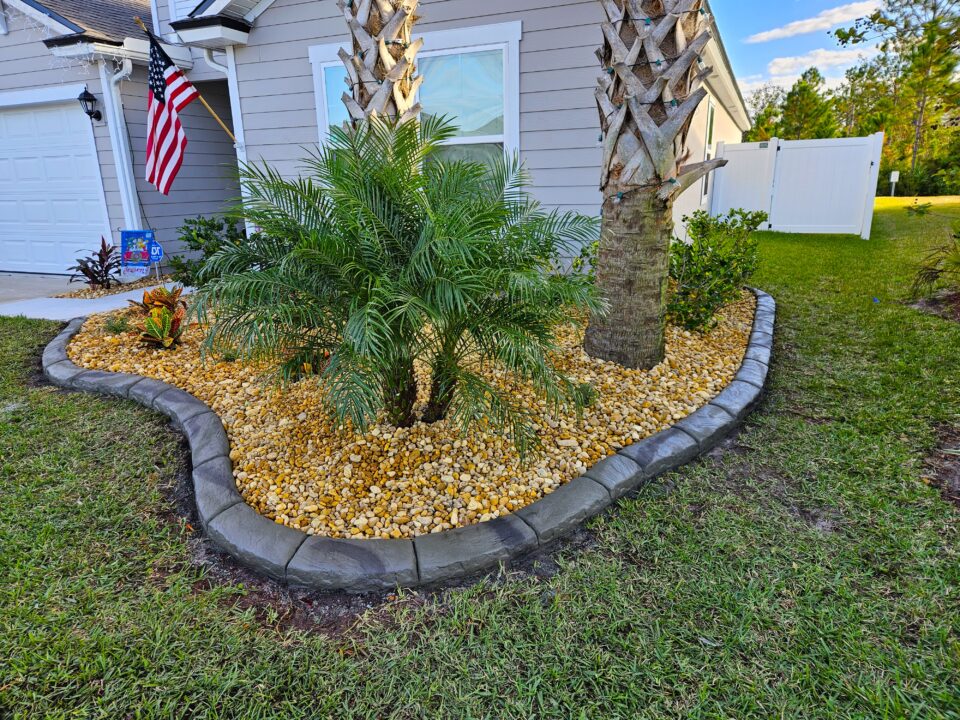
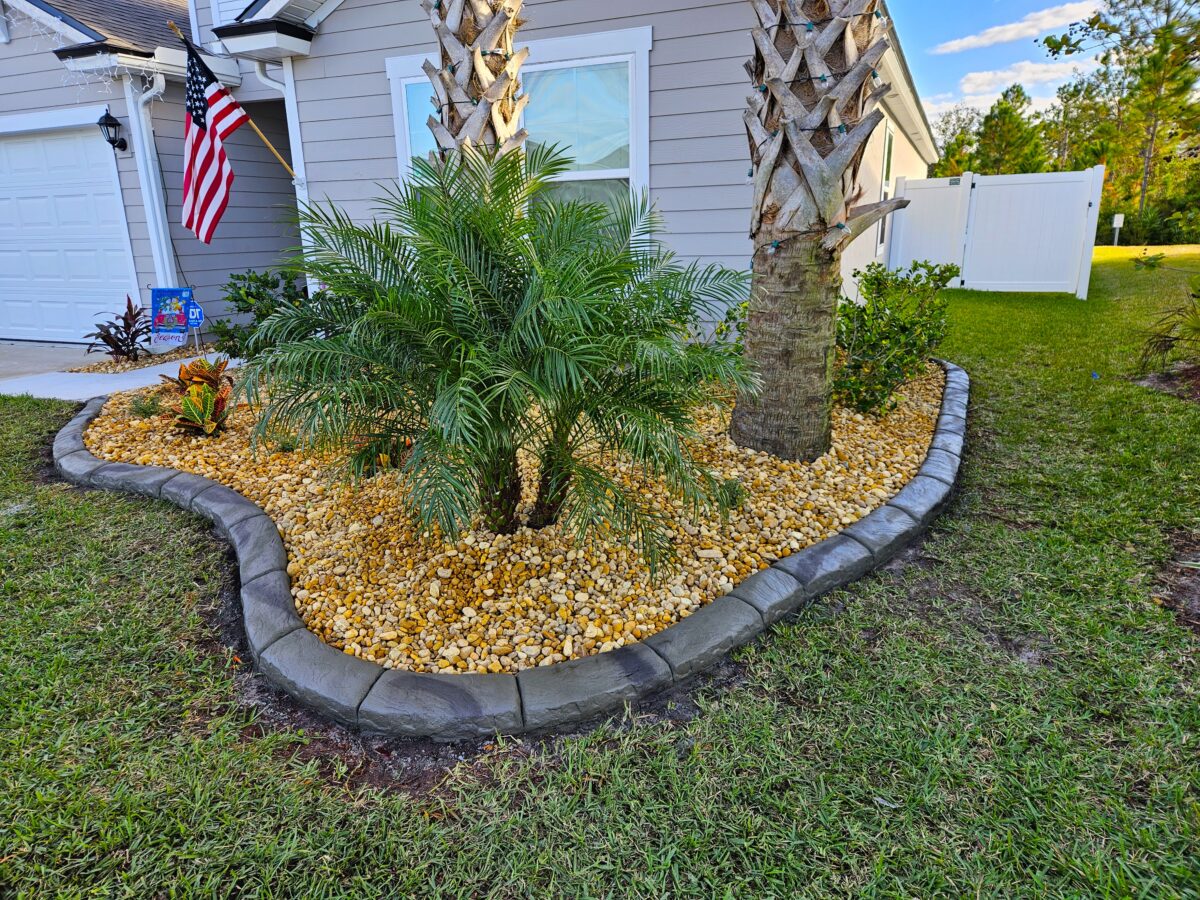
Mulch looks natural, keeps roots cooler and slowly improves the soil, but it breaks down and needs topping up about once a year. Stone lasts for years and will not float away in heavy rain, though it holds heat in full sun and is harder to change later. Many homeowners use both: stone in strips along the house or under roof edges, mulch in planted beds. You can compare options in our article on decorative stone landscaping for low maintenance yards.
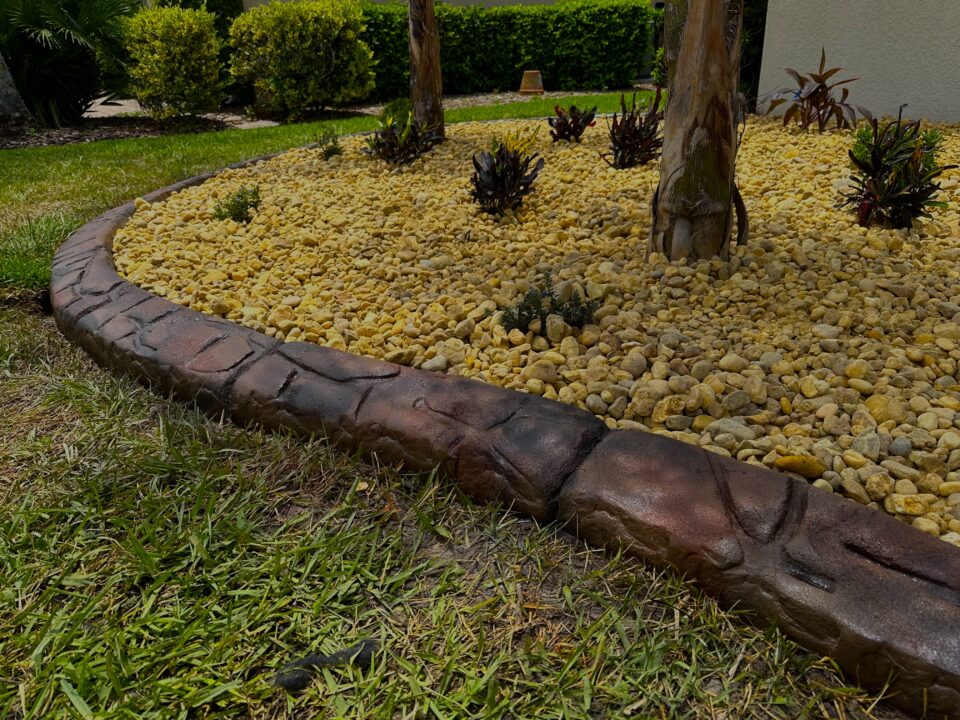
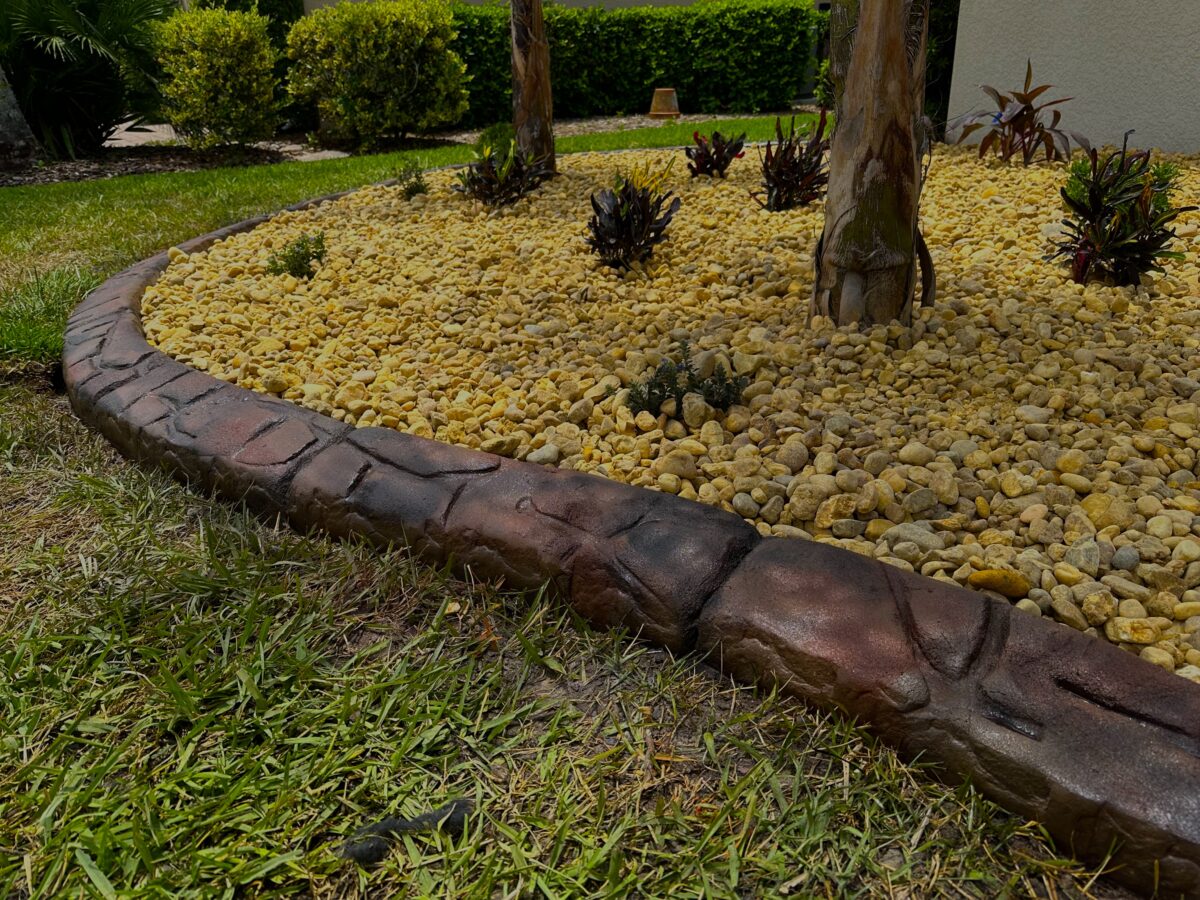
Whatever you choose, a solid border is what keeps it looking finished. Decorative concrete curbing holds material in place, keeps lawn grass from creeping into beds and gives the mower a clean line to follow. That alone cuts down on edging and raking.
Let the irrigation do its job
A low maintenance yard still needs water, but it should get it efficiently. Group plants with similar water needs together. Use drip or low volume heads in beds, and keep spray heads for lawn areas. Add a rain sensor so the system skips watering after a storm, and follow the watering days set for your area. Check the system a few times a year for broken heads, especially after mowing or storm cleanup.
Before hurricane season starts on June 1, it is also worth trimming anything that is overgrown and clearing loose items from beds. A simple yard is quicker to prepare and quicker to clean up afterward.
Frequently asked questions
Is an all stone yard the lowest maintenance option?
Not always. Stone still collects leaves and windblown seeds, and weeds can grow in the dust that settles between rocks. A mix of tough plants, mulch, some stone and a solid edge is often easier to live with than a yard of rock alone.
How often will a low maintenance landscape need professional care?
It depends on the plants and how much lawn remains. Many simple landscapes do fine with a few trims a year, a mulch refresh annually and cleanup after storms.
Will my HOA allow me to replace lawn with beds?
Rules vary by community. Some Palm Coast associations require a certain amount of turf or approval of any front yard change, so check with your HOA before removing grass.
Udell’s Landscape Services plans and installs easy care landscapes for busy homeowners in Palm Coast and across Flagler County, as part of our landscape design in Palm Coast. If you want a yard that asks less of your weekends, request a free estimate or call (386) 931-6539.