Palm Coast Lawn Repair After Storms and Yard Damage
May 4, 2026Plant Installation Tips for Florida Coastal Landscapes
May 4, 2026A good Palm Coast front yard design has deep, simply shaped beds along the house, a clear path to the front door, evergreen plants that hold their shape all year, and a clean edge between bed and lawn. Keep plants scaled to the house, leave room for them to grow, and repeat a small number of plant types so the yard looks calm and planned. Those few choices do more for a front yard than any single showpiece plant.
Here is how we approach a front yard, working from the street to the front door.
Stand at the curb first
Before drawing beds or picking plants, walk to the street and look back at your house. That is how neighbors, guests and buyers see it. Ask yourself:
- Where does your eye land first? It should land on the front door.
- Do any shrubs hide windows, house numbers or the entry?
- Does the driveway feel like the whole yard, with plants as an afterthought?
- Is there a clear sense of where to walk?
Many front yards in Palm Coast were planted when the house was built, with a single row of small shrubs against the foundation. After a decade or two, those shrubs are either overgrown or gone. If yours is in that spot, our post on signs your Palm Coast front yard is ready for a redesign can help you decide how far to go.
Bed shapes and depth
Narrow foundation strips are the most common front yard problem we see. A bed that is only two or three feet deep can hold one row of shrubs, which looks thin against a one story Florida home.
- Go deeper. Beds that extend six to eight feet or more from the house allow two or three layers of plants and make the house look settled into the yard.
- Use simple curves. Broad, sweeping curves look natural and are easy to mow around. Tight zigzags look busy and are hard to maintain.
- Wrap the corners. Extending beds around the front corners of the house softens hard edges.
- Connect the pieces. Tie the entry bed, any tree beds and the mailbox planting together with related shapes so the yard reads as one design.
Straight lines are fine too, especially for modern homes. The point is to choose one style and stick with it.
Plants that look good in every season
Florida front yards can look great all year because so many good landscape plants are evergreen here. We think in three layers.
Anchor plants. These are the larger shrubs or small trees that frame the house, usually at the corners. Walter’s viburnum, Simpson’s stopper and podocarpus are dependable choices that hold up in our heat and sandy soil.
Middle layer. Medium shrubs fill the bed in front of the anchors. Indian hawthorn, dwarf yaupon holly and firebush are common picks. Firebush can freeze back in a cold winter but usually regrows from the base.
Front edge. Low plants and groundcovers soften the border. Liriope, muhly grass and perennial peanut all work well.
Repeat each plant in groups of three, five or more rather than buying one of everything. Check sun and shade before choosing, since the front of the house may face full afternoon sun while the side yard sits under an oak.
Spacing is where many front yards go wrong. Plants look small in nursery pots, but in a few years they reach full size. Leave enough room between shrubs and the house for air flow and access. We go into more detail in our guide on plant spacing near windows, walkways and outdoor equipment.
Walkways and the path to the door
The front walk is how people move through your yard, so it deserves real thought.
- Make it comfortable. A walk around four feet wide lets two people walk side by side. Many builder walks are narrower.
- Keep it clear. Plants that will spill onto the walk should be set back from the edge.
- Consider a second path. If people always cut across the lawn from the driveway, a few stepping stones there are better than a worn spot.
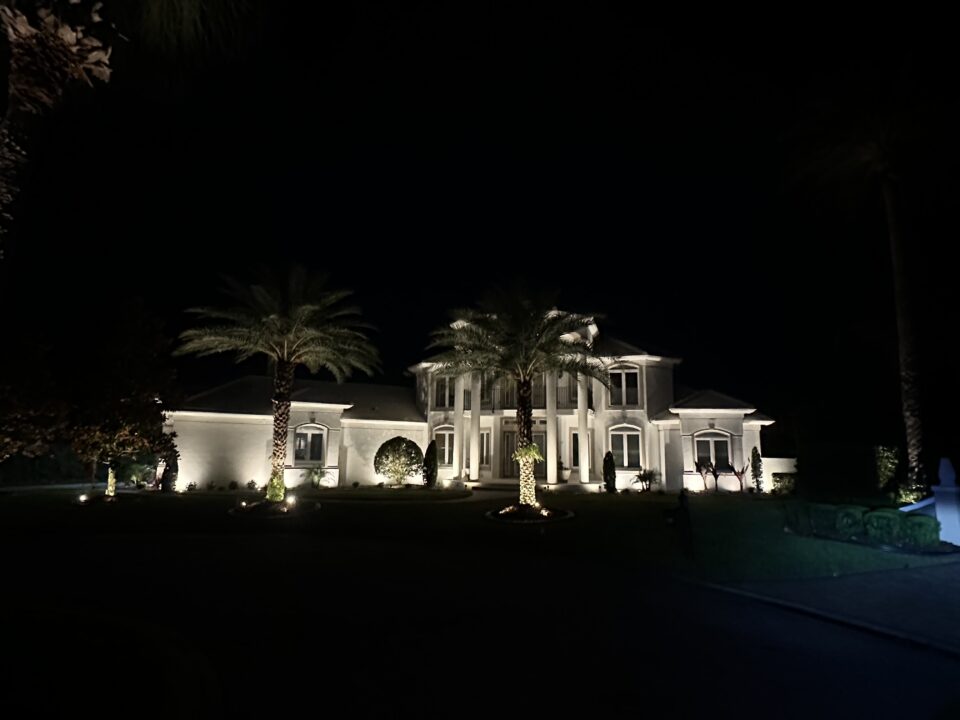
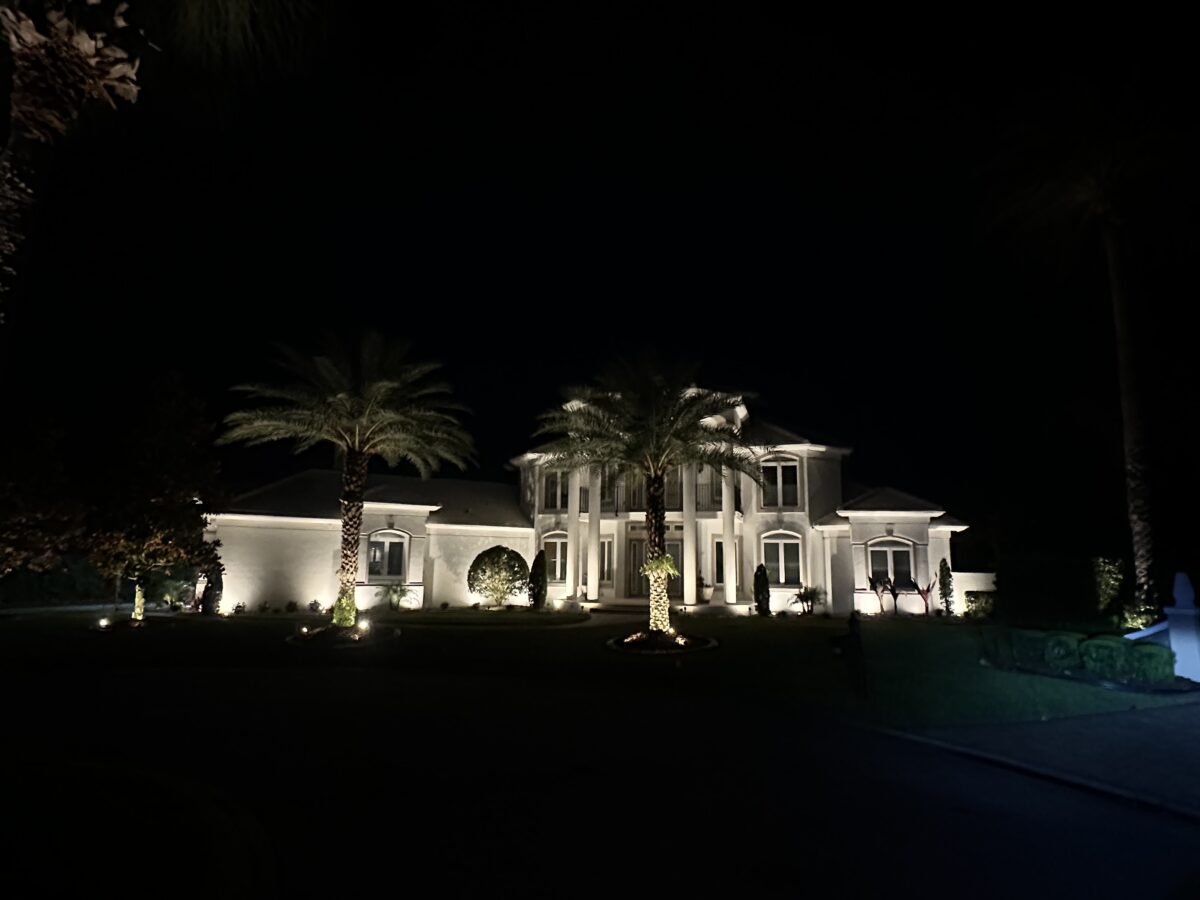
- Light it. A few low path lights make the walk safe at night and show off the beds after dark.
Edging and finishing details
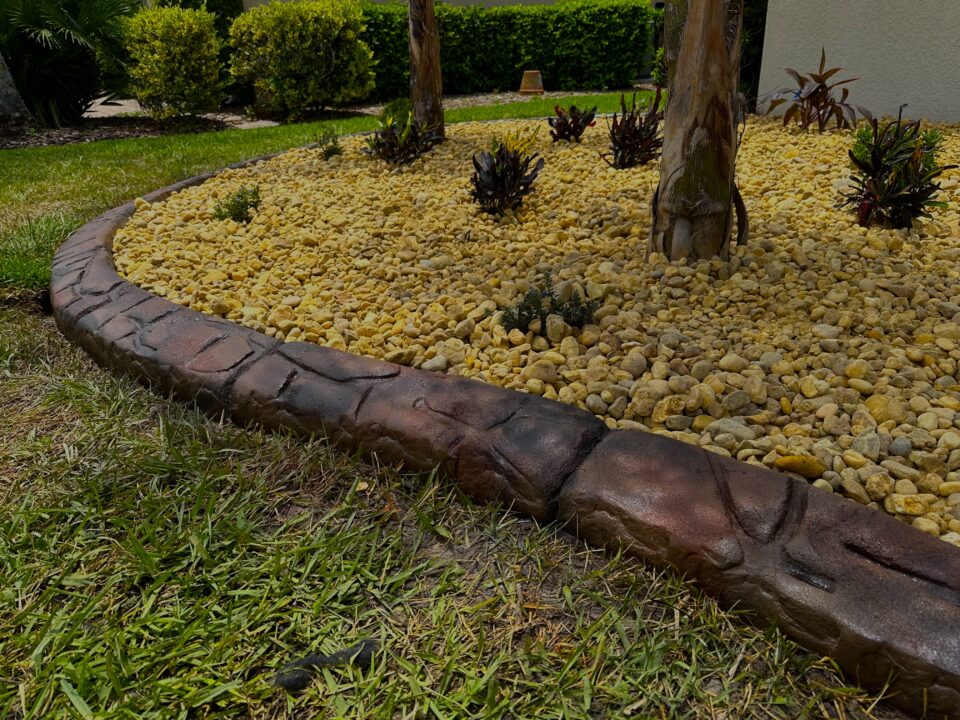
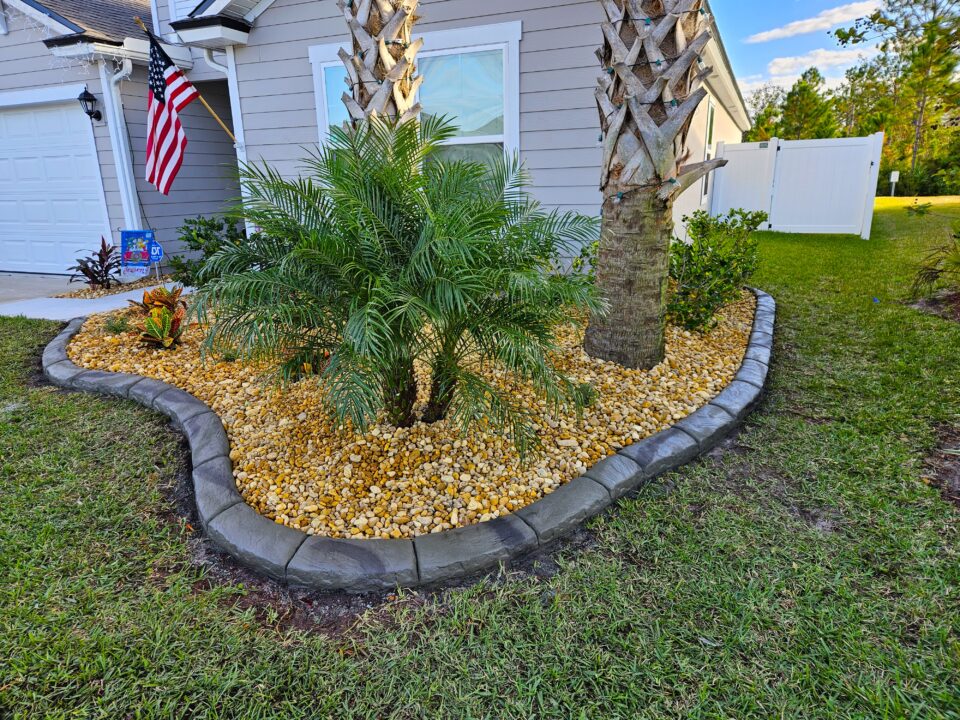
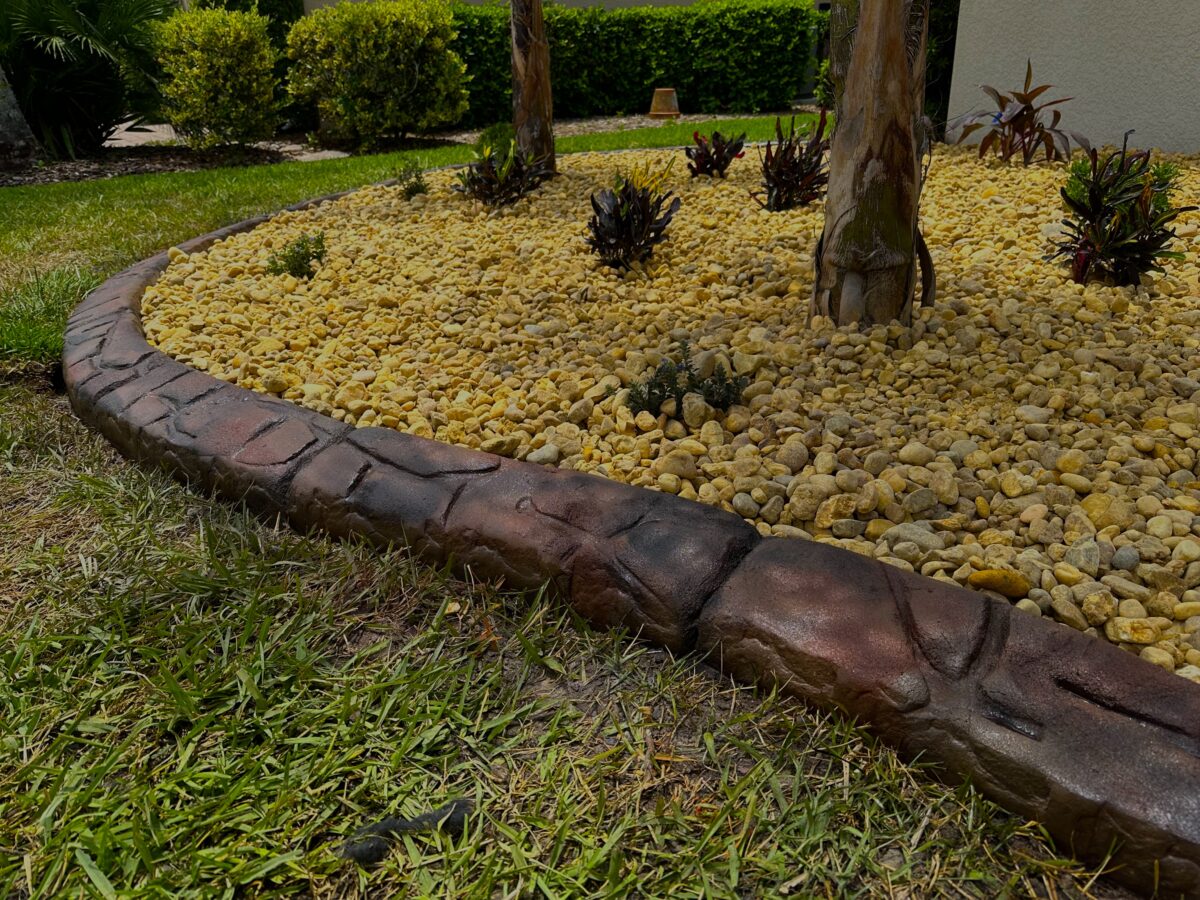
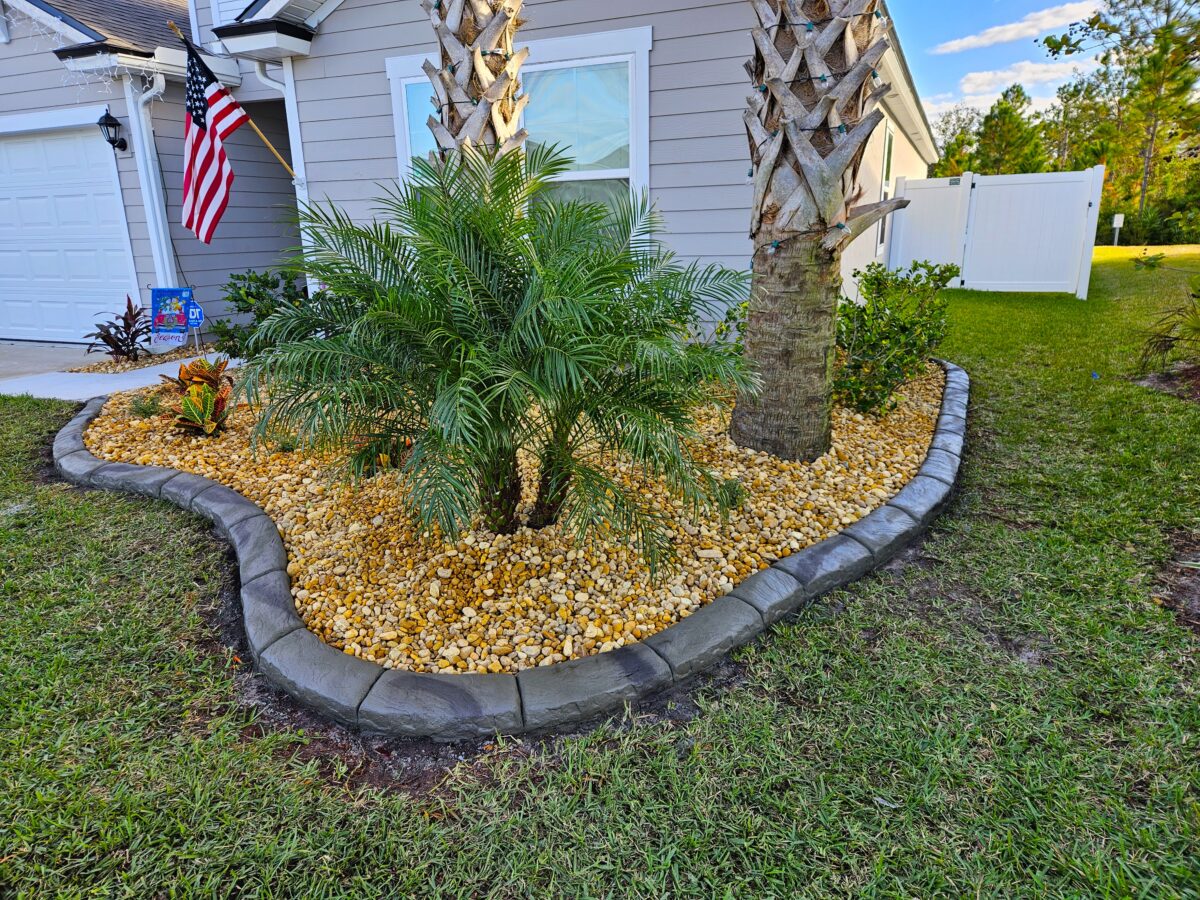
The finish is what makes a front yard look complete. Clean edges, whether cut by hand or set with decorative concrete curbing, keep mulch in the beds and grass out. A consistent groundcover of mulch or stone across all front beds ties everything together.
Small details add up: a planted bed around the mailbox, house numbers you can read from the road, and trimmed shrubs below window sills.
Two practical notes. Call Florida’s 811 service before digging new beds so underground utilities can be marked. And keep plants low near the driveway apron so you can see the street when backing out. If you live in an HOA community, check with your HOA before changing beds or plant types.
Frequently asked questions
What is the best front yard plant for Palm Coast?
There is no single best plant, but evergreen shrubs that handle heat, sandy soil and summer rain form the backbone of most good designs. Viburnum, Indian hawthorn and dwarf yaupon holly are reliable starting points.
How far from the house should shrubs be planted?
It depends on the mature size of the plant. As a rule, plant far enough out that the shrub at full width will still leave space between it and the wall.
Can I redesign my front yard in stages?
Yes. Many homeowners start with bed shapes, edging and the main shrubs, then add lighting or accent plants later. A plan up front keeps each stage working together.
Udell’s Landscape Services designs and installs front yards across Palm Coast and Flagler County through our landscaping services. You can see examples in our project gallery or learn more about landscape design in Palm Coast. To talk about your yard, request a free estimate or call (386) 931-6539.