Landscaping in Phases: A Fall Project Plan for Palm Coast
September 16, 2026Designing a Small Pollinator Bed Without Crowding the Yard
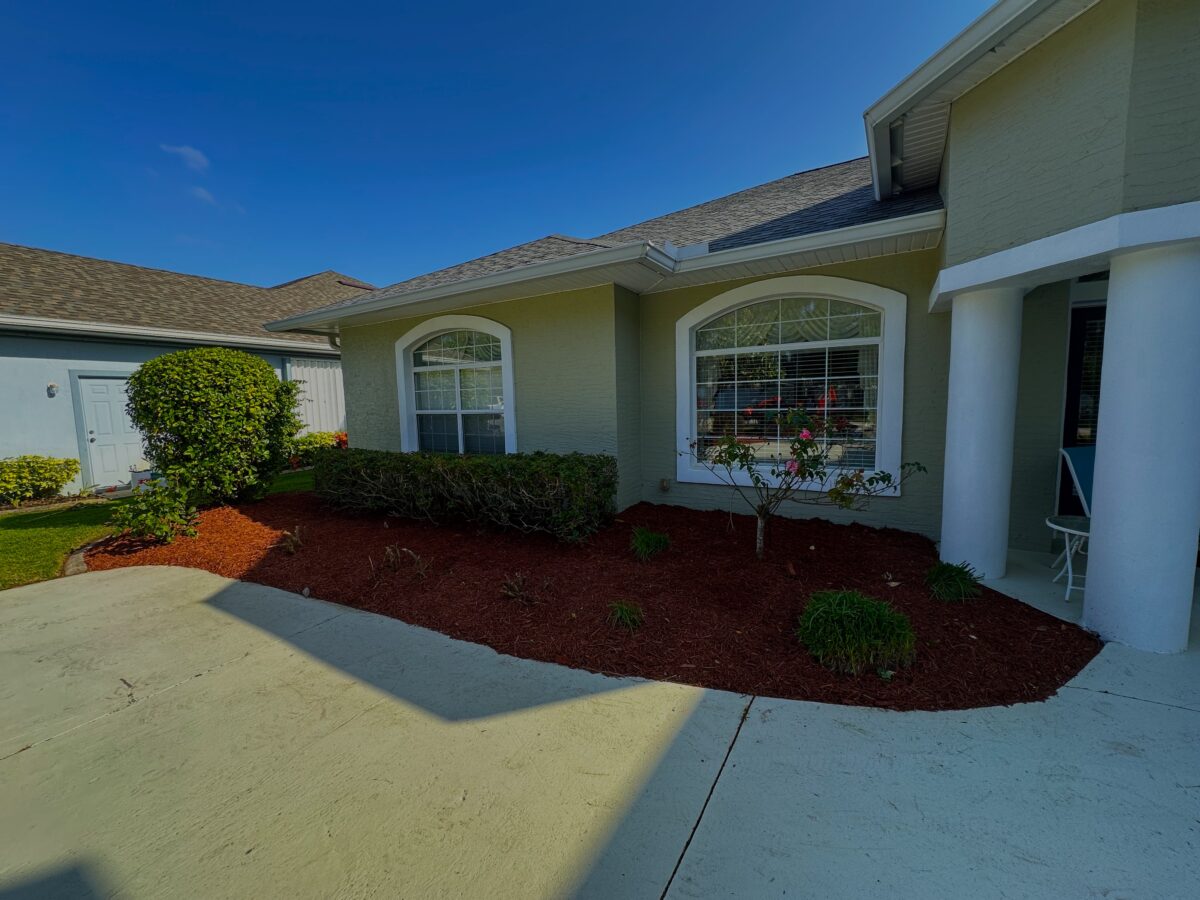
September 21, 2026Space plants near windows, walkways and outdoor equipment based on their mature size, not the size of the nursery pot. A small shrub that fits neatly at planting time can block a window, crowd a path or swallow an air conditioning unit within a few years. In Palm Coast, where the long warm growing season keeps many plants growing much of the year, a good planting plan leaves room for growth, everyday access and the equipment that already serves the house.
Getting spacing right up front saves a lot of pruning, replanting and frustration later. Here is how we think through it when laying out beds around Flagler County homes.
Measure the available space
Start with a tape measure and a simple sketch of the bed. Record:
- The distance from the front edge of the bed to the wall of the house
- The height of each window sill from the ground
- The width of the walkway or path beside the bed
- The location of utility equipment such as AC units, pool pumps, meters, hose bibs and irrigation controls
- Any areas that service technicians need to reach
For equipment, ask the relevant service provider or the manufacturer’s guidance about required clearances instead of assuming there is one standard distance for everything. Air conditioning units, for example, need airflow around them and room for a technician to work. Meters and utility boxes need to stay reachable. Mark these zones on your sketch as no-planting or low-planting areas before you choose a single plant.
Compare mature height and spread
Once you know the space, compare it against how big each plant will get. Read the plant tag and confirm the exact species or cultivar, not just the common name. Two plants sold under similar names can mature at very different sizes. Dwarf varieties of popular Florida shrubs, for instance, can stay a fraction of the size of the standard form.
UF/IFAS Florida-Friendly Landscaping guidance points to mature plant size as a key part of choosing the right plant for the right place. A few practical rules help:
- Under windows, choose plants whose mature height stays below the sill.
- Along walkways, allow for the plant’s full spread so it does not reach into the path.
- Near the house, leave space between the foliage and the wall for air movement and maintenance access.
Our landscape bed layout guide connects mature size with the shape and layers of the bed. If a plan only works with constant hard pruning, it may deserve a different plant choice. Shearing a large shrub to stay small takes ongoing effort and often leaves it looking stressed.
Think about the person using the path
Spacing is not just about plants. It is about how people move around the house. Walk the route with a bag of groceries, a trash can or a garden cart and notice where branches would brush against you. Think about guests at night, kids running to the car and anyone who needs a clear, even surface to walk on.
Check sightlines too. Shrubs near the end of a driveway can hide cars and pedestrians, and tall plantings near an entry can hide the front door. Keep these areas lower and more open.
Avoid putting a broad shrub in a narrow passage just to fill an empty spot on installation day. New beds often look a little sparse at first, and that is fine. Open space can be intentional while plants grow in. Mulch or stone can cover the gaps neatly in the meantime.
Plan around real site conditions
Foundation beds have their own small climate. Before choosing replacements, note:
- Roof overhangs: soil under eaves can stay dry even after rain, while the drip line beyond it may get heavy runoff.
- Reflected light and heat: windows, light colored walls and pavement can make a bed hotter than the rest of the yard.
- Shade from the house and neighbors: a north side bed may get far less sun than one on the south side.
- Salt spray: homes closer to the coast need plants that tolerate salt exposure.
These conditions affect how fast plants grow and whether they thrive at all. Review our coastal plant installation guide for more on matching plants to the site. Keep your plant list separate from a shopping list until the measurements and conditions have been considered together.
Can existing shrubs be kept?
Often, yes. Healthy shrubs that fit the layout and stay at a manageable size can anchor a refreshed bed. Others may need a closer look. Depending on the plant and its condition, the options include selective pruning, relocating it to a spot with more room, or replacing it with something better suited to the space.
Signs a shrub may be in the wrong place include branches covering a window, foliage pushing into a walkway, constant contact with the house or equipment that is hard to reach. Ask what ongoing maintenance any proposed arrangement will need, so you know what to expect a year or two after planting.
Our landscaping services include bed redesign and plant installation, and we are glad to talk through which plants are worth keeping.
Frequently asked questions
How far should shrubs be planted from the house?
It depends on the mature spread of the plant. A good rule is to plant far enough out that the shrub’s full width will still leave a gap between the foliage and the wall. Check the plant tag or a UF/IFAS plant profile for mature size before deciding.
What can I plant under a window?
Choose plants whose mature height stays below the window sill, such as low growing shrubs, groundcovers or compact varieties of larger plants. Confirm the exact cultivar, since dwarf and standard forms of the same plant can differ a lot in size.
How much space should plants leave around an AC unit?
Check the manufacturer’s guidance or ask your HVAC provider, since clearances vary by unit. In general, keep plants far enough away to allow good airflow and room for a technician to work on all sides that need service.
Why do new beds look sparse after planting?
Properly spaced plants need room to reach their mature size, so a new bed often looks open at first. That gap is intentional. Filling it with extra plants usually leads to crowding and heavy pruning later.
If you are planning beds around windows, walkways or equipment, Udell’s Landscape Services can help you lay them out with room to grow. We work with homeowners throughout Palm Coast and Flagler County, and our approach to landscape design in Palm Coast starts with how you actually use the space. Share a measured sketch and a few photos when you request a free estimate, or call (386) 931-6539.