September Landscape Walkthrough: What to Check in Palm Coast
September 7, 2026A Nighttime Landscape Lighting Walkthrough Before Fall
September 11, 2026When mulch or soil keeps washing out of a Palm Coast landscape bed, photograph the path the water takes before you replace anything. The most useful pictures show where water enters the bed, what it crosses and where it leaves. A close-up of the empty patch alone usually misses the cause, so start wide and work in.
Good photos turn a vague complaint about messy mulch into a clear record of a drainage pattern. That record helps anyone assessing the bed recommend a fix that addresses the source, rather than simply refilling the same spot after every storm.
Photograph from a safe, dry location
Wait until conditions are safe before you head outside. Do not walk into deep or moving water, and stay away from electrical equipment, pool equipment and downed lines just to get a picture. A photo taken a little later from a dry spot is far better than a risky one.
Once it is safe, take these shots in order:
- The wide view: one photo that shows the roof edge, gutter or downspout, the driveway or patio, and the bed together.
- The entry point: where water appears to come into the bed, such as a downspout outlet, a driveway edge or a neighboring slope.
- The trail: the sediment line, displaced mulch or small channels cut through the bed.
- The exit: where the material ends up, whether that is the lawn, the sidewalk, the street or a low corner of the yard.
- The empty patch: a close-up of the washed area, with something familiar in the frame for scale.
Our landscape drainage guide covers the questions that connect drainage conditions with landscape design, and it is a good companion to this photo list.
Add time and weather context
Photos are more useful with a few notes attached. Write down when you noticed the washout and whether the same location has failed before. If you can, take one set of pictures right after rain and another after the ground has had a day or two to dry.
Comparing the two sets can show whether the concern is surface movement, prolonged wetness or both:
- Material scattered but soil dry the next day usually points to fast surface flow.
- Soil that stays soggy for days suggests water is collecting or draining slowly.
- Both together can mean the bed sits in a low spot that also receives runoff.
Record what you saw rather than guessing how much rain fell. Notes like “water ran off the driveway into the bed for about twenty minutes” are more helpful than a rainfall estimate.
Check the boundary without blocking drainage
A bed edge helps separate mulch or stone from the lawn, but a continuous barrier does not automatically solve a water problem. Water still needs an appropriate path. A border that blocks the natural flow can push water somewhere else or hold it inside the bed.
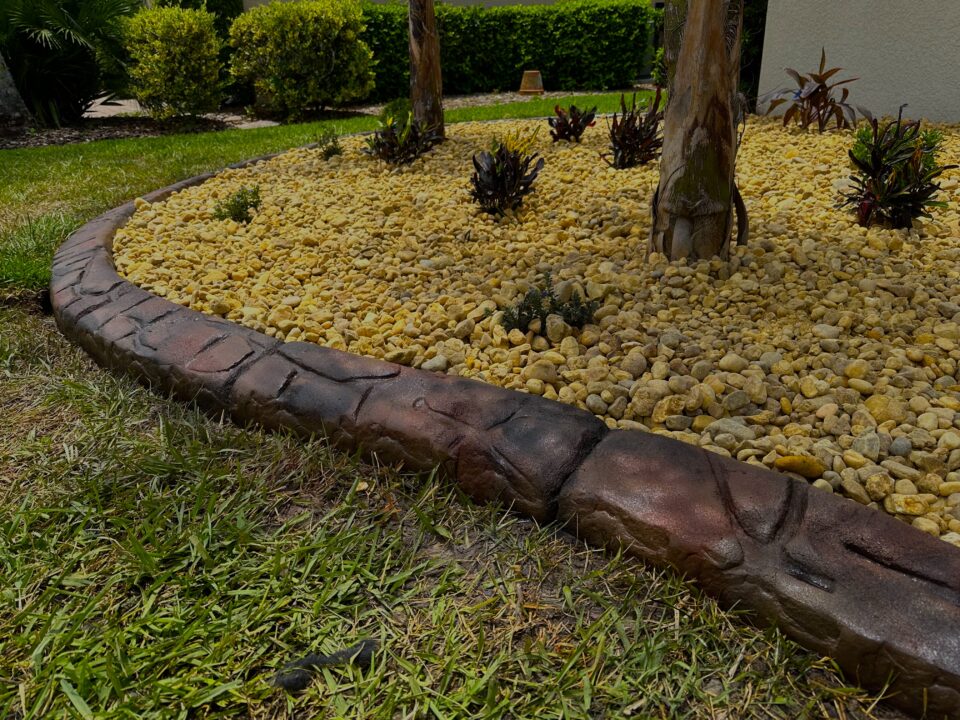
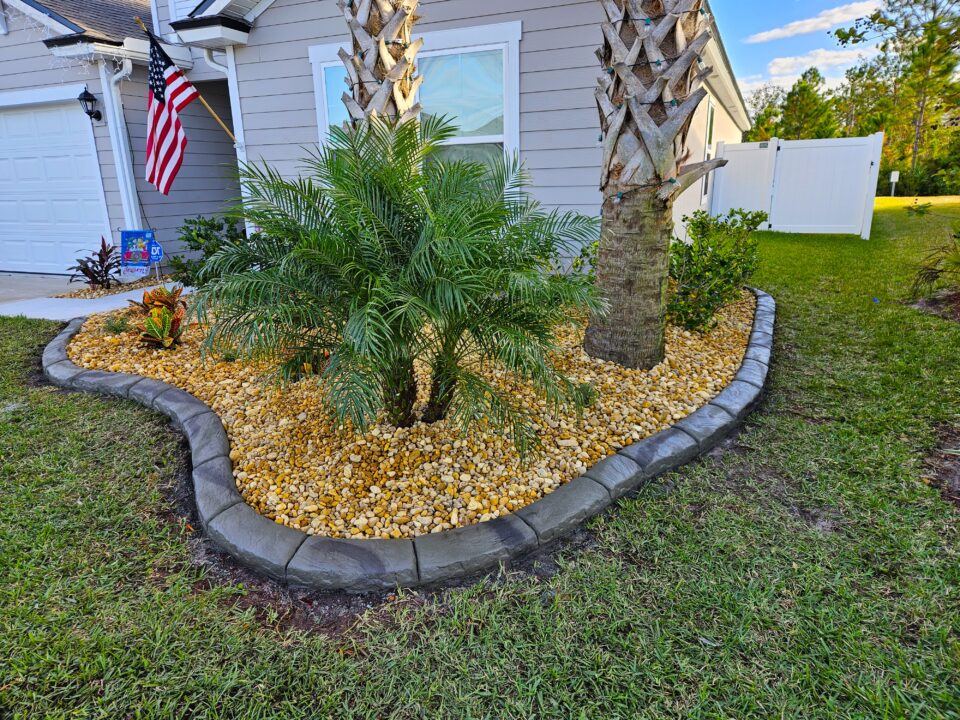
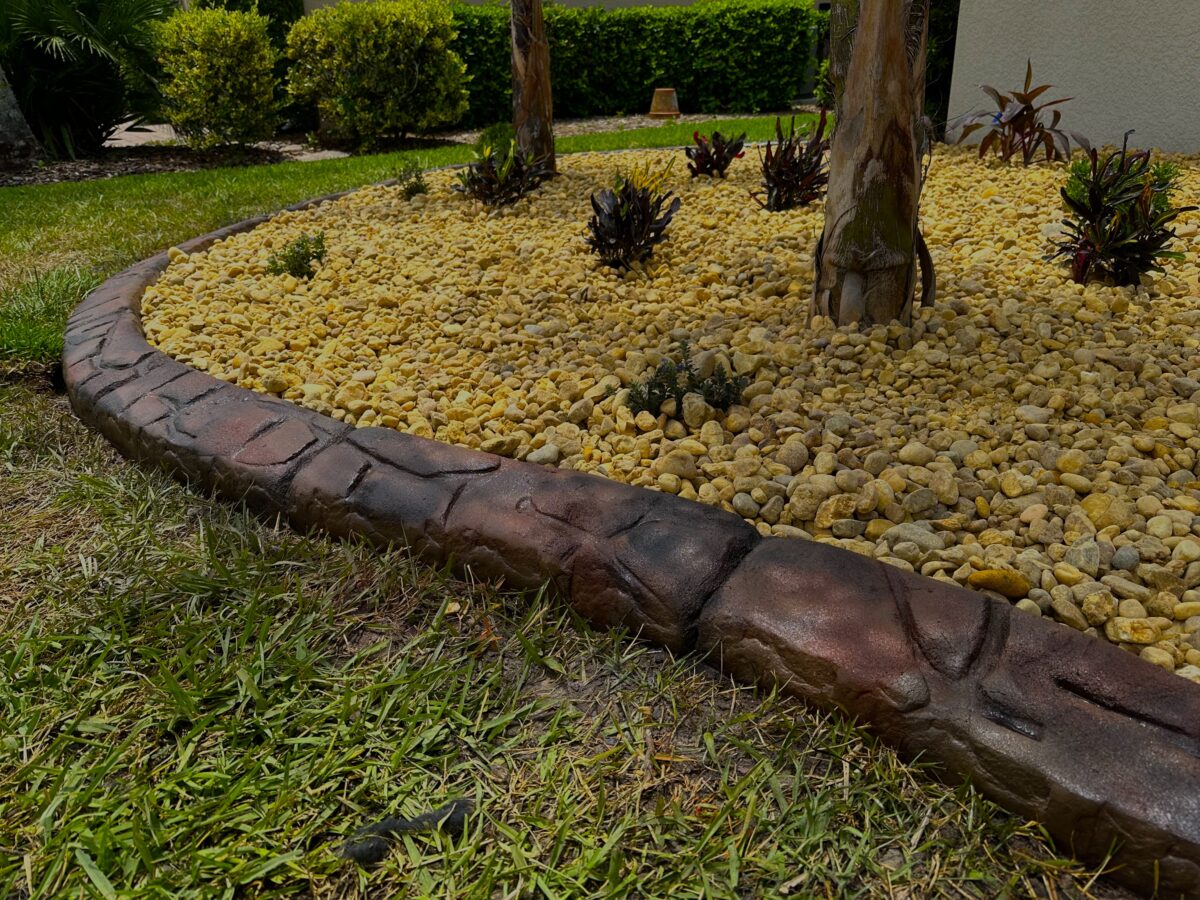
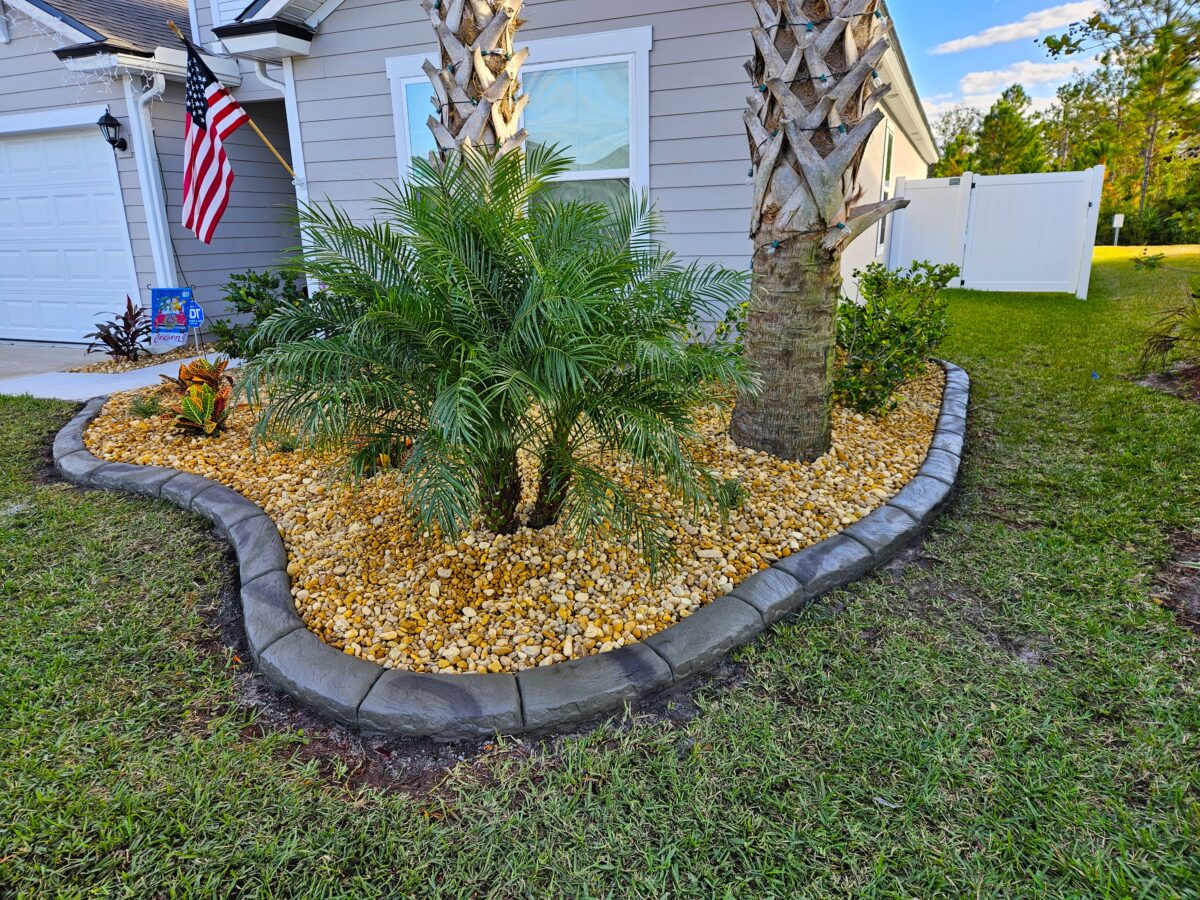
Before discussing decorative concrete curbing, use your photos to identify:
- Existing outlets and the direction water leaves the bed
- Low points where water gathers
- Transitions where the bed meets the driveway, walkway or patio
- Downspouts that empty directly into the planting area
Then ask how a proposed edge will work with those features instead of assuming a taller border is the answer. In some cases curbing is part of the solution, and in others a downspout extension, a regraded edge or a change in bed material does more. Our article on how concrete curbing helps control mulch, gravel and soil explains where edging helps and where it has limits.
Avoid covering up the evidence
It is tempting to rake things back into place or add a few bags of mulch right away. Adding stone, soil or mulch before an assessment can hide the original flow pattern, which makes the cause harder to find.
If a small temporary cleanup is needed, such as clearing mulch off a sidewalk, photograph the area first. Then clean up only what is necessary for safety or access. Repeatedly replacing washed-out material can become expensive while leaving the same cause in place.
Persistent wetness deserves attention before planting decisions, too. The UF/IFAS guidance on dealing with heavy rains explains that heavy rain can leave soil saturated and lead to problems such as root stress and disease. Many common landscape plants do not tolerate wet roots for long, so a bed that stays soggy may need different plants, better drainage or both.
What should the repair proposal explain?
Once your photos are in hand, a good proposal should connect each recommendation to something you or the contractor observed. When you review one, ask:
- What observation supports this fix?
- Which work is included, such as regrading, edging, downspout changes or new bed material?
- Will the change move water toward a neighbor, the house or another bed?
- Is drainage expertise beyond landscape work needed for any part of it?
Keep the scope clear about grading, outlets and bed materials so everyone understands what will change. Sharing your photos ahead of time lets whoever is assessing the bed see the pattern before the visit, and it often makes the on-site conversation shorter and more focused. A thoughtful approach to landscape design in Palm Coast treats water as part of the plan from the start.
Frequently asked questions
Why does mulch keep washing out of the same spot?
Repeated washouts in one location usually mean concentrated water, such as a downspout, a roof valley or runoff from paving, is crossing the bed. Until that flow is redirected or slowed, new mulch tends to follow the same path.
Will switching from mulch to stone stop the washout?
Heavier stone often moves less than light mulch, but it does not change where water goes. If the bed also stays wet or channels deeply, the drainage pattern still needs attention. Your photos help show which situation you have.
Should I add a taller border to hold the mulch in?
Not without checking where the water will go. A border that blocks flow can trap water in the bed or push it toward the house. Edging works best when it is planned with the drainage path in mind.
How soon after a storm should I take photos?
Take them once it is safe to go outside, ideally while the trail of mulch and sediment is still visible. A second set after the ground dries adds useful comparison.
If a bed on your property keeps washing out, Udell’s Landscape Services is glad to review your photos and look at the site with you. We work with homeowners throughout Palm Coast and Flagler County. You can request a free estimate online or call (386) 931-6539 to talk it through.