Spring Landscape Refresh Ideas for Palm Coast Properties
April 22, 2026Storm Debris Removal for Flagler County Yards
May 4, 2026Landscape design for Florida outdoor living starts with how you actually spend time outside, then adds shade, privacy, lighting and plants that can take the heat without constant care. In Palm Coast, that usually means planning around afternoon sun, summer storms and humidity first, and choosing the pretty details second. A yard designed this way gets used year round instead of just in the cooler months.
Start with how you use the yard, not with plants
Before anyone picks a single shrub, it helps to answer a few honest questions about your household. Most of the design flows from these.
- Where do you sit in the morning, and where do you sit in the evening?
- Do you grill, eat outside, or mostly pass through the yard on the way to the pool or dock?
- Do kids or dogs need open lawn to run on?
- Do you host people often, or is the backyard mostly a quiet place for two?
- How much time do you want to spend on yard care each month?
A couple who drinks coffee on the lanai at sunrise needs something very different from a family that grills every weekend. Once we know the daily routine, we can sketch zones: a place to sit, a place to cook, a play area, a path between them, and planted areas that frame each one.
Shade is the most valuable thing in a Florida yard
From late spring through early fall, an unshaded patio in Palm Coast is hard to enjoy in the afternoon. Shade can come from structures, like a pergola, shade sail or screened lanai, or from plants. Most good designs use both.
When planning shade with trees, think about where the sun is in the late afternoon, since that is when west-facing patios get the hottest. A tree on the southwest or west side of a seating area usually does the most work. Keep a few things in mind:
- Give trees enough distance from the house, pool and roofline for their mature size.
- Choose wind-tolerant species. During hurricane season, from June 1 to November 30, a poorly placed or weak-wooded tree can become a liability.
- Near the coast, pick trees that tolerate salt air.
- Remember that grass struggles in deep shade, so plan mulch, groundcovers or a patio under the canopy instead.
Our post on designing for shade and sun areas goes into which spots in a typical Palm Coast lot tend to stay sunny or shady.
Privacy without building a wall
Many Palm Coast neighborhoods have homes fairly close together, and backyards often face each other. Layered planting can screen a seating area without making the yard feel boxed in.
Instead of a single straight hedge along the property line, consider a mix of heights: a taller shrub or small tree right where a neighbor’s window looks in, medium shrubs on either side, and lower plants in front. This blocks the views that matter and leaves the rest of the yard open and breezy, which also helps air move on humid days.
Before planting along a lot line, check your HOA rules and any easements. Some communities limit hedge height or require approval for new plantings along shared boundaries. We cover more ideas in improving privacy without closing in your yard.
Lighting that extends the evening
In summer, the best hours outside are often after sunset, once the heat breaks. Good lighting makes those hours usable and safe.
For outdoor living areas, we think in three layers:
- Path and step lights so people can move between the patio, pool and door without tripping.
- Soft area light around seating, often from fixtures tucked in plant beds or mounted under a pergola.
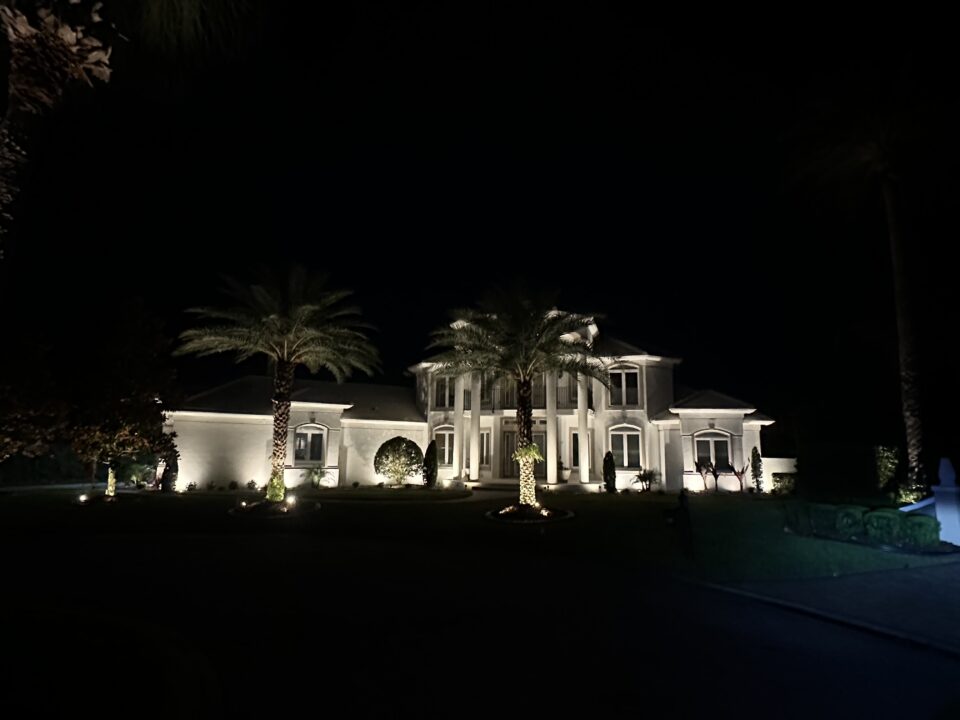
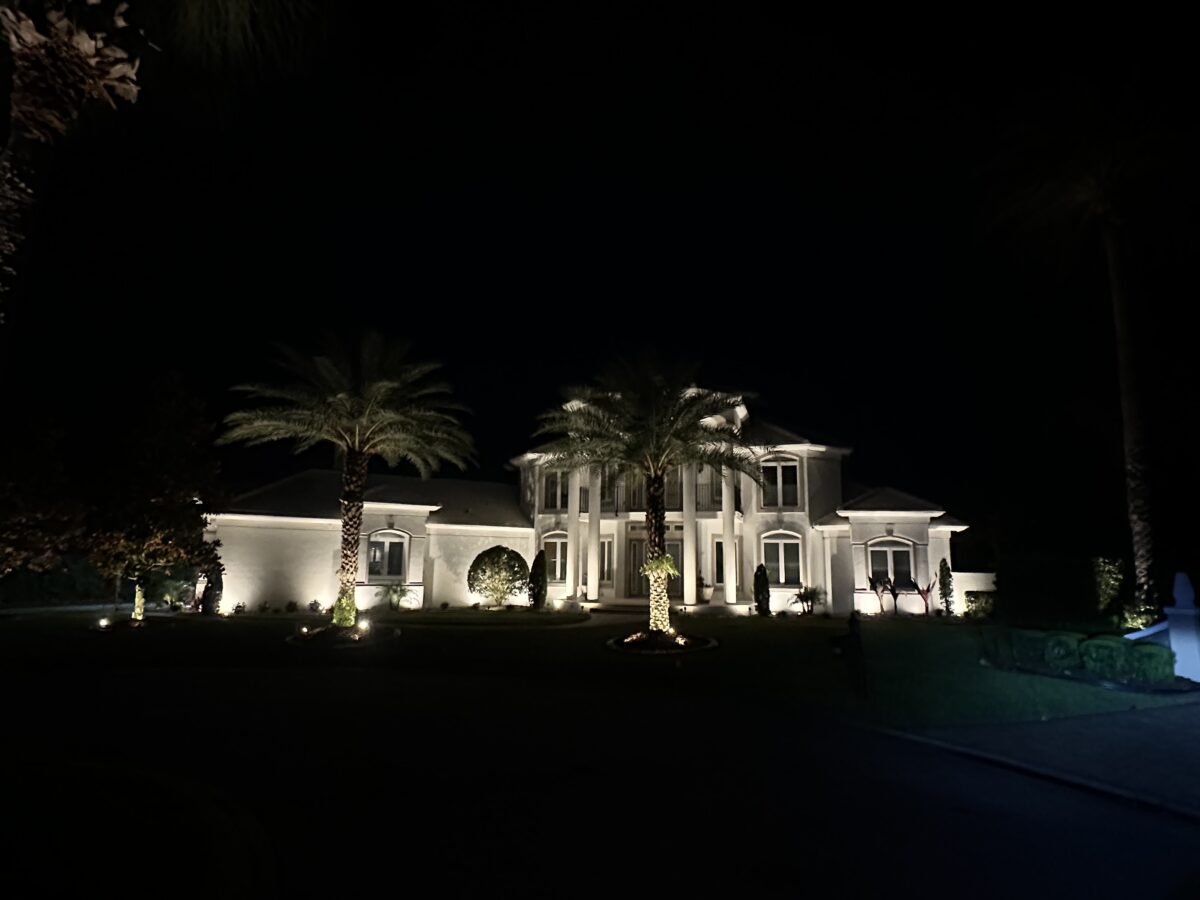
- Accent light on a palm, specimen tree or textured wall to give the yard depth at night.
Warm-colored, low-voltage LED fixtures keep the mood relaxed and use little power. Pointing fixtures down or into plants rather than toward seating keeps glare out of people’s eyes. Our landscape lighting page explains how we lay out a system.
Easy-care plants for the way Floridians live outside
Nobody wants to spend Saturday weeding when they could be on the patio. The plants closest to your living areas should be tough, tidy and suited to our sandy soil and heat.
- Right plant, right place: match each plant to its sun, shade and moisture. This is the first of the Florida-Friendly Landscaping principles from UF/IFAS, and it saves more work than anything else. You can read all nine on the UF/IFAS Gardening Solutions site.
- Mind the mature size: a shrub that will outgrow its spot near a walkway means trimming forever.
- Skip messy plants near pools: heavy leaf drop or dropping fruit next to water creates constant cleanup.
- Group by water needs: thirstier plants together, drought-tolerant ones together, so irrigation can be set sensibly.
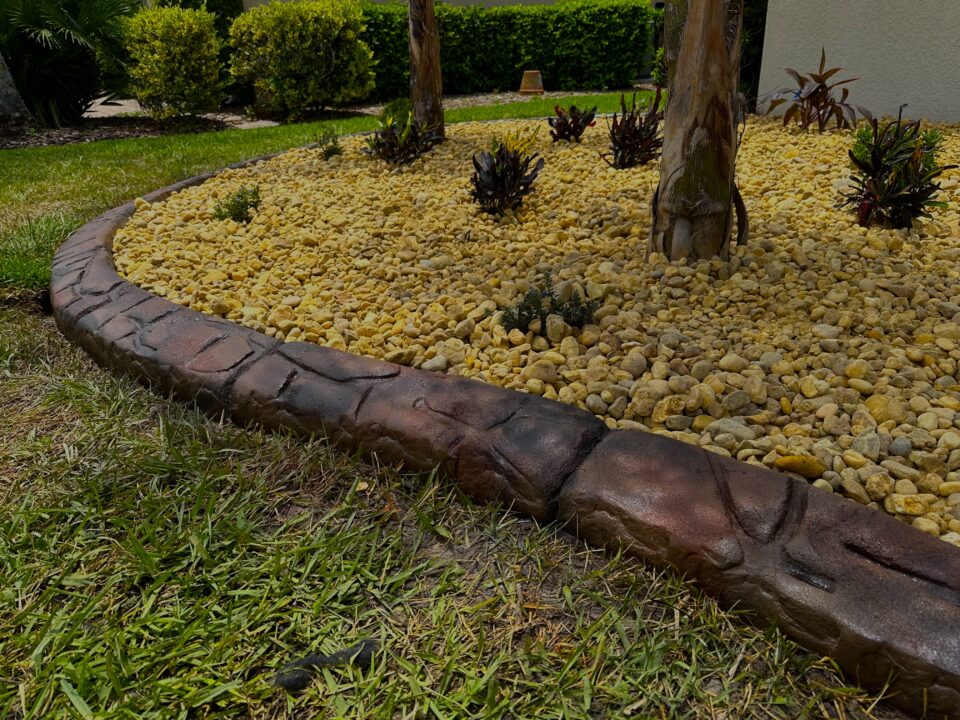
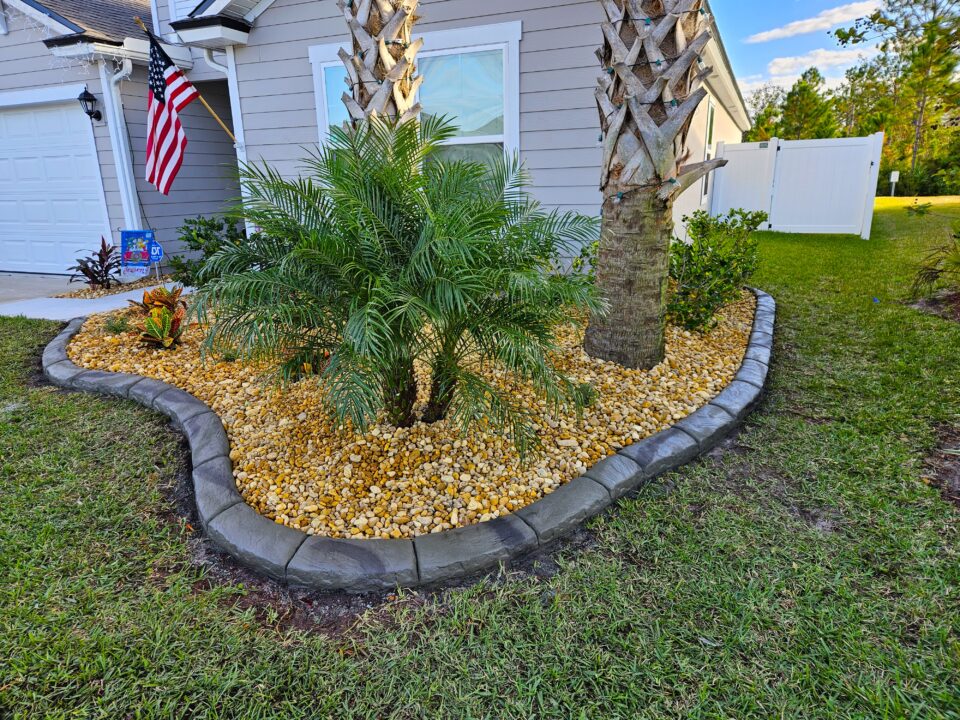
- Use mulch or stone: a clean layer in beds holds moisture and reduces weeds.
Paths, edges and how it all connects
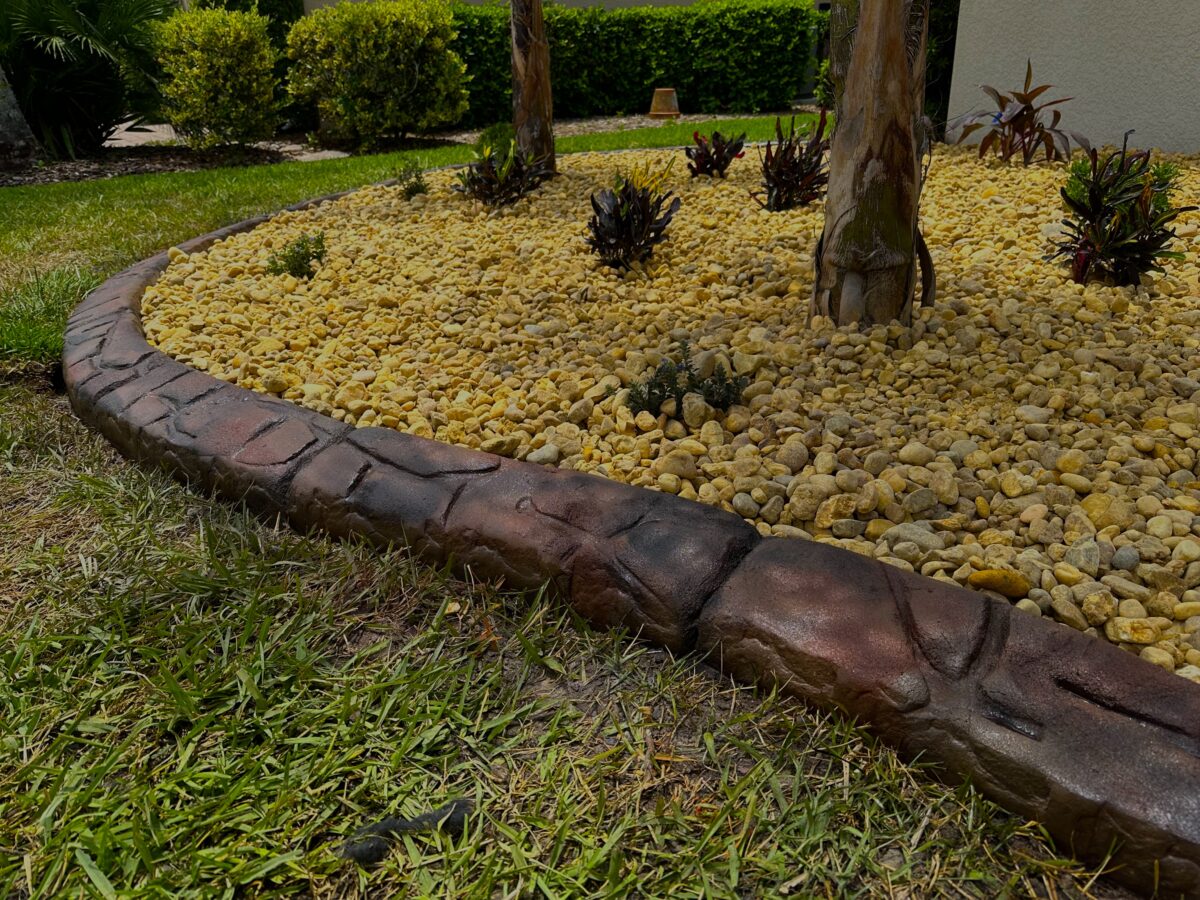
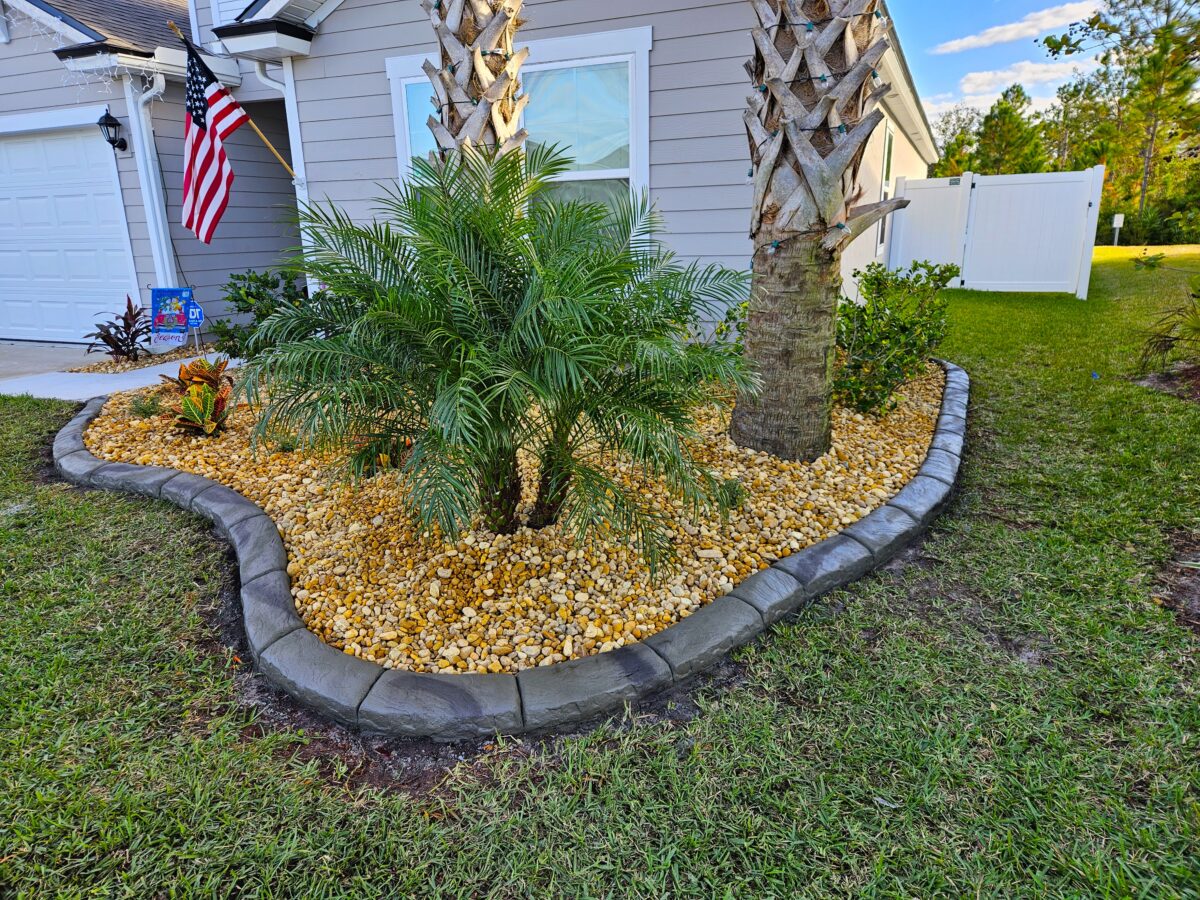
The last piece is making the spaces flow. A clear path from the back door to the grill, from the pool to the outdoor shower, or from the driveway to the side gate keeps people off the beds and out of wet grass. Defined bed edges, whether stone, pavers or concrete curbing, make it obvious where to walk and keep mulch in place during summer downpours.
Drainage belongs in this conversation too. Heavy rain should move away from the house and patios, not pool around them. If a spot stays soggy after storms, plan for it before anything else gets built there.
Frequently asked questions
What is the first step in designing an outdoor living space?
Figure out how you want to use the yard and at what times of day. Seating, cooking and play areas come first, then shade, privacy, lighting and plants are planned around them.
How do I keep a Palm Coast patio cooler?
Shade from the west and southwest helps most, since late afternoon sun is the hottest. A mix of shade structures and well-placed trees, plus plants instead of large stretches of bare pavement, makes a noticeable difference.
Do I need HOA approval for outdoor living changes?
Often, yes. Many Palm Coast communities review structures, lighting and some plantings. Check with your HOA before work starts so there are no surprises.
If you would like help planning a yard you will actually use, Udell’s Landscape Services designs outdoor spaces for homes across Palm Coast and Flagler County. Learn more about our landscape design in Palm Coast, request a free estimate, or call (386) 931-6539.