Best Landscaping Services for Palm Coast Property Enhancements
May 4, 2026Why Flagler Beach Homes Need Salt-Tolerant Landscaping
May 4, 2026Good patio and backyard lighting uses several soft, low light sources instead of one bright flood, so you can see the table, the steps and the grill without squinting. The best setups light the places people sit, walk and cook, add a little glow to nearby plants, and keep every bulb shielded or aimed away from eyes. Done that way, a Palm Coast backyard becomes a comfortable place to spend the cooler hours after sunset.
Here is how we think through backyard lighting, from the first question we ask to the details that keep a system working through Florida summers.
Start with how you actually use the backyard at night
Before choosing a single fixture, picture a normal evening out back. Most families in Palm Coast use the yard after dark more than they expect, because the evenings are when the heat finally lets up. Walk the space and note:
- Where people sit and talk, and which way the chairs face
- Where food is prepped or grilled
- The route from the back door to the patio, pool deck or lanai
- Steps, level changes and edges that could trip someone
- Trees, palms or beds you would enjoy seeing from inside the house
That list becomes the lighting plan. Each item gets its own kind of light, and anything not on the list probably does not need any.
Three layers that make a patio comfortable
Lighting designers often talk about layers. It is a simple idea that keeps a backyard from feeling either too dark or like a parking lot.
Ambient light. This is the general glow that lets you see faces and move around. Downlights mounted in a pergola, under eaves, or high in a tree work well because the light falls gently over the whole area. String lights can also give soft ambient light if they are warm in color and not too bright.
Task light. The grill, an outdoor kitchen counter, and steps need focused light so you can see what you are doing. A small, shielded fixture aimed down onto the surface is far better than a bright wall light by the door.
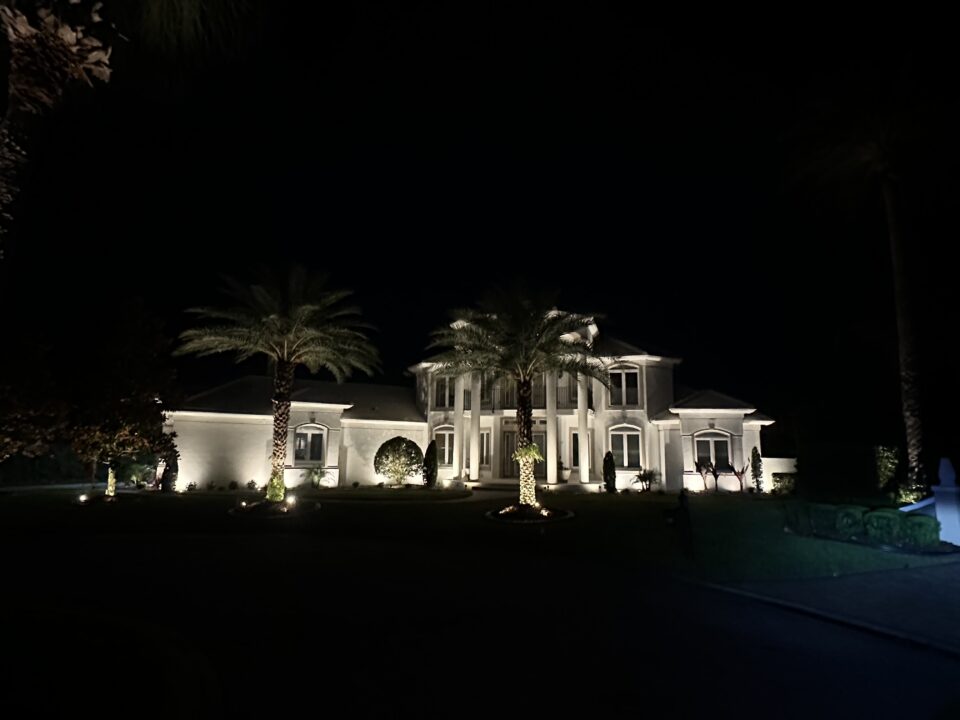
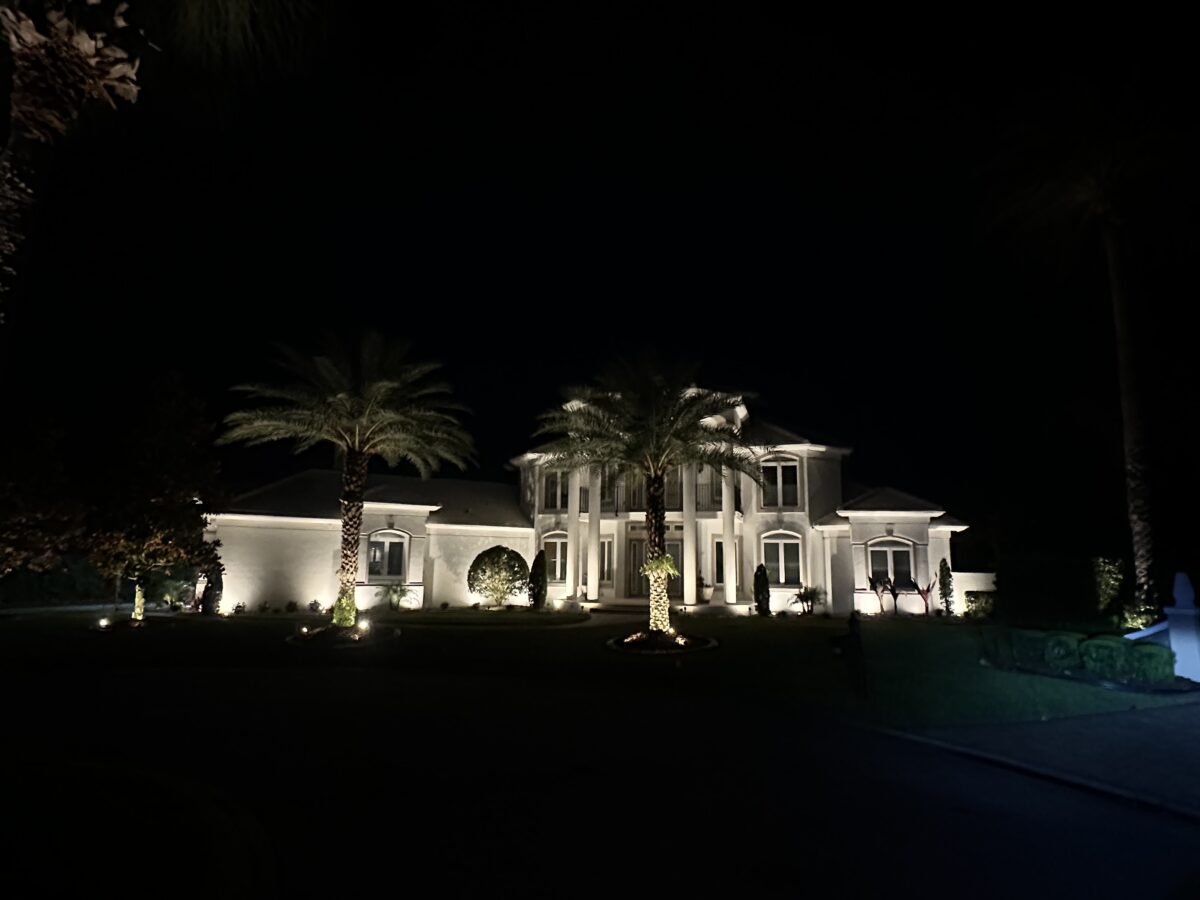
Accent light. Accent lights give the space depth. A palm uplit from below, a textured wall washed with light, or a bed of grasses glowing at the edge of the yard draws the eye outward and makes the patio feel bigger.
How to avoid glare
Glare is the most common complaint we hear about outdoor lighting. It usually comes from fixtures that are too bright, aimed at the wrong angle, or have an exposed bulb. A few habits help:
- Hide the source. Choose fixtures with hoods, louvers or recessed lenses so you see the light, not the bulb.
- Aim away from seating. Uplights near a sofa or dining table should point away from where people look.
- Go lower and softer. Several dim fixtures feel better than one strong one.
- Pick warm color. Warm white LEDs, roughly in the 2700K to 3000K range, look relaxed and flatter skin and plants. Cooler, bluer light can feel harsh at night.
- Think about neighbors. Keep light pointed into your own yard, especially in close HOA lots and around pool cages.
If you live on or near the beach, check local sea turtle lighting rules, which limit light visible from the beach during nesting season.
Lighting the plants around your patio
Plants are what make backyard lighting feel natural. A few approaches suit Florida yards well:
- Palms: one or two uplights at the base highlight the trunk and fronds. Tall palms often look best with a fixture on each side.
- Large shade trees: a light mounted high and aimed down through the branches gives a soft, moonlight effect on the patio below.
- Grasses and shrubs: a low wash from the front picks up texture without spotlighting each plant.
- Paths: low path lights spaced along the edge, offset so they do not form a runway.
Remember that plants grow fast here. Leave room for a shrub to fill in so the fixture is not swallowed in a year, and plan to adjust aim as trees mature. Our post on lighting trees, beds and pathways goes deeper on plant lighting.
Power, timers and Florida weather
Most backyard landscape lighting runs on low voltage. A transformer plugs into a weatherproof outdoor outlet and steps power down for the fixtures, which makes the system safer around kids, pets and pools. We explain the basics in our article on low voltage landscape lighting for Flagler County homes.
A few Florida specific points are worth planning for:
- Moisture. Summer rain and humidity are hard on cheap connectors. Sealed, waterproof connections hold up much better.
- Salt air. Closer to the coast, solid brass or copper fixtures tend to last longer than painted aluminum.
- Storms. During hurricane season, from June 1 to November 30, it is wise to know where your fixtures and cables are so they can be checked after a storm.
- Controls. A photocell or timer turns lights on at dusk and off at bedtime, so you never forget them.
Any new outdoor outlet or line voltage wiring should be handled by a licensed electrician.
Frequently asked questions
How bright should patio lighting be?
Softer than most people expect. Your eyes adjust quickly outdoors, so a few low fixtures usually give enough light for conversation and dining while keeping the night sky and the yard visible.
Do warm lights attract fewer bugs?
Many insects are drawn more to cool, bluish light than to warm light, so warm white or amber bulbs can help a little. They will not stop mosquitoes, but they tend to draw fewer moths to the table.
Can lighting be added to an existing patio?
Yes. Low voltage cable can usually be run through beds and along edges without tearing up pavers. Pergolas, eaves and trees give good mounting spots for downlights.
Udell’s Landscape Services designs and installs landscape lighting for homes in Palm Coast and throughout Flagler County, often alongside landscape design in Palm Coast. If you would like help planning your backyard, request a free estimate or call (386) 931-6539.