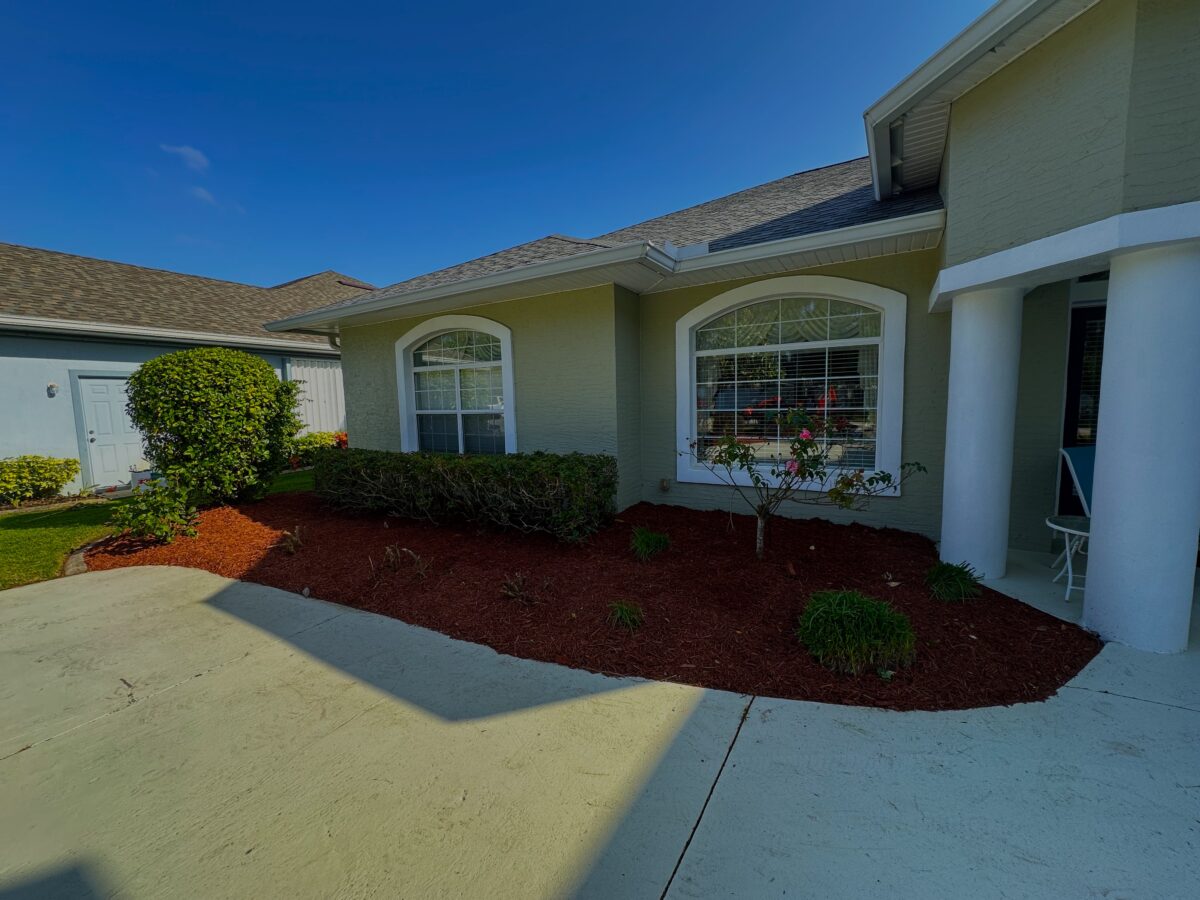
Plant Spacing Near Windows, Walkways and Outdoor Equipment
September 18, 2026Concrete Curbing Layout: Questions to Settle Before Installation
September 23, 2026You can design a small pollinator bed without crowding the yard by starting with one well-placed area instead of converting the whole landscape. For a Palm Coast property, first check the light, moisture and space available, then choose a short list of plants that fit those conditions and offer food and shelter for bees, butterflies and other visitors. A compact bed with a clear edge and room for plants to grow will do more good, and look better, than a crowded one.
Pollinator gardens have a reputation for being messy, but they do not have to be. With a little planning, a small bed can fit neatly into a front or back yard and still be useful to wildlife. Here is how we approach it for homeowners around Flagler County.
Choose a workable location
Most flowering plants that attract pollinators bloom best with plenty of sun, so start by watching the proposed spot at different times of day. Note how many hours of direct sun it gets and whether it stays wet or dry after rain. Our sun and shade planning guide can help you read the exposure.
Also think about how people use the area:
- Keep the bed from narrowing an entrance, walkway or driveway.
- Avoid spots right beside doors or seating if you would rather not have bees close by.
- Leave access to hoses, irrigation parts and utility equipment.
- Pick a place you will actually see, so you can enjoy the visitors and notice problems early.
UF/IFAS describes food, cover and space as the parts of a wildlife-friendly landscape. A compact bed can contribute to that goal when its layout is intentional, even if it is only a few feet wide.
Build a short, verified plant list
A small bed works best with a small plant list. Use exact plant names when comparing options and ask a local nursery or the UF/IFAS Extension office to confirm suitability for your site. Do not assume every flowering plant supports the same insects, or that every native plant fits every yard.
A few things to keep in mind when building the list:
- Nectar plants feed adult butterflies, bees and other insects.
- Host plants feed caterpillars. Many butterflies lay eggs only on specific plants, the way monarch caterpillars rely on milkweed.
- Native and Florida-friendly plants are often well matched to local insects and conditions, but they still need the right light, soil and moisture.
- Coastal exposure matters. Homes closer to the ocean may need plants that handle salt and wind.
Our native and Florida-friendly plant guide explains why site conditions still matter when choosing locally appropriate plants. Expect some leaf damage on host plants. Chewed leaves on a host plant usually mean it is doing its job.
Consider the whole growing season
Palm Coast has a long growing season, and pollinators are active for much of the year. Ask when each plant on your list flowers, how large it gets and what it looks like when it is not blooming. A bed that bursts into color for a few weeks and looks bare the rest of the year can feel like a gap in the landscape.
Aim for a few plants with complementary habits:
- Bloom times that overlap or follow one another
- A mix of heights, with taller plants toward the back or center
- At least one plant with good foliage between flowering periods
- Groupings of the same plant rather than one of everything, which looks tidier and is easier for pollinators to find
Leave room for mature spread rather than filling every gap on day one. A bed that looks a little open at first will fill in, while an overcrowded one tends to need constant cutting back.
Decide what maintenance you will accept
Be honest about how much care you want to give the bed. Talk through weeding, how often plants may need replacing, and how closely the finished bed should match a formal look. Some homeowners are happy with a looser, natural style. Others want a neat bed that blends with clipped hedges and lawn.
Learn to recognize beneficial visitors before treating every insect as a pest. Many insects in a pollinator bed are helpful or harmless. UF/IFAS encourages responsible pest management, which means identifying the actual problem first and avoiding unnecessary treatment. If an issue does show up, look for current plant-specific guidance, and keep any treatment tied to a confirmed problem. Broad spraying can harm the very insects the bed is meant to support.
How can it fit an existing landscape?
A pollinator bed feels like part of the yard when it borrows from what is already there. A few ways to tie it in:
- Repeat the curve or shape of an existing bed.
- Use the same edging or border style found elsewhere on the property.
- Match the mulch or stone used in nearby beds.
- Add a clean edge so the planting looks planned, not overgrown.
Start with a manageable area and take photos through the season to see what performs well. You can always expand later once you know which plants suit your yard. When reviewing landscape planning services, describe your wildlife goal along with your maintenance preferences so the plan fits both.
Frequently asked questions
How big does a pollinator bed need to be?
It can be quite small. Even a bed a few feet wide can offer food and shelter if the plants suit the site. Starting small also makes it easier to see what works before expanding.
Does a pollinator garden need full sun?
Most nectar plants flower best with several hours of direct sun. Some plants tolerate partial shade, so a shadier spot can still work with the right plant list. Confirm light needs for each plant before buying.
Will a pollinator bed attract stinging insects to my door?
Bees and wasps will visit flowering plants, so placement matters. Putting the bed away from doors, patios and busy paths gives visitors space while still letting you enjoy the garden from a comfortable distance.
Can I use pesticides in a pollinator bed?
It is best to avoid unnecessary treatment. Identify the problem first, since many insects are helpful. If treatment is needed, follow current UF/IFAS guidance for that specific plant and pest.
If you would like a small pollinator bed that fits neatly into your yard, Udell’s Landscape Services can help with layout, plant selection and installation. We work with homeowners across Palm Coast and Flagler County, and you can learn more about our approach to landscape design in Palm Coast. When you are ready, request a free estimate or call (386) 931-6539.