Spring Landscape Refresh Ideas for Palm Coast Properties
April 22, 2026Storm Debris Removal for Flagler County Yards
May 4, 2026Concrete curbing controls mulch, gravel and soil by forming a continuous, solid wall between your beds and the lawn. Because it is heavy, seamless and sits slightly above the surrounding grade, it holds bed material in place when Palm Coast’s summer downpours try to wash it out, and it keeps lawn grass from creeping in. Thin plastic or metal edging can do part of this job, but it tends to shift, lift and leave gaps over time.
Why bed material moves in the first place
If you have lived in Flagler County through a summer, you have probably seen it: mulch floating across the lawn after an afternoon storm, river rock scattered into the grass, or a dark fan of soil on the driveway. A few local conditions make this common.
- Heavy, fast rain. Summer storms can drop a lot of water in a short time, and it has to go somewhere.
- Sandy soil. Our sand is loose and moves easily once water starts flowing over it.
- Roof runoff. Water pouring off a roof edge or gutter outlet lands right in front beds.
- Mowers and blowers. Every mowing pass and blower sweep nudges a bit of material out of the bed.
- Lightweight mulch. Many common mulches float, especially when they are freshly spread.
Without a real border, each of these slowly pulls material out of the bed. You end up topping off mulch more often, raking stone out of the grass, and watching bed lines blur.
How curbing actually holds things in
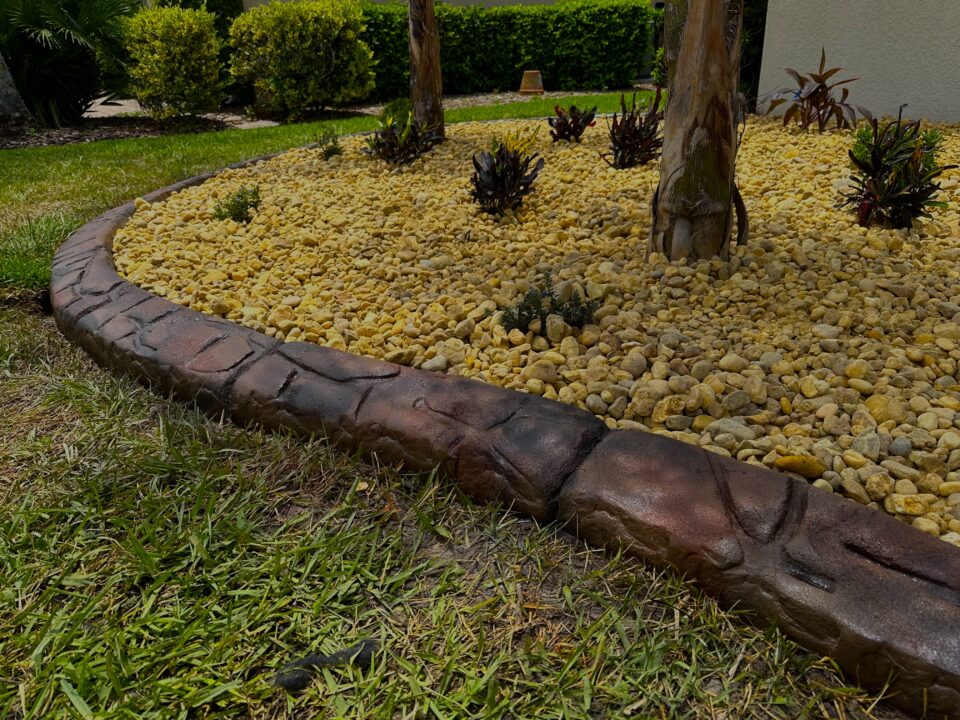
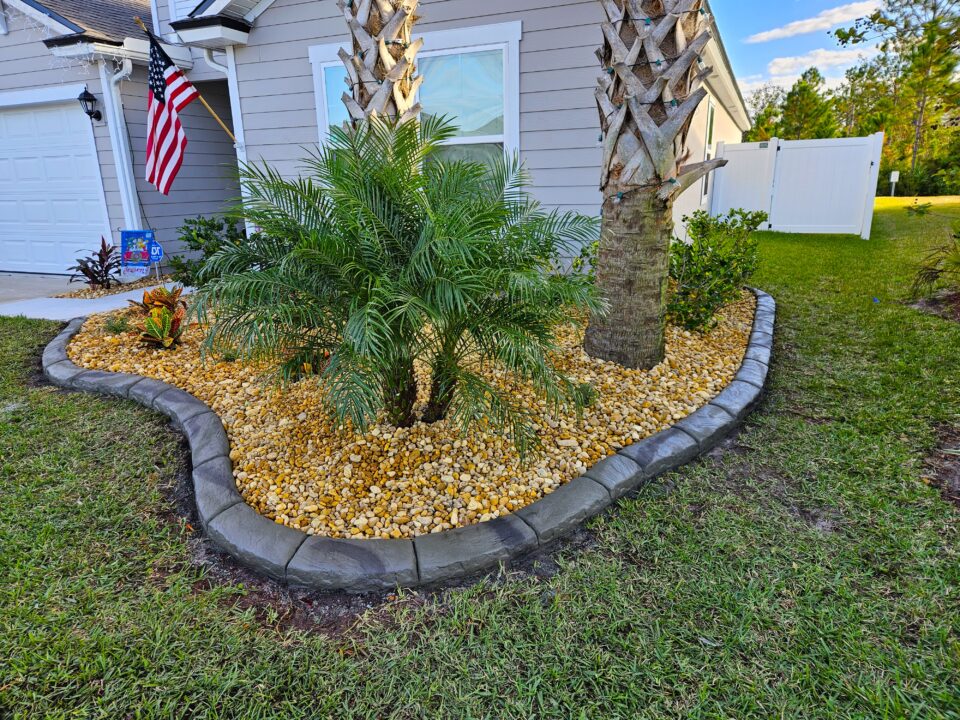
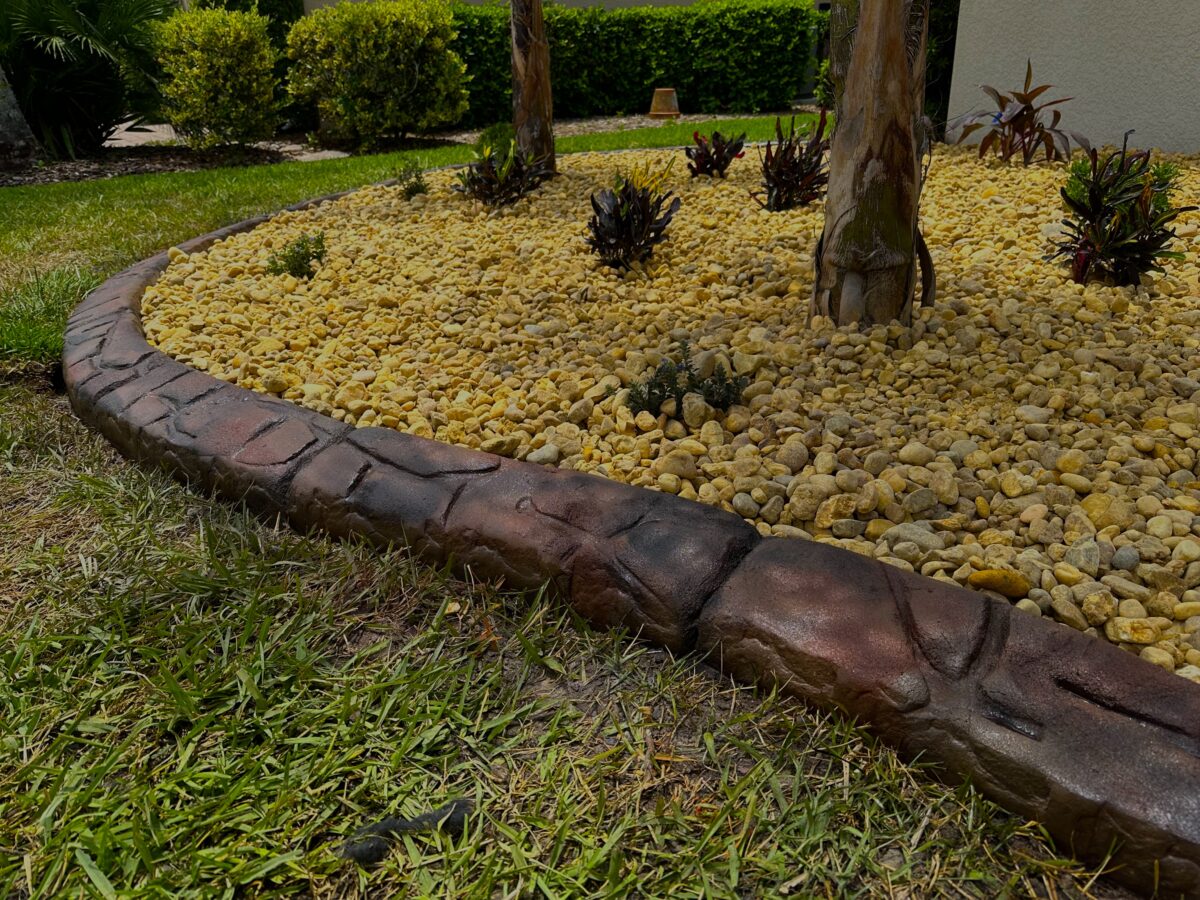
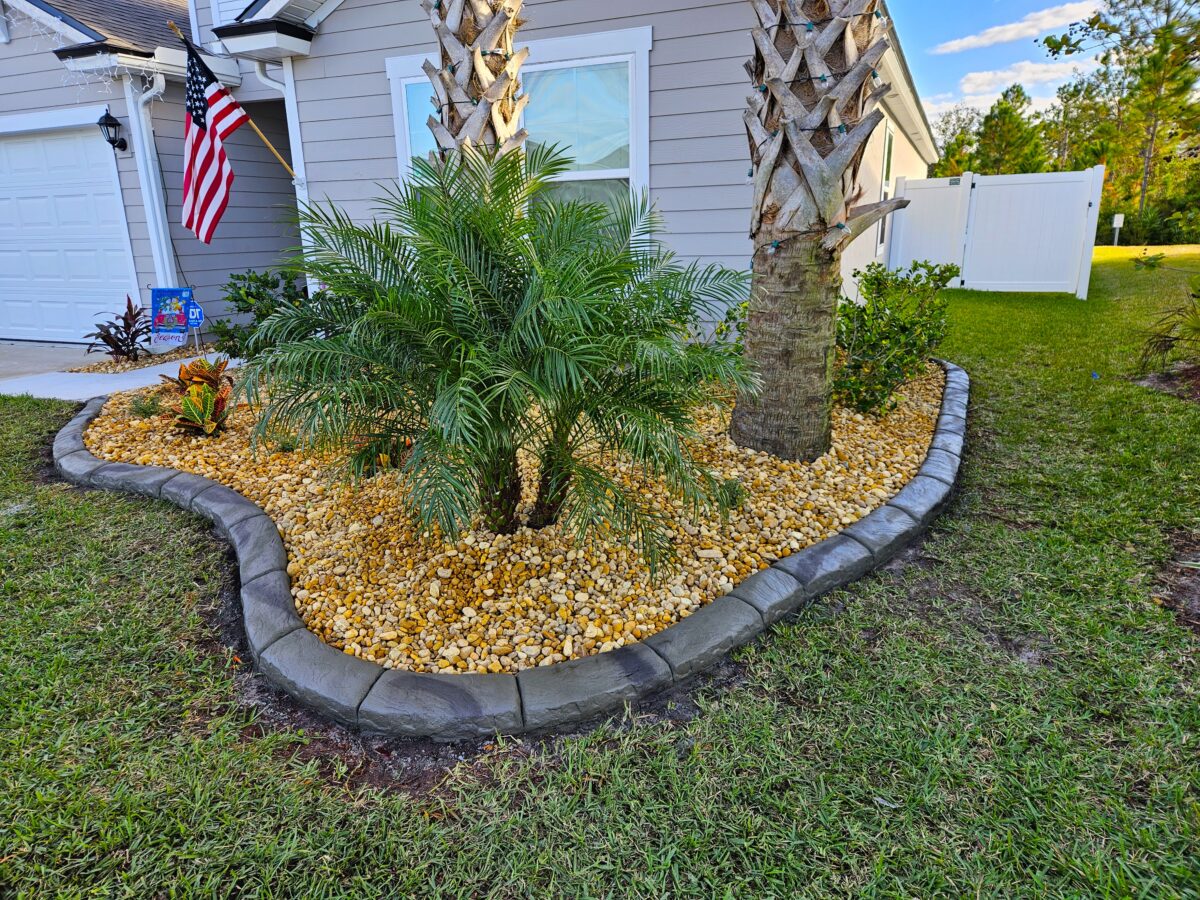
Decorative concrete curbing is formed in place as one continuous piece that follows your bed shape. That matters for a few reasons.
- No seams to slip through. Pieced edging has joints where stone and mulch can work out. A continuous curb does not, apart from small control cuts made to manage cracking.
- Weight and stiffness. Concrete does not get pushed outward by soil pressure or lifted by roots the way thin edging does.
- A raised lip. The curb sits a little higher than the lawn and bed surface, so floating mulch and loose stone have a wall to stop against instead of an open path.
- A root barrier at the surface. It slows grasses like St. Augustine from running their runners into the bed.
It is worth being honest about the limits too. Curbing is a surface border, not a dam. If a bed sits directly under a downspout or at the low point of the yard, water may still overtop it in a big storm. In those spots, fixing the drainage itself, with a splash block, extension or stone channel, works alongside the curb.
Mulch, gravel and soil each behave differently
| Material | How it tends to escape | What curbing helps with |
|---|---|---|
| Mulch | Floats during heavy rain and gets kicked out by mowers | Gives floating mulch a barrier to stop against and keeps a clean line at the lawn |
| Gravel and river rock | Gets pushed into grass by foot traffic, mowers and water | Keeps stones contained so they do not end up in the lawn or mower |
| Soil and sand | Washes out with runoff, especially on slopes and raised beds | Holds the bed edge firm so soil stays at the right level around plants |
With stone beds especially, a solid edge saves a lot of frustration. A loose rock in the grass can be thrown by a mower, so keeping stone where it belongs is a safety issue as much as a looks issue. Our post on mulch and stone options for Palm Coast flower beds compares the materials themselves.
Getting the most out of curbing for containment
A few details make a big difference in how well curbing holds material:
- Keep the bed surface below the top of the curb. If mulch is mounded above the curb, it will spill over no matter what. Leave a little lip showing.
- Choose a profile that suits the job. Some curb styles are taller on the bed side, which helps with deep mulch or stone. A flatter mower-edge style gives a mowing strip but less height.
- Plan the bed shape around water flow. Gentle curves and sensible placement around downspouts help water move past beds rather than through them.
- Use landscape fabric under stone where appropriate, so stone does not sink into the sand over time.
Our decorative concrete curbing page shows the styles and finishes we install, and the project gallery has examples around beds and trees.
Is curbing worth it compared with other edging?
Plastic and metal edging cost less up front and are fine for some situations, like temporary beds or areas you plan to change soon. But in our climate, thin edging often heaves, separates at joints or gets clipped by mowers. Many homeowners end up replacing it or living with wavy lines. Pavers and natural stone also work well as borders but involve more pieces and more joints.
Concrete curbing makes the most sense when your bed layout is settled and you want a border that stays put. If you are still deciding on bed shapes, it is worth settling the design first. We have more on that in landscape borders that keep mulch and stone in place.
Frequently asked questions
Will concrete curbing stop all mulch from washing away?
It stops most of it during typical rain, especially if the mulch is kept below the curb top. In areas with concentrated runoff, such as under a downspout, you may also need to redirect the water.
Does curbing work for gravel and river rock beds?
Yes, it is one of the best uses for it. A solid curb keeps stones from migrating into the lawn, where they can be thrown by a mower.
Can grass grow under concrete curbing?
Curbing slows grass from spreading into beds at the surface, but determined runners can sometimes find a way under or around over time. Occasional edging along the curb keeps it neat.
If washed-out beds and stray stone are a regular headache, Udell’s Landscape Services installs decorative concrete curbing throughout Palm Coast and Flagler County. Learn more about our landscape design in Palm Coast, request a free estimate, or give us a call at (386) 931-6539.